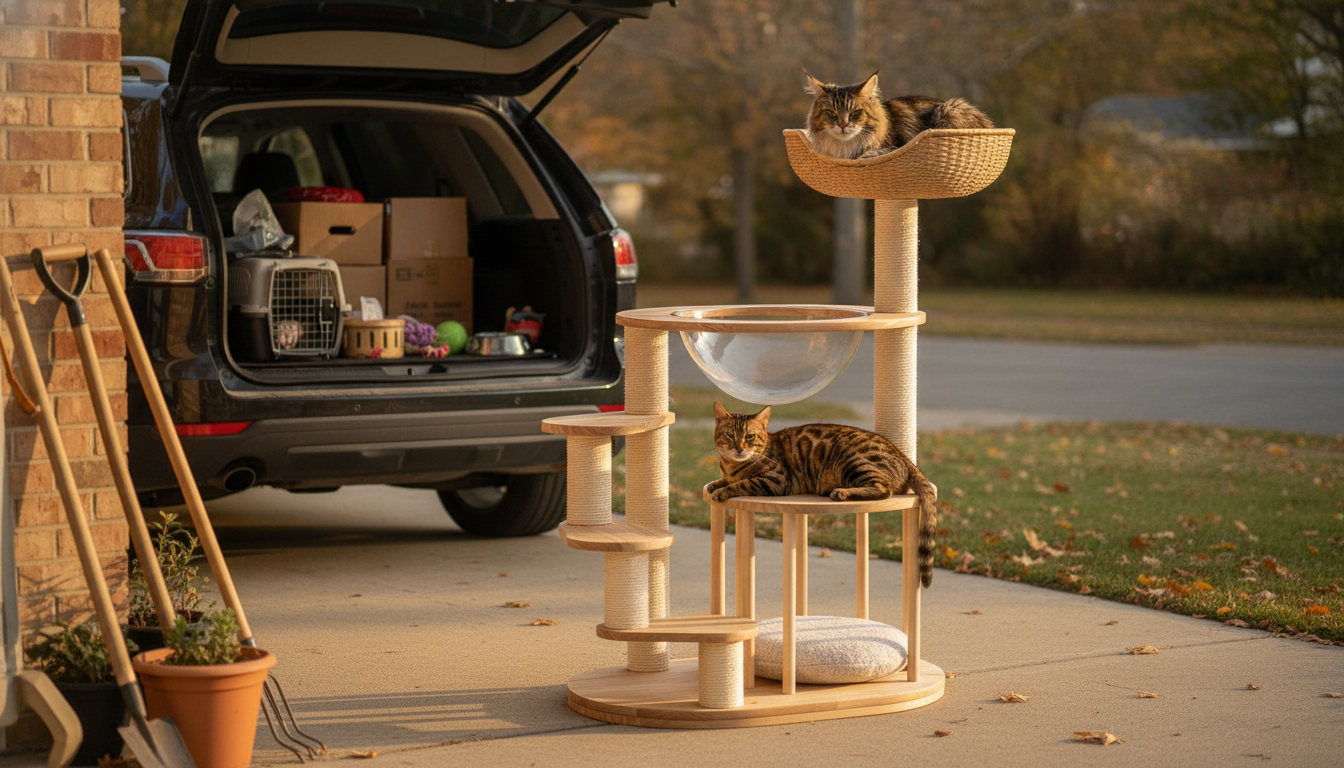
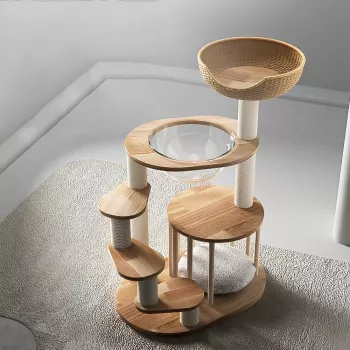
Wooden cat trees are often a better choice for large cats because they tend to be heavier, sturdier, and less prone to wobbling during climbs, jumps, and full-body stretches. Bigger cats put more force on every platform and post, so a rigid frame and solid joints matter more than extra fluff or decorative features. When the base is wide and the structure uses thick wood panels or solid wood posts, the result is a tower that feels stable under real weight.
Large cats benefit from materials that resist flexing. Many wooden frames hold their shape better than lightweight particleboard builds, especially at height where sway becomes more noticeable. Wood also supports hardware—like bolts, brackets, and threaded inserts—more securely, helping platforms stay tight over time.
Another advantage is longevity. Big cats can shred carpeted coverings quickly, but many wooden cat trees use replaceable sisal, thicker posts, or smooth sealed surfaces that are easier to wipe clean. If shedding, litter dust, or hair buildup is a constant issue, a sealed wood surface can be simpler to maintain than plush fabric that traps debris.
Not every wooden cat tree is automatically “large-cat ready.” Focus on these practical details:
Wooden cat trees can cost more and may feel less cozy if they don’t include padded mats or soft beds. The best setups pair a sturdy wood frame with removable cushions or hammocks rated for higher weight, giving large cats both security and comfort.
For a deeper comparison of materials, stability, and everyday use, read the full guide here: https://perfectpickspalace.shop/are-wooden-cat-trees-better-for-cats/.
Pick a height that fits your ceiling clearance and gives your cat a confident climb without making the structure top-heavy. If your cat loves high vantage points, prioritize a wider base and larger upper platforms for stability.





Leave a comment