Indoor plant watering works best as a flexible schedule built around light, temperature, pot size, soil mix, and the plant’s growth cycle—not a rigid calendar. A reliable routine comes from knowing what controls “dry-down,” using moisture checkpoints, and watering thoroughly when the plant is ready. This approach prevents both underwatering (stress and stalled growth) and overwatering (root rot and pest issues), while making care simpler as your collection grows.
If two plants are watered on the same day, they won’t dry at the same speed. Build your schedule around these drivers instead of a fixed interval:
For baseline guidance rooted in horticulture, see the University of Minnesota Extension’s houseplant watering notes and how environmental conditions change watering needs: https://extension.umn.edu/houseplants/watering-houseplants.
Swap “every Saturday” for a simple two-step rule: check moisture first, then water only when the plant’s preferred dryness zone is reached (top-dry, half-dry, nearly dry). A practical way to do this is setting a “watering window”—for example, inspect twice per week—without forcing a watering event.
| Plant group | When to water (checkpoint) | Typical pitfalls | Quick tip |
|---|---|---|---|
| Tropical foliage (pothos, philodendron, monstera) | Top 1–2 in (2–5 cm) dry; lower soil slightly moist | Overwatering in low light | Use a chunky mix and water thoroughly, then let it dry to the checkpoint |
| Peace lily and thirsty bloomers | Soil evenly moist but not soggy; don’t let fully dry | Wilting cycles stress the plant | Water when surface is dry but pot still feels heavy-ish |
| Succulents and cacti | Soil fully dry; pot very light | Frequent small sips cause rot | Soak fully, drain fully, then wait—often longer than expected |
| Ferns and moisture lovers | Top surface just beginning to dry; deep soil moist | Dry air and missed checks | Increase humidity and avoid hot vent airflow |
| Snake plant and ZZ plant | Soil mostly dry to fully dry | Watering “because it’s been a while” | Err on the dry side; use bright indirect light for steadier growth |
When a plant hits its checkpoint, the technique matters as much as timing.
For additional houseplant care fundamentals and troubleshooting, the Royal Horticultural Society is a dependable reference: https://www.rhs.org.uk/houseplants.
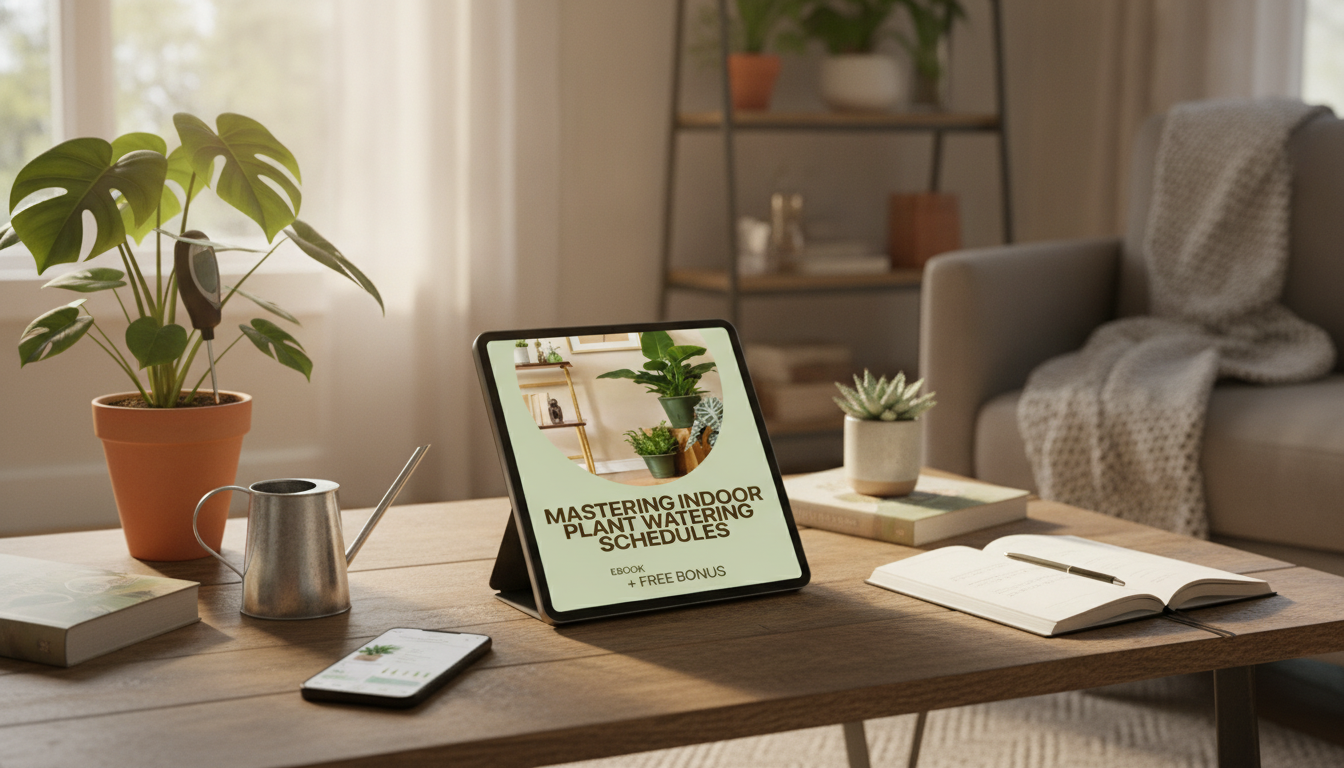
If you want consistency without guesswork, a dedicated planner helps standardize checkpoints and capture what changes your timing (light, pot type, soil mix, and season). For a structured system that separates inspection days from watering days and supports AI-assisted notes, see: Mastering Indoor Plant Watering Schedules: Ultimate Guide for Indoor Plants Watering Schedule, Tips, and AI-Powered Care.
For anyone who likes tracking habits with simple templates and check-ins, this budgeting-and-goals planner can also be repurposed as a general “routine tracker” for plant inspections: Smart Savings: The Ultimate Guide to Balancing Short-Term and Long-Term Goals | Personal Finance Guide | Budgeting Planner | Short-term vs. long-term savings Beginner Blueprint.
It depends on light, pot size, soil mix, humidity, and the plant type. Use moisture checkpoints (top-dry, half-dry, nearly dry) and set inspection windows so you water only when the plant reaches its preferred dryness level.
Soak less often is usually healthier: water thoroughly until runoff, then wait until the correct dryness checkpoint. Daily small watering can keep soil constantly damp, encourage shallow roots, and increase rot risk in many common houseplants.
They can help you spot trends, but they’re most reliable when you cross-check with a wooden skewer or pot weight. Readings can be inconsistent in chunky mixes, and mineral buildup can skew results over time.







Leave a comment