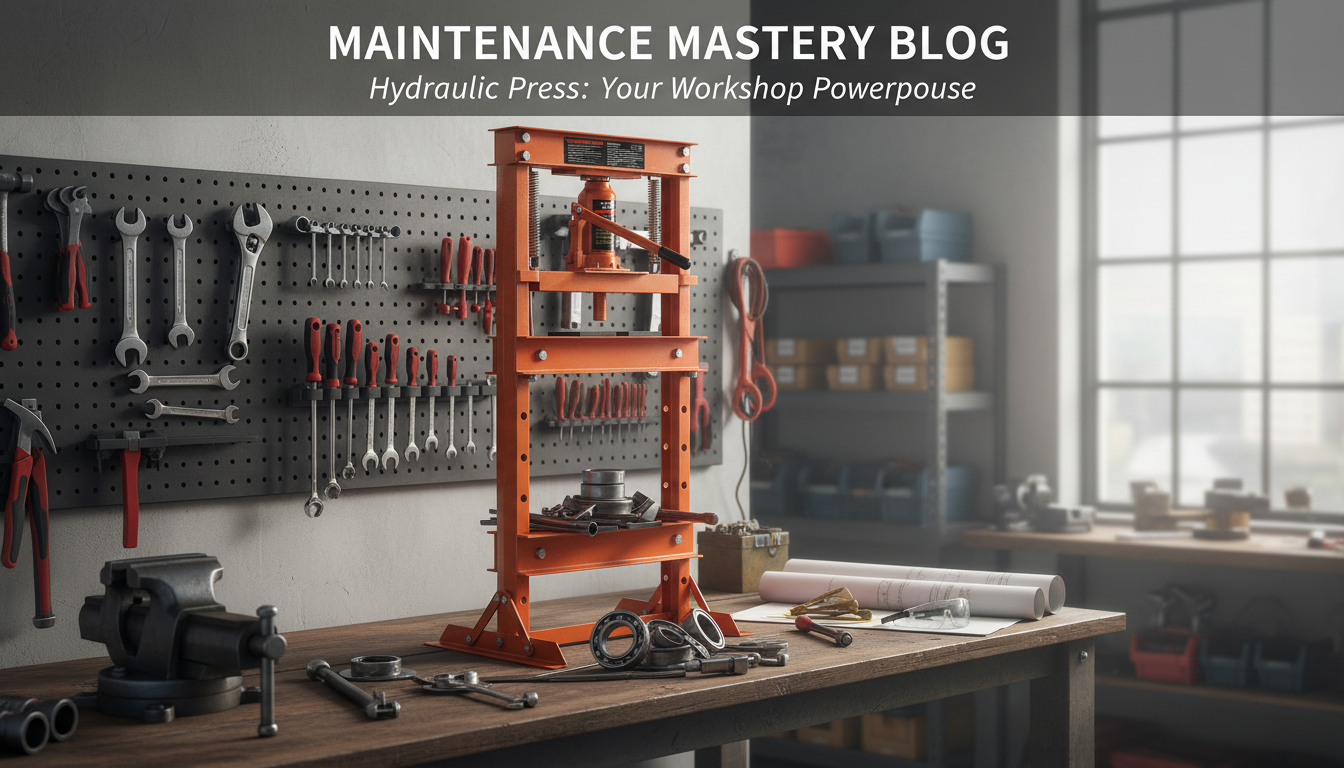
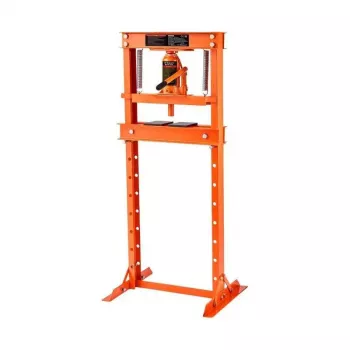
A 12-ton hydraulic shop press adds controlled force for jobs that are difficult or unsafe with hammers and improvised setups. With a stable frame, a smooth bottle jack, and the right press plates and adapters, it becomes a go-to tool for bearing work, bushing service, and careful straightening. Below is a practical guide to what a 12-ton press does best, how to set it up in a home garage or small workshop, and the habits that keep pressing steady, predictable, and safer.
A 12-ton press shines when parts need steady, even force and accurate alignment. Instead of relying on impact, you can apply load gradually and stop the moment something looks or feels off.
For many DIY and light professional tasks, 12 tons is a strong “middle ground” capacity. It covers a wide range of common press-fit jobs without demanding the space and cost of larger industrial presses.
| Job | Recommended setup | Common mistake to avoid |
|---|---|---|
| Bearing removal | Support the housing on press plates; use proper drifts/sleeves against the race being moved | Pressing through the wrong race and damaging the bearing/housing |
| Bushing install | Use a sleeve that contacts the bushing evenly; confirm start is square | Forcing an angled start that galls or deforms the bushing |
| Straightening brackets | Use blocks and a flat plate to distribute load; measure progress in small increments | Overbending due to large single pushes |
| Pulley/gear pressing | Use a matched adapter to avoid point loading; keep the shaft supported | Unsupported shaft flex that leads to wobble or damage |
Not all shop presses “feel” the same under load. A few design details make daily use smoother and reduce the chance of parts shifting unexpectedly.
A shop press is safest when the space around it supports good posture, clear sightlines, and stable footing. A few setup choices also make it easier to repeat successful press jobs.
For general guidance on guarding and safe machine use practices, consult OSHA’s Machine Guarding requirements. For eye protection basics and selection tips, see NIOSH workplace eye safety guidance.
Many common bearing and bushing jobs can be handled by a 12-ton press when the part is supported correctly and the proper sleeves/drifts are used. Rust, tight interference fits, and misalignment can spike the required force, so stop and reset if the load rises suddenly or the part starts to tilt.
Use press plates, flat adapters, and correctly sized drifts or sleeves so the load is spread evenly and contacts the correct surface (such as the bearing race being moved). Avoid improvised stacks or point loading, which can slip and damage parts.
Place the press on a level surface with clear space and good lighting, start every job with light pressure to verify alignment, and keep hands away from pinch points. Use wide, stable supports on the bed, release pressure slowly, and anchor the press if the design allows and the floor can support it.




Leave a comment