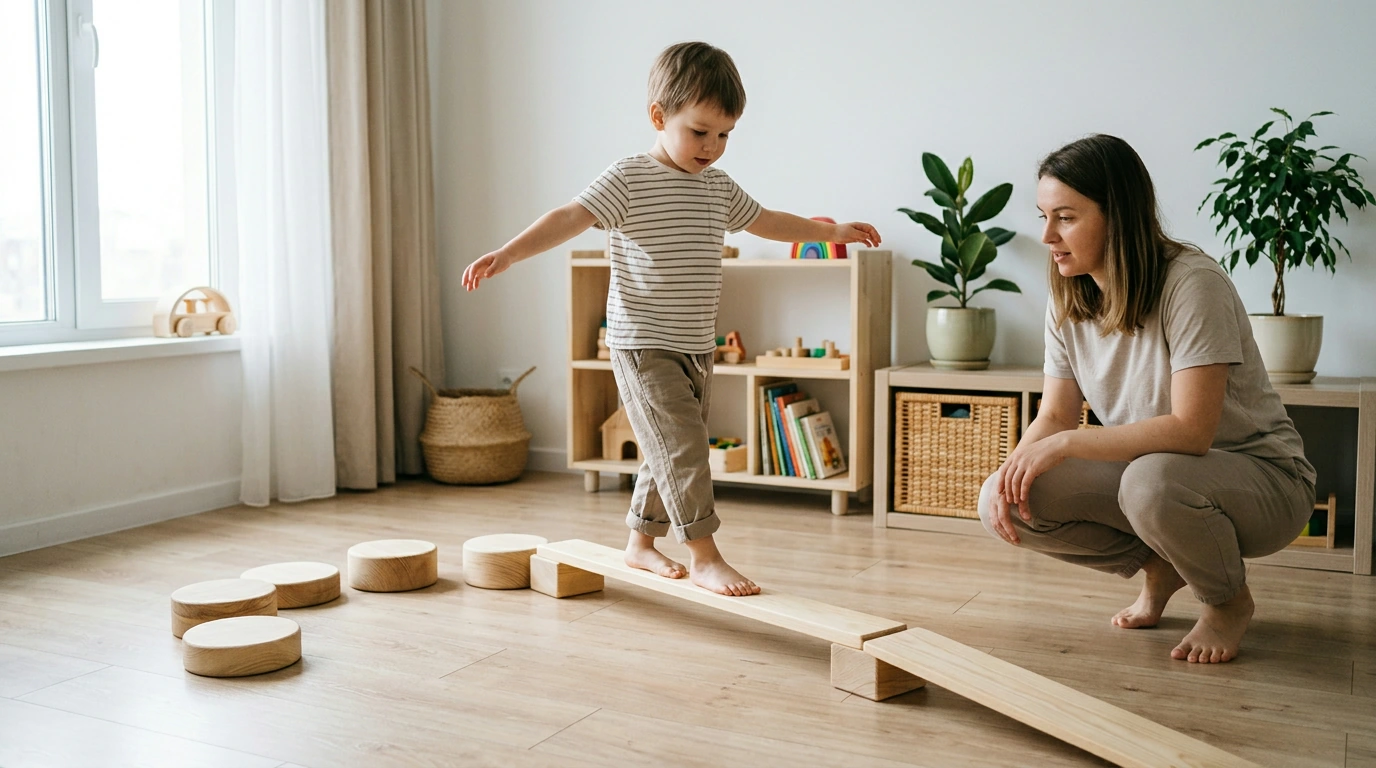
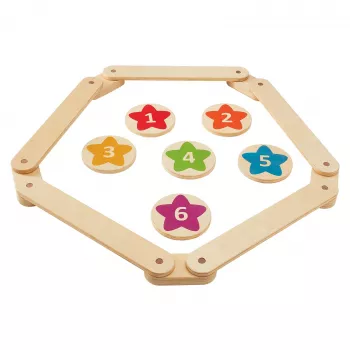
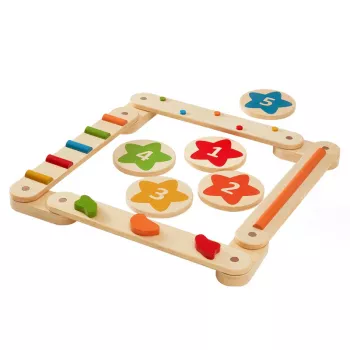
Active play gets easier when the setup is simple and the fun is obvious. Our 6PCS Kids Wooden Balance Beam & Stepping Stones set is designed for everyday movement games—balancing, stepping, hopping, and creating new “paths” again and again. It’s the kind of play that fits a living room on a rainy day, a backyard on a sunny afternoon, and a playroom when kids need a screen-free challenge. For more guidance, see Child Care Center Characteristics Associated With … – PMC.
Movement matters for growing bodies, and it doesn’t have to be complicated. The CDC recommends that school-aged kids get regular physical activity across the week, including active play and strengthening activities (CDC Physical Activity Guidelines). The American Academy of Pediatrics also emphasizes play as a key part of healthy development (AAP: The Power of Play). For further reading, see 25 Favorite Montessori Toys on Amazon – Mamas Cold Coffee.
What this 6-piece set is made for
- Create quick obstacle courses that keep kids moving without complicated assembly.
- Support balance practice through stepping, heel-to-toe walking, and controlled turns.
- Encourage coordination and body awareness as kids adjust speed, posture, and foot placement.
- Offer open-ended play: you can build routes, invent rules, and change the layout anytime.
- Work well for independent play, sibling games, or parent-guided challenges.
Everyday movement skills it helps practice
- Balance and stability: shifting weight from one foot to the other while staying steady.
- Coordination: matching eyes, feet, and timing when moving from piece to piece.
- Motor planning: figuring out how to step, turn, pause, and continue—especially when the route changes.
- Core engagement and posture: staying upright while moving slowly and carefully.
- Confidence through progress: repeating a path until it feels “easy,” then making it harder.
Simple play ideas by challenge level
| Level |
Setup |
Game idea |
Make it harder |
| Starter |
Straight line path |
Walk across slowly and freeze on each piece for 3 seconds |
Add a “no arms” round (hands on hips) |
| Growing |
Zig-zag path |
Step only on the edges, then return to center steps |
Time the round and try to beat the personal best |
| Confident |
Mixed spacing |
Hop between selected pieces (choose a color/spot rule if applicable) |
Carry a soft toy “delivery” without dropping it |
| Family |
Two routes side-by-side |
Relay: tag the next player after finishing the path |
Add a “quiet feet” rule to improve control |
Where it fits best: indoor and outdoor routines
- Indoor “movement break” station: set it up for 5–10 minutes between homework tasks or quiet activities.
- Playroom staple: keep pieces accessible so kids can build their own routes without waiting for an adult.
- Backyard obstacle course: combine with cones, chalk lines, or jump ropes for a full circuit.
- Party or playdate activity: create a shared challenge that keeps kids engaged without requiring screens.
- Classroom or therapy-style routines at home: repeat the same pattern weekly and track progress with simple goals (fewer wobbles, smoother turns, slower-and-steady control).
Safety and setup habits that make play smoother
- Choose a clear area: remove small toys, cords, and slippery rugs from the route zone.
- Start low and simple: use short routes first, then add turns and spacing as confidence grows.
- Use supervision for new challenges: especially when adding speed, hopping, or relay-style games.
- Footwear check: barefoot or secure, non-slip shoes often work best for controlled stepping (avoid socks on slick floors).
- Make “reset” the rule: if a piece shifts or the route feels unstable, pause and reset before continuing.
How to keep it interesting week after week
- Theme routes: “lava,” “jungle bridge,” “space walk,” or “delivery mission” turns simple stepping into imaginative play.
- Skill focus days: slow-control day (quiet feet), turning day (pivot carefully), or freeze day (hold a pose).
- Add light learning: call out colors, numbers, letters, or simple math prompts at each step (keep it fun, not formal).
- Sibling-friendly rules: each child designs one route; take turns trying each other’s paths.
- Progress markers: celebrate small wins—finishing without stepping off, using fewer hand swings, or completing a longer route calmly.
Product picks from our team
Quick buying snapshot
FAQ
What age is a kids balance beam and stepping stones set best for?
It works best when you match the challenge to your child: younger kids can start with simple stepping and short straight paths, while older kids can add turns, wider spacing, hops, and relay-style games. When you introduce a new rule (speed, hopping, carrying an item), close supervision helps keep play safe and confident.
How do you set up an indoor obstacle course without making it too hard?
Use a simple 3-step approach: clear a safe route area, start with a short straight line, and add only one change at a time (a turn, more spacing, or a freeze rule). Stable footing matters—avoid slick socks on smooth floors—and stay nearby while your child tries a new setup.
How can kids use balance beams and stepping stones for screen-free energy breaks?
Run a 5–10 minute routine: two slow-and-steady rounds, then one faster round, plus a few freeze holds (2–5 seconds each). Repeating the same route for a few days builds confidence, and you can rotate in a “soft toy delivery” or mini-relay to keep it fresh.
Recommended for you





Leave a comment