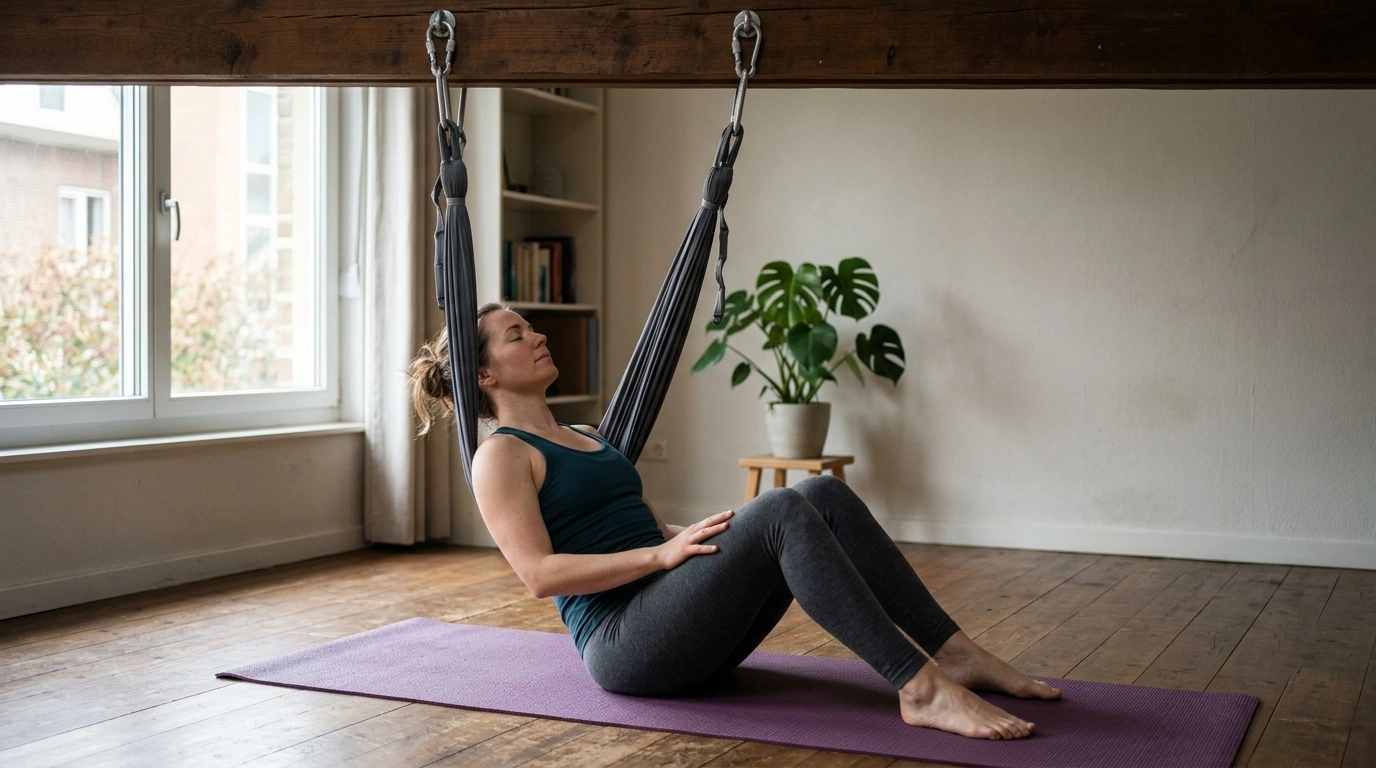
Aerial practice can turn a small corner of your room into a place to lengthen, reset posture, and move with more freedom. Our team put the Premium Aerial Yoga Swing Hammock Kit together for at-home sessions where comfort, adjustability, and confidence in your setup matter—whether your goal is a gentle decompression sequence, a mobility routine, or a playful strength-focused flow.
A swing adds “supported space” that a mat alone can’t always provide. When you use it with control (and at an appropriate height), it becomes a tool for traction, stability work, and breath-led pacing.
If you’re new to flexibility training, the basics still apply—warm up, move slowly, and prioritize consistency over intensity. The American Council on Exercise offers solid general guidance on flexibility and mobility work here: https://www.acefitness.org/resources/everyone/blog/.
Your practice is only as safe as your hanging system. Before you focus on flows or stretches, lock in a setup routine you can repeat without shortcuts.
| Anchor option | Best for | What to verify | When to skip it |
|---|---|---|---|
| Ceiling joist / beam with proper hardware | Dedicated home setup | Structural member location, correct hardware rating, correct installation into wood/structure | If the structure is unknown, damaged, or installation can’t be done correctly |
| Freestanding aerial frame | Renters and flexible room layouts | Frame load rating, stability on your flooring, sufficient height for intended poses | If it wobbles, shifts, or the rating is unclear |
| Doorway pull-up bar (temporary use only) | Very gentle, low-height supported stretches | Bar rating, secure fit, controlled movements only | For dynamic swings, inversions, or anything that introduces bounce |
| Outdoor overhead point (tree branch/beam) | Occasional outdoor practice | Point health/condition, conservative load rating, protection from abrasion | If weathered, cracked, or you cannot confirm strength |
If you plan to do any inversion-based work, it’s worth reviewing the benefits and risks of inversion approaches from a clinical perspective (especially if you’re managing blood pressure, eye pressure, or dizziness): https://my.clevelandclinic.org/health/treatments/22455-inversion-therapy.
Aerial feels intuitive once your nervous system trusts the support. The easiest way to build that trust is a short progression you can repeat without rushing.
If you want help learning safe progressions, working with a qualified teacher (even virtually) can reduce trial-and-error. Yoga Alliance maintains resources for yoga education and finding teachers: https://www.yogaalliance.org/.
A lower setup works well for supported stretching and beginner practice because you can keep your feet close to the floor for control. More ceiling height can help with longer body lines and some inversion entries, but it’s still smart to start low and only raise the swing once you can enter and exit positions consistently.
It can be when you start with a low height, choose stable positions, move slowly, and inspect your setup every session. Avoid inversions at first, and if you have medical conditions that could be affected by pressure changes or traction, get professional guidance before you begin.
Gentle traction and supported stretching can feel relieving for some people, especially when tightness is linked to prolonged sitting. It isn’t a medical treatment, so stop if discomfort increases, and seek qualified care if symptoms persist or include sharp pain, numbness, or weakness.






Leave a comment