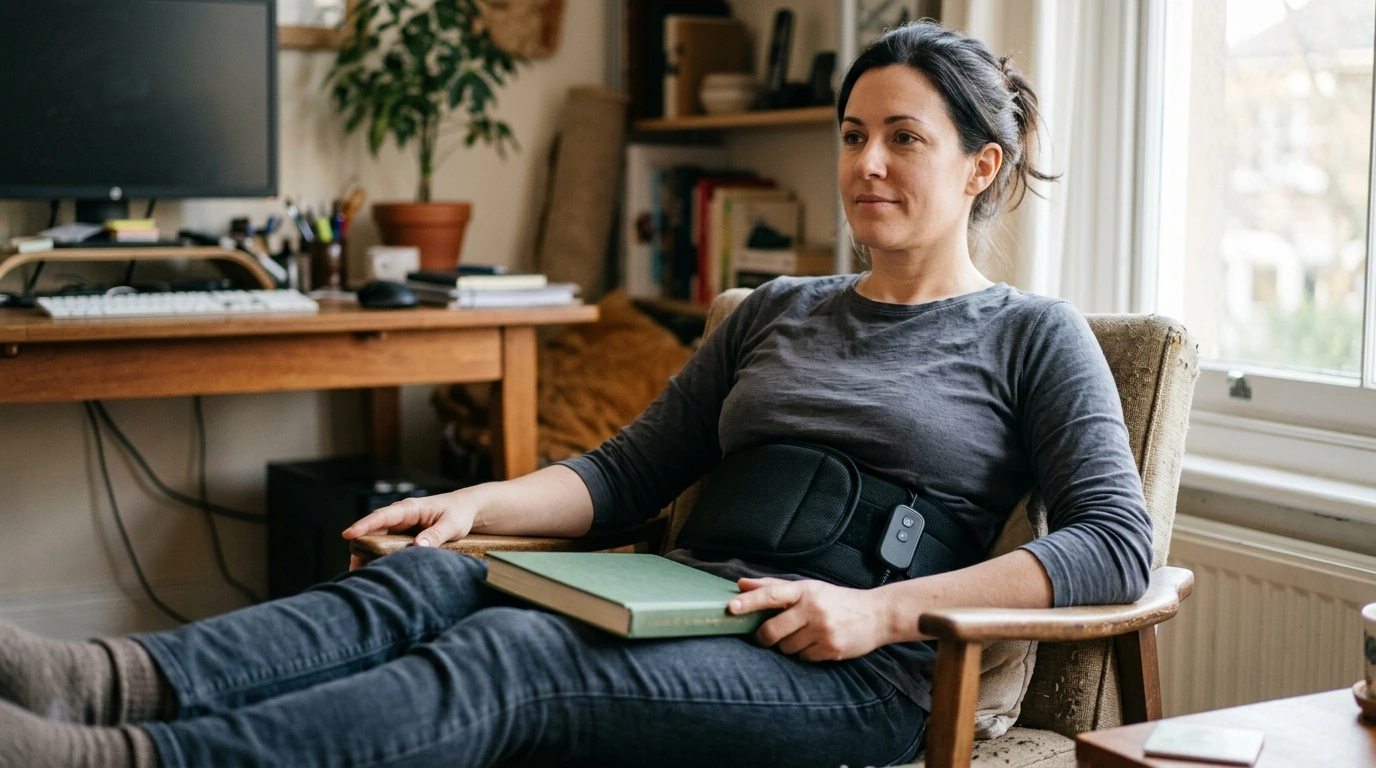
Long sitting hours, repetitive lifting, or a busy on-the-go schedule can leave the lower back feeling tight and overworked. Our team built the Infrared Heated Waist Massager Belt with Vibration & Lumbar Support for simple, at-home comfort: wrap it on, choose a comfortable heat level and vibration setting, and let the belt deliver steady warmth and targeted stimulation while the lumbar support helps you hold a more supported posture during downtime.
Used in short, repeatable sessions, a wraparound belt can be an easy “reset button” for days when your back just feels tired from normal life—especially when you want hands-free relief while you sit, read, or decompress.
It’s not a replacement for medical care, but it can be a practical way to add warmth and calming stimulation into your routine—two of the simplest inputs for day-to-day comfort.
Heat is often the first thing people reach for when their lower back feels stiff. Warmth can make the area feel more comfortable and “unlocked,” particularly after static postures like sitting or standing in one position. (For general background, Cleveland Clinic provides a helpful overview of heat therapy basics: https://my.clevelandclinic.org/health/treatments/heat-therapy.)
Vibration adds a second layer: a gentle, massage-like sensation that many people find more relaxing than heat alone. Together, you can dial in a session that matches the moment—lighter and more stimulating, or steady and calming.
| Moment | Goal | Suggested approach |
|---|---|---|
| Desk day stiffness | Unwind and feel looser | Start with gentle heat, then add vibration for short cycles |
| After activity | Relax the lower back area | Moderate heat + light vibration; keep posture neutral and supported |
| Evening wind-down | Settle into comfort | Steady warmth with minimal vibration for a calmer session |
| On-the-go breaks | Quick reset without lying down | Short session focused on comfort; avoid overtightening the belt |
A big reason people give up on at-home routines is friction: having to prop pillows, maintain posture, or keep a handheld device in place. Built-in lumbar support helps reduce that friction by giving your waist a held, steadier feel during rest.
If you’re pairing relaxation with a little mental downtime, a simple add-on that many customers like is calming audio during a session—our team often suggests a comfortable set of earphones like the High-Fidelity 9.2mm Beryllium-Coated Single Driver In-Ear Headphones for a wind-down playlist or guided breathing.
The best routine is the one you’ll actually repeat. You don’t need long sessions or intense settings; consistency and comfort tend to matter more than “cranking it up.” If you’re also working on staying active and using self-care measures for back comfort, the NHS encourages practical, steady approaches (see: https://www.nhs.uk/conditions/back-pain/).
| Time available | Session structure | Best for |
|---|---|---|
| 5–8 minutes | Low heat + brief vibration | Midday reset, travel break, quick unwind |
| 10–15 minutes | Heat steady + vibration as needed | After work, post-workout cooldown |
| 15–20 minutes | Comfortable heat + minimal vibration | Evening wind-down and relaxation |
Snug enough to stay in place without sliding, but not restrictive. It shouldn’t pinch, limit breathing, or create pressure points—steady contact and comfort matter more than tightness.
Yes. Many people alternate or combine them for a more customized feel; start low and adjust gradually so the session stays comfortably warm and relaxing.
It depends on your comfort and routine, but short sessions used consistently are common. Avoid excessive intensity, and take breaks if the area starts to feel sensitive.






Leave a comment