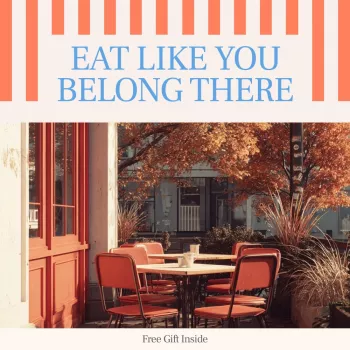
Great trips are remembered in flavors: the bakery with the line of regulars, the corner café where lunch feels unrushed, the tiny market stall serving one perfect thing. Tourist-trap restaurants can look tempting—big menus, prime locations, flashy photos—but they often cost more and deliver less. This guide lays out a simple, repeatable way to “eat like you belong there” in any city, even on a short schedule. The goal is confidence: knowing what to look for, what to avoid, and how to choose places that locals actually use. If planning time is limited, our digital download Eat Like You Belong There – Travel Food Guide (Digital Download) turns these steps into a practical, packable checklist you can keep on your phone.
When you plan meals around how a city actually moves, you naturally drift toward places built for repeat customers (not one-time foot traffic). Try these anchors:
| What you notice | More likely a local spot | More likely a tourist trap |
|---|---|---|
| Menu size | Short or focused menu; clear specialties | Huge menu covering many cuisines or every “famous” dish |
| Location | A block or two off the main landmark streets | Directly on the busiest sightseeing strip |
| Who’s eating there | Regulars, families, workers, groups of friends | Mostly tourists; lots of menu-photo browsing |
| How the food is described | Simple, specific descriptions; fewer buzzwords | Overhyped claims (“best in the world”), lots of photo callouts |
| Pacing | Natural rhythm; staff not rushing for turnover | Hard sell at the door; pressure to sit quickly |
When you’re hungry and short on time, you need a method that doesn’t rely on perfect research. Our team uses this quick decision loop:
Travel is messy: plans change, energy dips, and decision fatigue hits hard when everyone’s hungry. That’s why our team built Eat Like You Belong There – Travel Food Guide (Digital Download) around real conditions—limited time, limited patience, and too many options. You can use it before you go to set a few neighborhood anchors, then use it on the ground to make quick calls without spiraling into endless tabs.
If you want a simple travel add-on for the “get there” part of your day—planes, trains, long walks—our High-Fidelity 9.2mm Beryllium-Coated Single Driver In-Ear Headphones are an easy way to make commutes and layovers feel calmer, so you arrive with enough bandwidth to actually enjoy the meal you found.
For broader trip planning and cultural awareness, we also recommend skimming the U.S. Department of State’s Traveler’s Checklist before you fly, and exploring how food and culture intersect through UNWTO’s Tourism and Culture resources.
Aim for about 10–15 minutes on foot (roughly 3–5 blocks), especially if you’re leaving a main plaza or landmark corridor. Historic centers and night markets can be exceptions, but neighborhood streets where locals run errands usually offer better value and more consistent food.
No—ratings can be skewed by one-time visitors who prioritize location or photos over repeat-worthy food. Look for patterns in recent reviews (the same dish praised repeatedly), then confirm with timing, menu focus, and whether locals are actually eating there at normal mealtimes.
Ask, “What do people usually order here?” and follow it with the house specialty if they have one. If you’re sharing, use the two-dish rule: one safe pick and one new-to-you option.







Leave a comment