Electrical Lockout/Tagout That’s Clear, Consistent, and Ready to Deploy
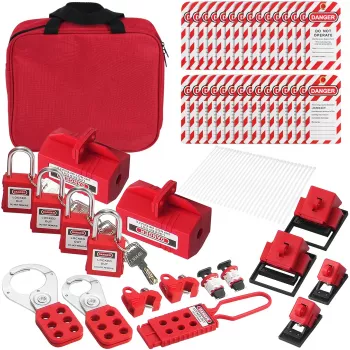
Lockout/tagout works best when the right tools are within arm’s reach—and when every person on the team can recognize the setup instantly. Our 47-piece electrical lockout tagout kit is built for day-to-day control of electrical energy sources during service, maintenance, and inspection. It’s a practical, job-ready set for organizing lockout points, standardizing procedures, and keeping compliance steps easy to follow from shutdown to verification.
If you’re building repeatable habits around hazardous energy control, this kit helps you keep the “lock, tag, and verify” cycle consistent from one job to the next—whether you’re on a planned PM, a downtime repair, or a quick inspection that still requires full control of the circuit.
What This Kit Helps Prevent During Electrical Work
- Unexpected energization during troubleshooting, cleaning, adjustments, or component replacement
- Accidental breaker re-close or device operation while someone is inside a panel or working downstream
- Confusing “who locked it out” situations—tags and lockout devices support clear ownership and communication
- Improvised lockout methods that slow down the team or fail a site safety audit
- Missed steps in the lockout cycle (shutdown, isolate, lock, tag, release stored energy, verify)
To align your program with recognized requirements, it helps to reference the core standards that guide most workplace procedures, including OSHA 29 CFR 1910.147 and the electrical work practices in NFPA 70E.
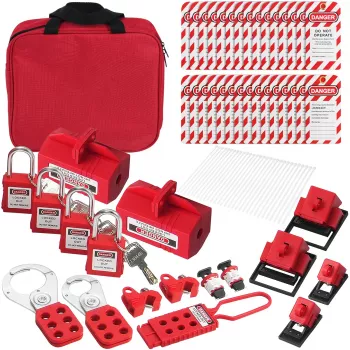
Inside a 47-Piece Complete Safety Set (and How Each Group Gets Used)
- Lockout devices: used to physically block switching/energizing at common electrical isolation points so the control can’t be operated
- Safety padlocks: used to secure the lockout device and create a one-person-one-lock control point for accountability
- Hasps (group lockout support): used when multiple workers or trades need individual locks on the same isolation point
- Tags and ID components: used to communicate status, ownership, date/time, and instructions at the point of isolation
- Carry/case organization: supports faster deployment, easier inventory checks, and a consistent “kit lives here” storage routine
When your kit is complete and organized, you spend less time searching for “one more lock” and more time following the procedure exactly as written—especially during urgent calls when distractions are high.
A Simple Workflow for Using an Electrical Lockout Tagout Kit on the Job
- Prepare: identify all energy sources (primary feed, control power, backfeed, stored energy) and notify affected employees
- Shut down: stop equipment using normal procedures before isolating energy sources
- Isolate: open the breaker/disconnect and apply the correct lockout device from the kit
- Lock and tag: add the padlock(s) and tag(s); for multi-person jobs, add a hasp so each person uses their own lock
- Release stored energy: discharge capacitors, bleed pneumatic/hydraulic energy if present, and block moving parts where required
- Verify: attempt start/operate using the normal controls (as appropriate) and test for absence of voltage with approved methods
- Complete the work: maintain the lockout until all guards are in place and personnel are clear
- Restore power: remove tools, account for workers, remove locks/tags under procedure, and re-energize in a controlled sequence
Our team’s practical rule: if a task crosses the line from “operate” to “service,” you want your isolation point locked, labeled, and verified—not just switched off.
Where This Kit Fits Best: Common Use Cases for Maintenance and Facilities Teams
- Electrical panels and branch circuits: standardizing breaker lockout and clear tagging for repeat tasks
- HVAC service: locking out local disconnects and preventing accidental restart during compressor/fan work
- Production equipment downtime: supporting group lockout during line maintenance and changeovers
- Commercial buildings: helping facilities teams keep lockout devices ready for emergency and planned service
- Contractor coordination: making lockout ownership visible and reducing handoff confusion when multiple crews are involved
Quick Reference: Match the Lockout Method to the Situation
LOTO Selection Cheat Sheet for Electrical Tasks
| Situation |
Recommended kit components |
Why it’s the safer choice |
| Single technician servicing a de-energized circuit |
Lockout device + 1 safety padlock + tag |
Prevents re-energization and clearly identifies ownership |
| Multiple workers on the same circuit or machine |
Lockout device + hasp + individual padlocks + tags |
Each person maintains personal control with their own lock |
| Shift change or extended downtime |
Lockout device + padlock(s) + detailed tag info |
Reduces misunderstandings across teams and time windows |
| Troubleshooting with repeated verify steps |
Organized kit access + consistent tags |
Supports repeatable steps and clear communication during stop/start cycles |
Setting Up a Kit That Stays Ready: Storage, Labeling, and Restock Habits
If you’re refining your written approach to hazardous energy, ANSI/ASSP Z244.1 is another widely referenced framework for lockout/tagout and alternative methods—useful for aligning roles, audits, and procedural clarity.
In-Stock Picks from Our Team
FAQ
Is a lockout/tagout kit only for electricians?
No. If you’re an authorized employee performing servicing or maintenance where hazardous energy could hurt someone, electrical LOTO can apply to you—facilities, maintenance, HVAC, and production technicians commonly use it under site procedures and training requirements.
When is a hasp needed during electrical lockout?
Use a hasp for group lockout when more than one person must maintain personal control over the same isolation point. It ensures each individual applies their own lock so power can’t be restored until everyone is clear.
Do tags replace locks in lockout/tagout?
No. Tags communicate status and ownership, but they don’t provide physical restraint. Whenever possible, you should use a lockout device and padlock along with tags, following your facility’s written program and applicable standards.
Recommended for you






Leave a comment