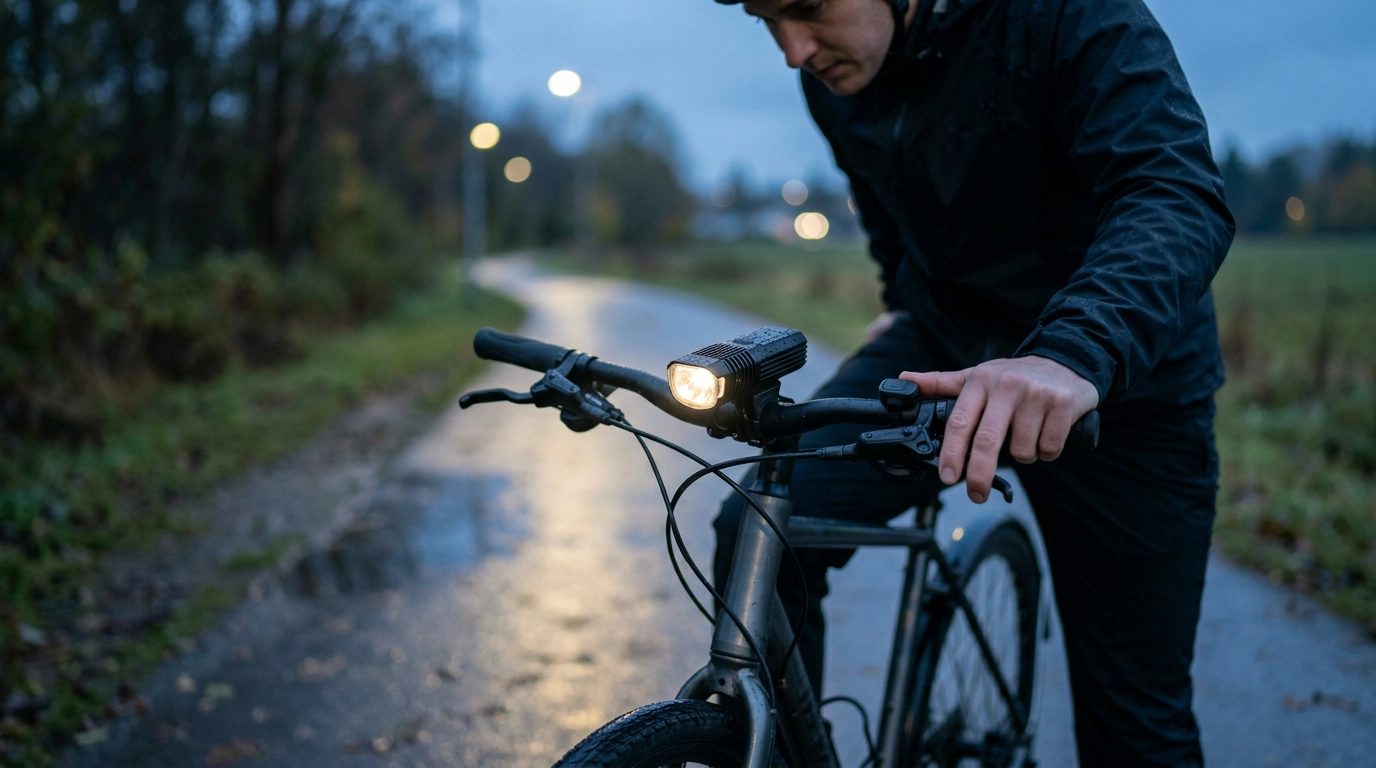
When a ride stretches past sunset, a front light becomes part of your plan—not just another item on your handlebars. Our 1600 Lumen Waterproof Bike Headlight with Wireless Remote Control brings a stated 1600-lumen output, waterproof construction, and wireless control to rides where light conditions can change. The useful question is how to set it up for the route, the weather, and the people sharing your path.
Lumens describe light output. They do not tell you exactly how far you will see on every street or trail. A beam that feels ample on a familiar road may seem different on an unlit path, around a bend, or against glare from approaching vehicles. Your speed and the condition of the surface ahead matter, too: you need time to notice and respond to what the light reveals.
A front light also helps other people notice you, but being visible and seeing the route are separate goals. Beam placement, surrounding light, and traffic affect both. Before you leave, look at where the beam lands from your riding position, then consider whether it will shine into the eyes of approaching riders, pedestrians, or drivers. Where the light offers brightness adjustments, choose an appropriate setting for the conditions rather than assuming the brightest option is always the most considerate one.
The wireless remote is appealing because you can manage the headlight without reaching up to the light itself. That can be useful when you expect a darker stretch or need to respond to changing conditions around oncoming traffic. The remote does not remove the need to pay attention, however. Learn its controls while stopped, so you are not trying to figure them out in motion.
Make any adjustment only when it is safe. If a control takes more attention than you can spare, pull over first. Our team favors that simple habit over trying to solve a lighting problem while navigating a crossing, a rough patch, or a crowded path.
A waterproof headlight is reassuring when the forecast shifts or your route includes damp roads. It is still worth treating the light and its mount as riding equipment that needs attention; “waterproof” alone is not a reason to assume it can be submerged or left without care after a muddy trip.
Before riding, make sure the headlight is secure and that its beam stays aimed where you intend when the bike moves. After a wet ride, wipe the light down, inspect the mount and controls, and follow the product’s care instructions. A quick post-ride look can help you catch a loose attachment or accumulated grit before your next departure.
Remember that a headlight is one part of a visibility setup. It does not do the job of a rear light or reflectors, particularly for someone approaching you from behind.
A good pre-ride check starts with the route, not a lumen number alone. Think about where streetlights end, where drivers or pedestrians may cross your path, and whether the pavement changes. Aim the beam toward the route ahead while avoiding unnecessary glare for people coming toward you. The table below keeps those decisions practical without assuming a particular lighting mode or runtime.
| Consideration | What to check | Why it matters |
|---|---|---|
| Route | Look for unlit stretches, crossings, and changes in road surface. | Ambient light affects how much illumination is useful. |
| Beam position | Check where the light falls from your riding position. | A well-aimed beam helps illuminate the route without directing avoidable glare at others. |
| Controls | Practice using the remote before moving. | Familiar controls are easier to use when your attention needs to stay on the ride. |
| Power | Check the light’s charge or power status before departure. | Brightness is only useful if the light lasts for your planned trip. |
Plan for the whole trip, including the way home. A route that begins at dusk can be fully dark by the return leg. If you are unsure whether the light has enough power for your plans, address that before setting off rather than counting on a bright beam at the start to carry you through.
Pair your front headlight with an appropriate rear light, and check local cycling-light requirements before you ride. Reflective details can add another way for others to notice you, while predictable riding helps them understand where you are going. None of these measures eliminates traffic risks, so continue to watch for turning vehicles, crossing pedestrians, and changes in the road.
For broader riding guidance, see NHTSA’s bicycle safety information and the League of American Bicyclists’ Smart Cycling tips. If you listen to audio after a ride, our High-Fidelity 9.2mm Beryllium-Coated Single Driver In-Ear Headphones are an option for off-bike time; while riding, keep your attention on the sounds and activity around you.
If a bright front light with wireless control suits your plans, take a closer look at the 1600 Lumen Waterproof Bike Headlight with Wireless Remote Control. We want you to choose it as part of a setup that fits your route—not as a substitute for a careful pre-ride check.
It depends on the setting and where you aim the beam. Avoid directing unnecessary glare toward oncoming riders, pedestrians, and drivers.
Yes. Wipe it down, check the mount and controls, and follow the product’s care instructions.
Yes. A front headlight does not provide the same visibility from behind, so check local requirements and use suitable rear lighting and reflectors.






Leave a comment