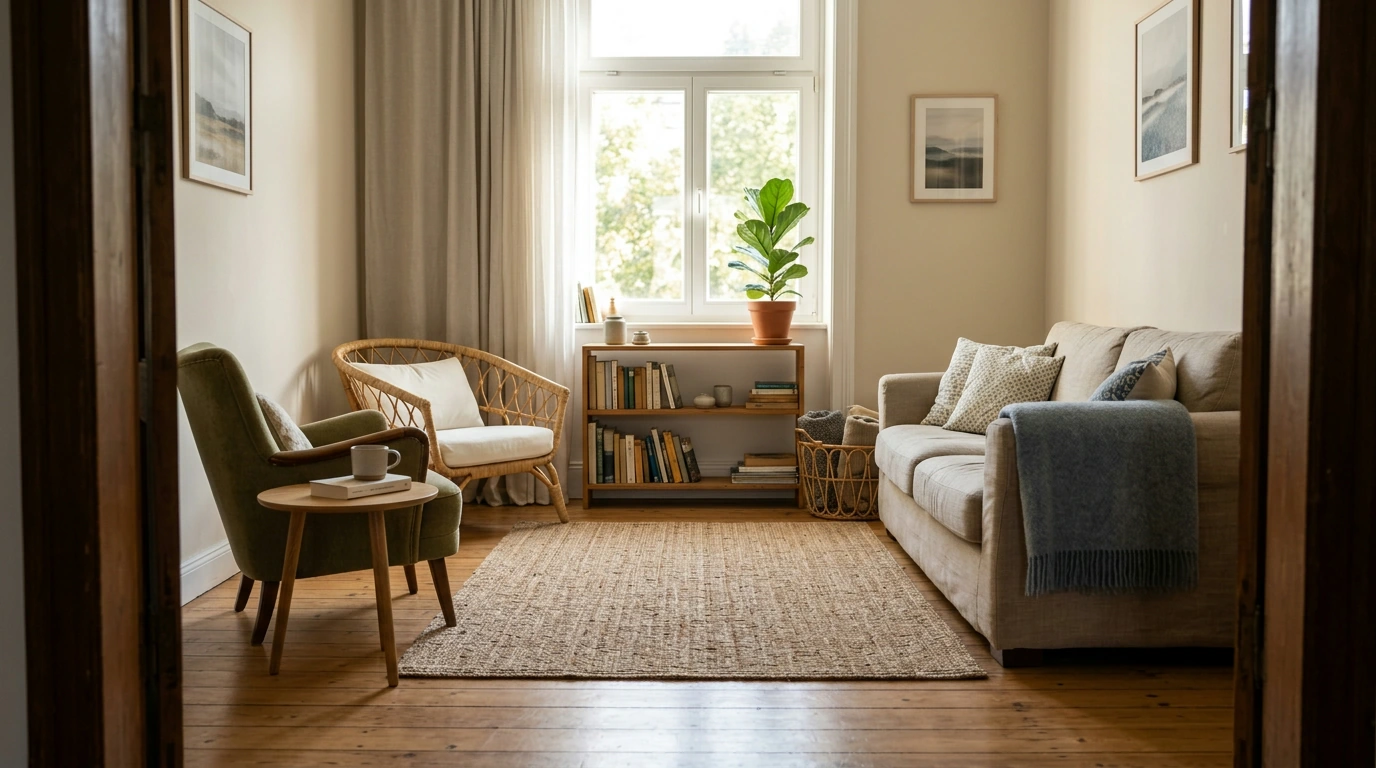
A room can feel crowded even when every piece of furniture has a purpose. Sometimes the issue is simply where things sit: a chair interrupts the walk to the window, or a side table makes the doorway feel tight. Before you decide to buy, donate, or store anything, try changing the layout. A few thoughtful moves can make the furniture you already own easier to use—and give the room space to breathe.
Walk through the room as you normally would. Trace the route from the door to your usual seat, then to windows, storage, and adjoining rooms. Notice where you turn sideways, step around a table, or pause to let someone pass. Those small detours are useful clues.
Begin by moving portable items—stools, baskets, plants, and small tables—out of the route. Live with the clearer path before moving heavier furniture. You may find that the room already feels more open. Comfortable clearance depends on the people who use the space, particularly anyone using a mobility aid. For guidance on accessible routes, the U.S. Access Board is a helpful reference; your everyday test is whether people can move through the room comfortably without obstacles.
Ask what the room helps you do most. Is it where you talk with friends, read, eat, or unwind? Place the main furniture piece to support that activity, then let smaller pieces follow its lead. In a living room built for conversation, for example, seats should feel connected without forcing people to cross the seating area to reach the door.
A sofa does not automatically belong against a wall. Floating it can define a useful seating area, provided natural paths remain open behind or beside it. Step back to the doorway and look in. Your eye should have a calm place to land, rather than meeting several pieces competing for attention at once.
For each piece, ask three questions: What does it help you do? Does its current position make that task easier? Does something else already do the same job? A chair that gets daily use may deserve a better spot; a table that only catches clutter may not need to return at all.
Try moving a piece to another position—or another room—before deciding to part with it. We favor a room that works for your life over an arbitrary furniture count. The goal is not to own the fewest pieces. It is to make each piece useful without letting it crowd out movement, light, or comfort.
| Piece | Keep it when… | Try changing… |
|---|---|---|
| Coffee table | It provides a useful surface without blocking the seating area. | Its size or position if everyone has to walk around it. |
| Extra chair | It is regularly used and easy to reach. | Its location if it narrows a doorway or route. |
| Storage unit | It holds items you need nearby. | What it contains or where it stands if it crowds the room. |
Look at your windows from the places where you spend time. A tall bookcase or bulky chair may block more daylight than you realize, especially during the hours you use the room most. Move it if you can do so without creating a new obstacle. The U.S. Department of Energy’s daylighting guidance explains why access to natural light is worth considering in a room’s design.
Empty floor and wall space also have a job: they give your eye a place to rest. A corner does not need a chair simply because one fits there. Leave newly opened areas alone for several days before adding anything back. Notice whether you miss the item itself or only the habit of seeing it there.
Once the room looks better, put it through an ordinary day. Can doors and drawers open fully? Can you reach the lamp from your seat? Can someone sit down without shifting a table first? A layout that photographs neatly but interrupts your routine is not finished.
Our team recommends working in this order: clear the main route, position the largest piece, arrange the supporting furniture, and return small items one at a time. Stop when each addition no longer improves how the room works. If you have a dedicated reading spot, even a personal item such as in-ear headphones is easier to enjoy when the chair, light, and nearby surface are thoughtfully placed. Revisit the arrangement as your routines change; openness matters most when the room remains comfortable to live in.
If you want to continue working through furniture placement and open-space decisions at your own pace, our Less Furniture More Freedom digital download is a guide focused on room flow and lighter living. You do not need to redesign your home in one afternoon. Clear one frequently used path today, use the room as usual, and reassess what still needs to move.
No. First try moving pieces to clear everyday routes and ease crowding around doors or windows. Remove an item only if it no longer supports how you use the room.
Start with the route from the entrance to the main seating area. Position the largest piece around the room’s primary activity, then add smaller pieces back one at a time.





Leave a comment