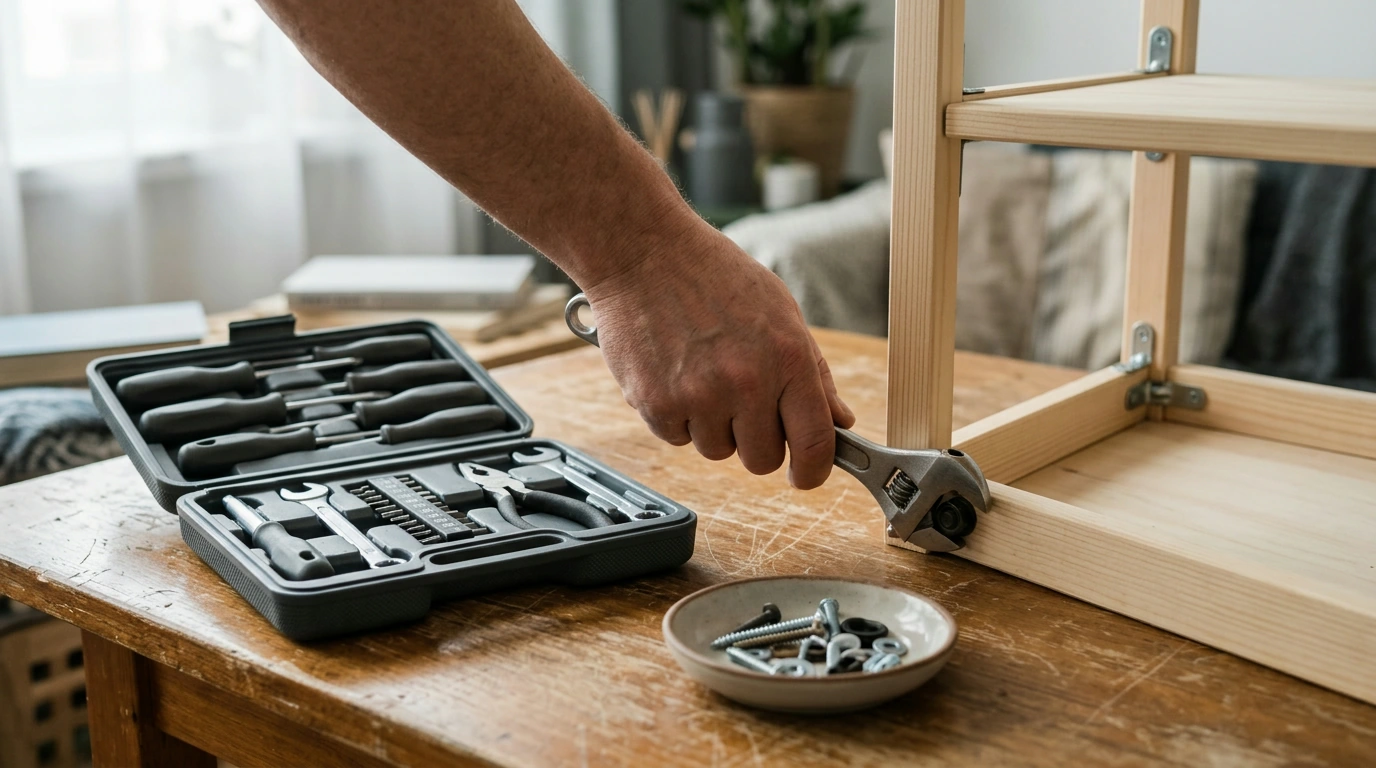
A loose drawer of tools can turn a five-minute fix into a hunt for the right screwdriver. Keeping everyday hand tools together gives you a better starting point when a cabinet handle loosens or a piece of furniture needs assembly. Our 198-Piece Home Repair Tool Kit with Wrench and Compact Storage Case is one option for building that routine. The useful question isn’t whether 198 pieces sound like enough; it’s whether the tools you need are present, fit the job, and are in good condition.
Small household jobs tend to arrive without warning: a handle starts to wobble, a flat-pack shelf needs putting together, or an accessible fixture needs a minor adjustment. A general home kit can give you one place to start instead of sending you through several drawers. It may also help you see which tools you use often enough to keep close at hand and which specialized tools you should buy only when a task requires them.
Piece count is less important than fit. A driver that slips in a screw head can damage the fastener, while a loose wrench can round a nut. Before starting, identify the fastener and choose a tool that seats securely. If nothing in the case fits, don’t make the closest-looking piece work by applying more force.
The wrench in this kit can be useful for appropriately sized nuts and bolts when you have room to hold and move it safely. Check its fit before turning: it should grip securely rather than rock on the fastener. For other jobs, compare the kit’s current contents with the fasteners and instructions in front of you. Furniture, wall hardware, and household fixtures do not all call for the same tools.
Use this quick check to plan a small repair. The tool guidance is general, not a list of accessories included in the kit.
| Task | What to check | When to pause |
|---|---|---|
| Tighten a loose cabinet handle | Find a driver that fits the fastener without slipping. | The screw spins without tightening, or the cabinet material is damaged. |
| Assemble flat-pack furniture | Match each fastener to the correct tool and follow the furniture instructions. | Parts do not align, or a fastener needs excessive force. |
| Adjust an accessible nut or bolt | Make sure the wrench fits securely and has room to move safely. | The fastener is seized or rounded, or it connects to plumbing, gas, or electrical equipment. |
| Hang a lightweight item | Confirm the wall material, suitable mounting hardware, and item weight. | The wall may conceal wiring or pipes, or the load needs specialist mounting. |
Preparing the work area matters, too. Set out the parts where they won’t roll away, read any assembly instructions first, and make sure you can see the fastener clearly. If you listen to instructions through our in-ear headphones, pause the audio while you work so you can give the task your full attention.
A dedicated case is most helpful when tools go back into it after every job. Returning each piece to its place keeps the work area tidier and makes an empty spot easier to notice before a tool disappears. Choose a dry, accessible storage location that children cannot reach, and check that the case is closed securely before carrying it.
After a repair, wipe down tools as needed, put them away, and take a moment to inspect anything that slipped, bent, or became damaged. Replace a worn tool rather than saving it for “one more” job. That short reset makes the kit more useful the next time a loose handle interrupts your day.
We see a home kit as a starting point for straightforward, occasional hand-tool work—not a substitute for trade-specific equipment or training. Stop before working on live electricity, gas connections, or structural elements. A repair that could cause a leak or injury also deserves more than a quick turn with a wrench; call a qualified professional when you are unsure what a connection controls.
For any hand-tool job, inspect the tool first, use the proper fit, and keep your hands clear of the working edge and the path the tool would take if it slipped. Don’t force a stuck fastener. OSHA’s hand and power tool guidance likewise emphasizes selecting, maintaining, and using tools safely. Although written for workplaces, those basic precautions are useful reminders at home.
Before buying, list three or four small jobs you actually expect to do—perhaps assembling furniture, tightening handles, or adjusting an accessible bolt. Then compare those needs with the current contents of our 198-piece kit. Look beyond the total: you need the right type and size of tool for each fastener, and some projects will still require task-specific hardware or equipment purchased separately.
It can be a convenient starting point for occasional small repairs. Compare its listed contents with the jobs you anticipate, and buy any missing task-specific tools separately.
Use it on nuts and bolts it fits securely, with enough space to move safely. Don’t force a poor fit or use it on gas, electrical, or unfamiliar plumbing connections.
Choose a dry, accessible place away from children. Return tools to the case after each job and make sure it is securely closed before moving it.






Leave a comment