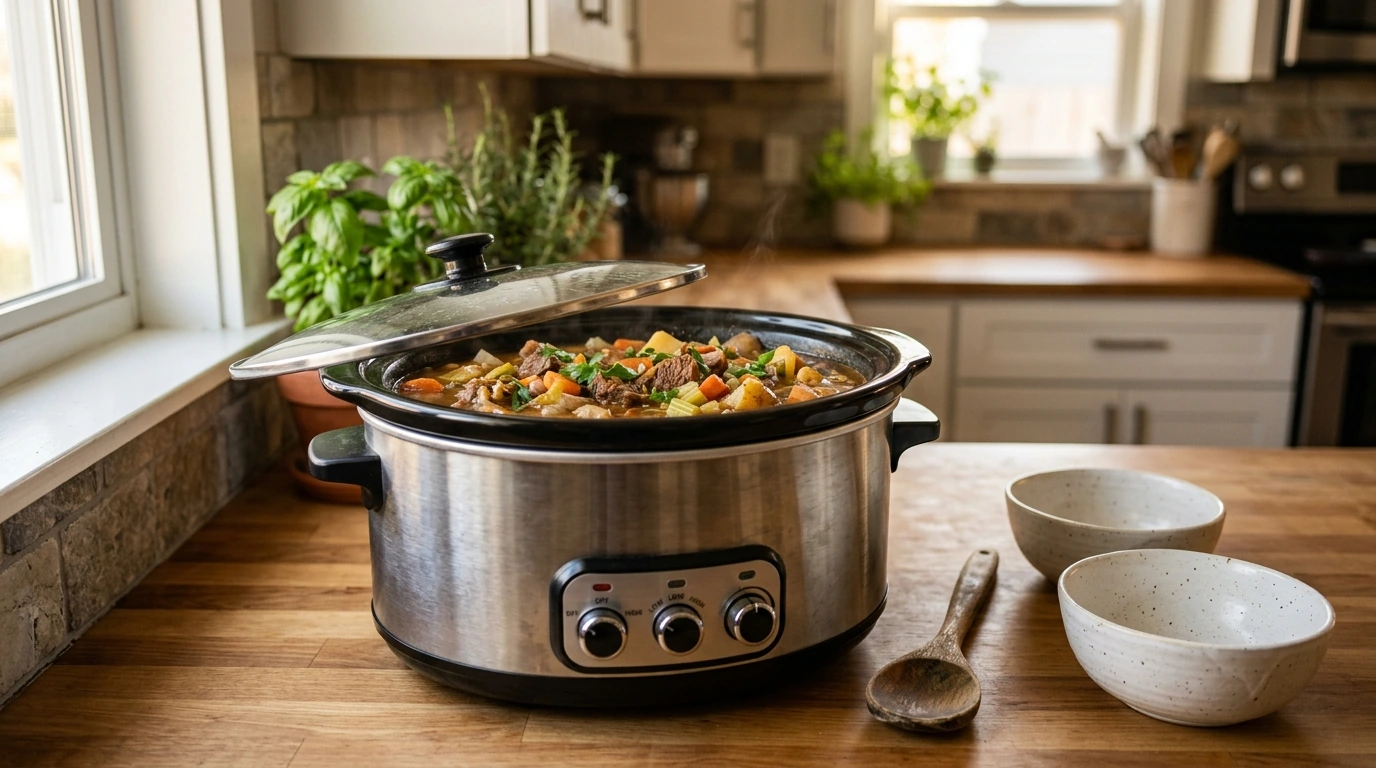
Some meals taste like they took all day—because they did, just without taking all of your attention. A 6-quart stainless steel slow cooker is the kind of countertop staple that makes busy days feel calmer: load it up, set the heat, and come back to tender stews, pulled-style meats, cozy soups, and hands-off sides. Our team put together this guide to show you what this size is great for, how to use it smoothly from morning to dinner, and the small habits that help slow-cooked food turn out consistently delicious.
A 6-quart bowl is a sweet spot for everyday cooking with enough headroom for extras. It’s large enough for batch soups, braises, chili, and potluck portions, while still being practical for regular weeknights.
Slow cooking also supports a steady routine: you can prep before work or after school drop-off, then return to a meal that’s ready when you are. And if you prefer appliances that look tidy between uses, a stainless steel exterior blends easily with modern kitchens and tends to stay presentable even when left out.
Most importantly, you get a wide comfort-food range in one vessel—shredded chicken for tacos, hearty lentil soup, braise-style meats that turn fork-tender, warm dips, oatmeal, mulled cider, and holiday sides—without needing active stovetop time.
This size shines when you want dinner plus leftovers, or when you’re feeding a few people without upgrading to an extra-large appliance.
| Meal type | Best for | Planning tip |
|---|---|---|
| Soup/stew | Big batches for leftovers | Leave room for stirring; avoid filling to the brim |
| Chili/beans | Long cook times, deep flavor | Add tender ingredients (like delicate veg) later if possible |
| Braise-style meat | Shreddable, fork-tender results | Keep enough liquid for moist heat; trim excess fat for a cleaner sauce |
| Party sides | Hands-off holding and serving | Use low/warm for serving once fully cooked |
| Breakfasts/desserts | Oats, bread pudding-style bakes | Grease insert if needed; watch sweet sauces near edges |
Slow cookers are designed for long cooking, but smart prep and storage habits keep results safer and better-tasting. For USDA-specific guidance, see USDA FSIS: Slow Cookers and Food Safety.
For many households, a 6-quart slow cooker is a comfortable fit for family dinners, with enough space for batch soups, chili, and planned leftovers. It’s also a convenient size for potlucks and casual gatherings without stepping up to an extra-large cooker.
You’ll get the most consistent cooking when the cooker is comfortably filled but not packed to the top, leaving space for simmering and heat circulation. Avoid running it nearly empty or overflowing, since both can lead to uneven results.
For best safety and more even cooking, thaw meat first so the slow cooker can reach a safe temperature efficiently. This also helps your dish cook more predictably from edge to center.






Leave a comment