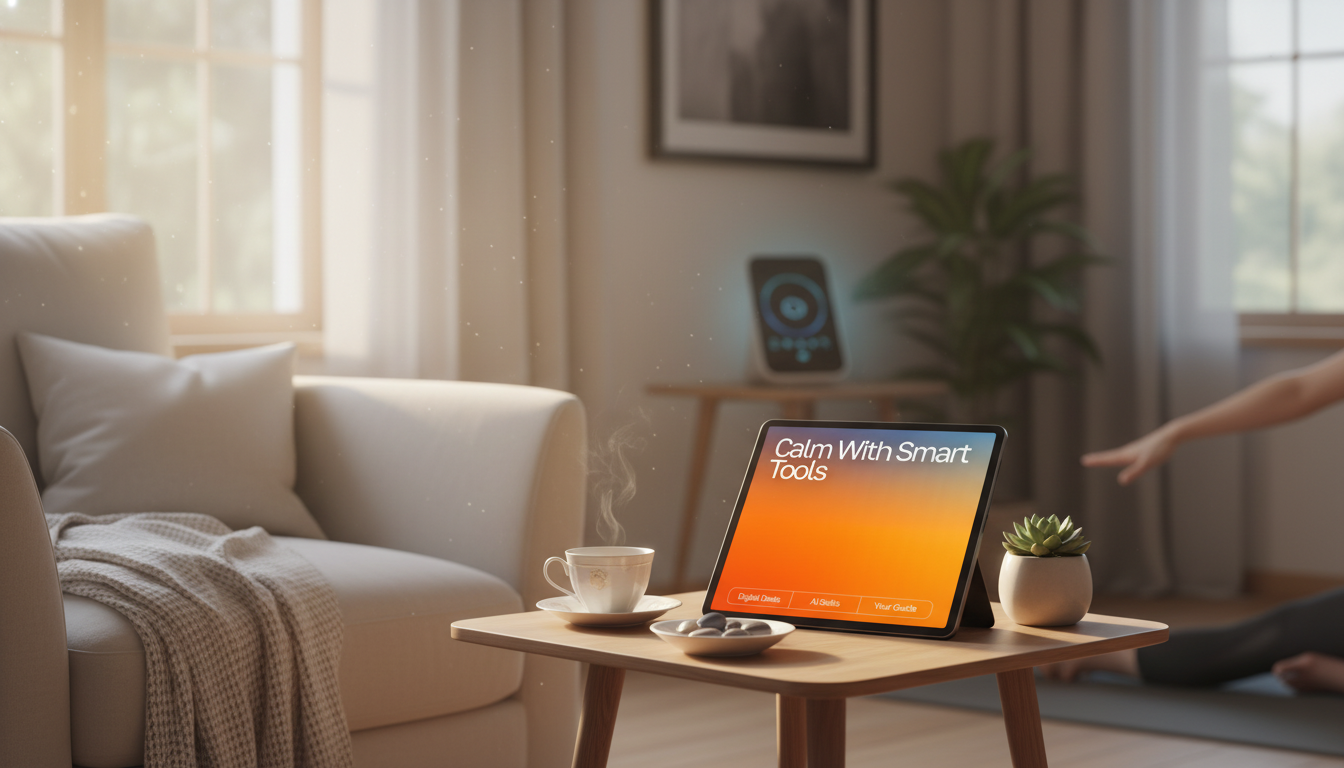
Daily stress can show up as mental overload, tight shoulders, restless sleep, or difficulty focusing. Calm With Smart Tools is a digital guide designed to turn small moments at home into practical calm—combining mindfulness basics with AI-friendly routines that fit real schedules. The goal is straightforward: reduce stress intensity, build steadier habits, and make relaxation easier to repeat.
Stress affects the mind and body in real, measurable ways, from tension and irritability to sleep disruption. If you want a credible overview of how stress can impact physical health, the American Psychological Association outlines common effects on the body here: https://www.apa.org/topics/stress/body.
“Smart tools” doesn’t require expensive gadgets or a complex setup. It’s a practical way to use what’s already around you—your phone, a notes app, basic reminders, and simple guided audio—to make calming habits easier to start and easier to repeat.
This approach is built for real life: short time windows, changing energy levels, and days when motivation is low. It’s especially helpful when you want a simple structure that removes guesswork.
The core idea is to “downshift” your nervous system using small, repeatable actions. Many people get stuck trying to relax only when there’s plenty of time—this guide prioritizes what works when you have very little.
| Time | Practice | Best for | Smart tool support |
|---|---|---|---|
| 2 minutes | Box breathing or paced breathing | Rapid stress spikes, before a call | Timer app; AI-generated breathing script |
| 5 minutes | Mindfulness anchor + body scan | Mental clutter, screen fatigue | Guided audio; notes app checklist |
| 10 minutes | Progressive muscle relaxation | Physical tension, headaches | Reminder + step-by-step prompt |
| 15 minutes | Journaling + cognitive reframe | Worry loops, irritability | AI prompt template; mood tracker |
For a research-informed view of mindfulness and meditation effectiveness and safety, the National Center for Complementary and Integrative Health provides a helpful overview: https://www.nccih.nih.gov/health/meditation-and-mindfulness-effectiveness-and-safety.
Consistency beats intensity. The weekly plan below keeps the bar low on purpose, so you can build a calming reflex that holds up on hectic days.
AI can help you organize your practice, but it shouldn’t replace professional care, crisis support, or clinical guidance. The most useful role is “structure”: making it easier to begin, continue, and reflect.
For an overview of anxiety disorders and signs that it may be more than everyday stress, the National Institute of Mental Health is a strong reference: https://www.nimh.nih.gov/health/topics/anxiety-disorders.
If you want a self-paced, home-friendly system that’s easy to revisit, the Calm With Smart Tools Guide is designed to be practical rather than aspirational.
| Item | Format | Price | Best for |
|---|---|---|---|
| Calm With Smart Tools — AI-Enhanced Stress Relief Ebook for Home Wellness, Mindfulness & Relaxation | Ebook / digital guide | $17.99 USD | Home-based stress relief routines with AI-supported prompts |
Pick one daily trigger moment (like after work or right before bed), choose a 2–5 minute breathing or grounding routine, and set a reminder so it happens even on busy days. Add one short reflection question afterward to name what stressed you and choose one coping response; after a few days, expand to a second routine in a different part of your day.






Leave a comment