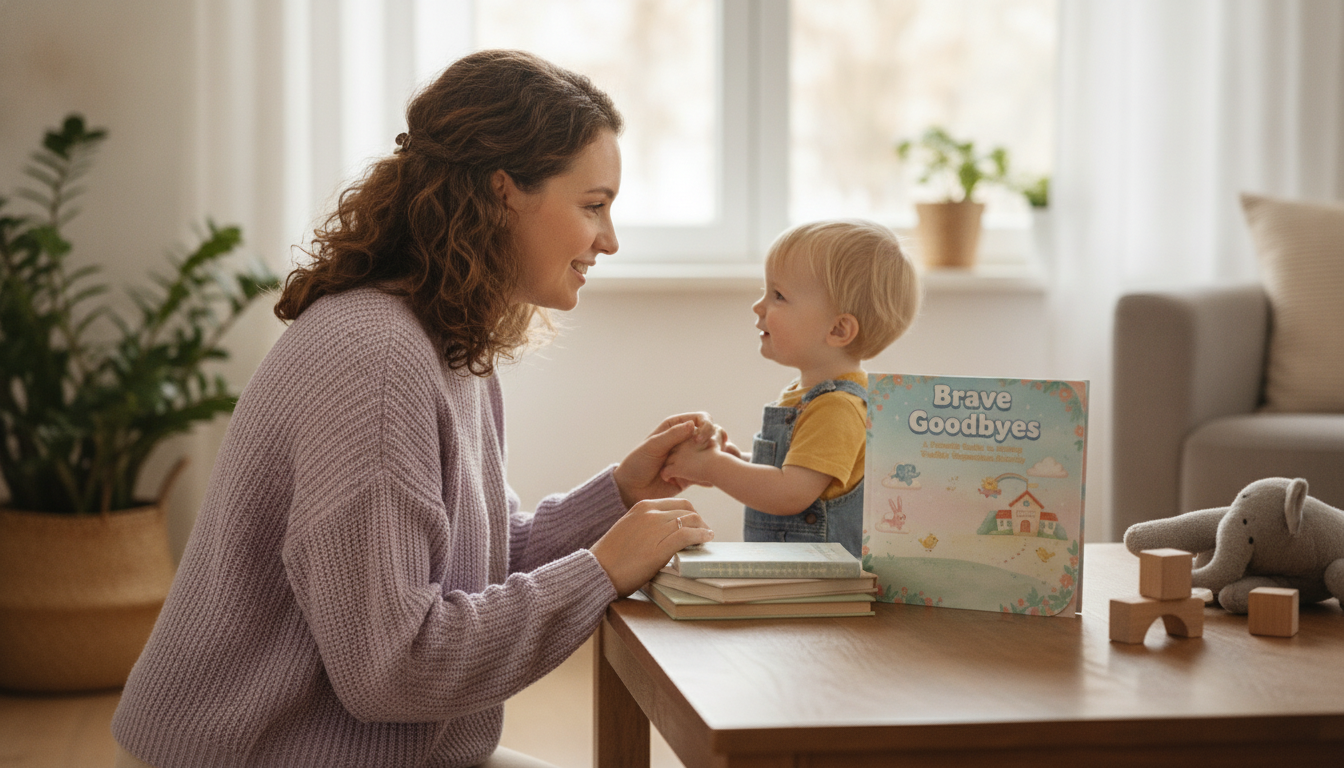
Separation anxiety is a healthy sign of attachment, but goodbyes can still feel overwhelming—for toddlers and parents alike. With predictable routines, clear language, and steady emotional support, transitions to daycare, preschool, babysitters, and bedtime can become calmer and more confident over time.
Separation anxiety often intensifies between 12–24 months, then can show up again during big changes—like a new caregiver, a new classroom, travel, illness, sleep disruptions, or after a long weekend at home. At this age, toddlers are building memory and object permanence: they understand you can be gone, but they can’t reliably predict when you’ll return. That uncertainty can feel huge.
Common signs include clinging, crying at drop-off, refusing to engage with caregivers, sleep setbacks, increased tantrums, or even stomachaches right before transitions. The goal isn’t to “stop the feelings.” It’s to communicate safety and predictability with a confident handoff—without minimizing what they’re experiencing.
For a deeper read on what’s typical, see separation anxiety guidance from American Academy of Pediatrics (HealthyChildren.org) and toddler parenting foundations from the CDC.
A reliable script helps toddlers “borrow” your confidence. Keep the language simple and repeatable: name the feeling, name the plan, and name the reunion. For example: “You feel sad. I’m going to work. After snack, I come back.”
Keep goodbyes brief. Long negotiations tend to increase distress and can accidentally teach that crying extends the moment. Pair your script with the same gesture every time—hug-kiss-high five, a special wave, or a “brave breath” together. Avoid sneaking away; it can reduce trust and increase vigilance at future drop-offs. If your toddler escalates, focus on staying regulated: a slower voice, relaxed shoulders, and a firm, kind exit.
| Moment | What to say | Why it helps |
|---|---|---|
| Daycare drop-off | “One hug, one kiss, then Ms. Ana helps you play. I’ll be back after nap.” | Predictable sequence + clear reunion cue |
| Babysitter handoff | “I’m going out. You’re safe with Jordan. I’ll come back after dinner.” | Names the caregiver and plan |
| Bedtime | “It’s hard to say goodnight. I’ll check on you in 10 minutes.” | Creates a short, believable separation |
| Parent leaves the room | “I’m going to the bathroom. I’ll be right back.” | Builds tolerance with tiny separations |
Toddlers don’t need elaborate systems—they need “same every time.” Build a micro-routine for each separation (drop-off, bedtime, leaving the house) and stick to it for at least 1–2 weeks before changing it. Visual cues can also lower anxiety: a picture schedule (shoes → car → school → snack → pickup) or a quick doodle on a notecard.
Practice “tiny goodbyes” daily: step into another room for 30–90 seconds and return exactly as promised. This teaches your toddler that separation has an ending. Transitional objects can help too—a small comfort item, a family photo, or a simple matching token you both keep.
If mornings are chaotic, reduce pressure the night before by prepping clothes, bags, and breakfast options. When your nervous system is calmer, your toddler’s often follows.
Drop-off usually goes best when it’s unrushed but not drawn out. Arrive with a small buffer, then move through a predictable handoff.
Validation works best when it’s steady and contained: “You miss me” is supportive; “You’ll be miserable without me” makes the feeling feel bigger and scarier. Pair empathy with a coping tool your toddler can actually do in the moment.
For more on toddler development and coping, ZERO TO THREE offers age-specific separation anxiety resources.
If it helps to have routines and scripts in one place, Brave Goodbyes: A Parent’s Guide to Easing Toddler Separation Anxiety is designed for quick reference during real-life transitions—daycare drop-off, babysitters, bedtime, and short separations at home. It works best when you pick one plan and repeat it consistently for 1–2 weeks before judging results.
For parents who feel pressure to “do it perfectly,” Parenting Without Perfection: A Practical Guide on How to Let Go of Perfect Parenting and Embrace Imperfections with AI Support can support a calmer mindset—often the missing piece in smoother goodbyes.
If your toddler settles best with something soft and familiar at home (especially during naps or quiet-time wind-downs), consider a cozy comfort item like the Cozy Baby Quilt – Soft & Thick Newborn Swaddle Blanket for supervised soothing routines and gentle transitions.
It’s often attributed to Paulo Coelho, but the attribution is widely disputed. It’s best treated as a popular quote rather than a confirmed citation from a specific author or book.






Leave a comment