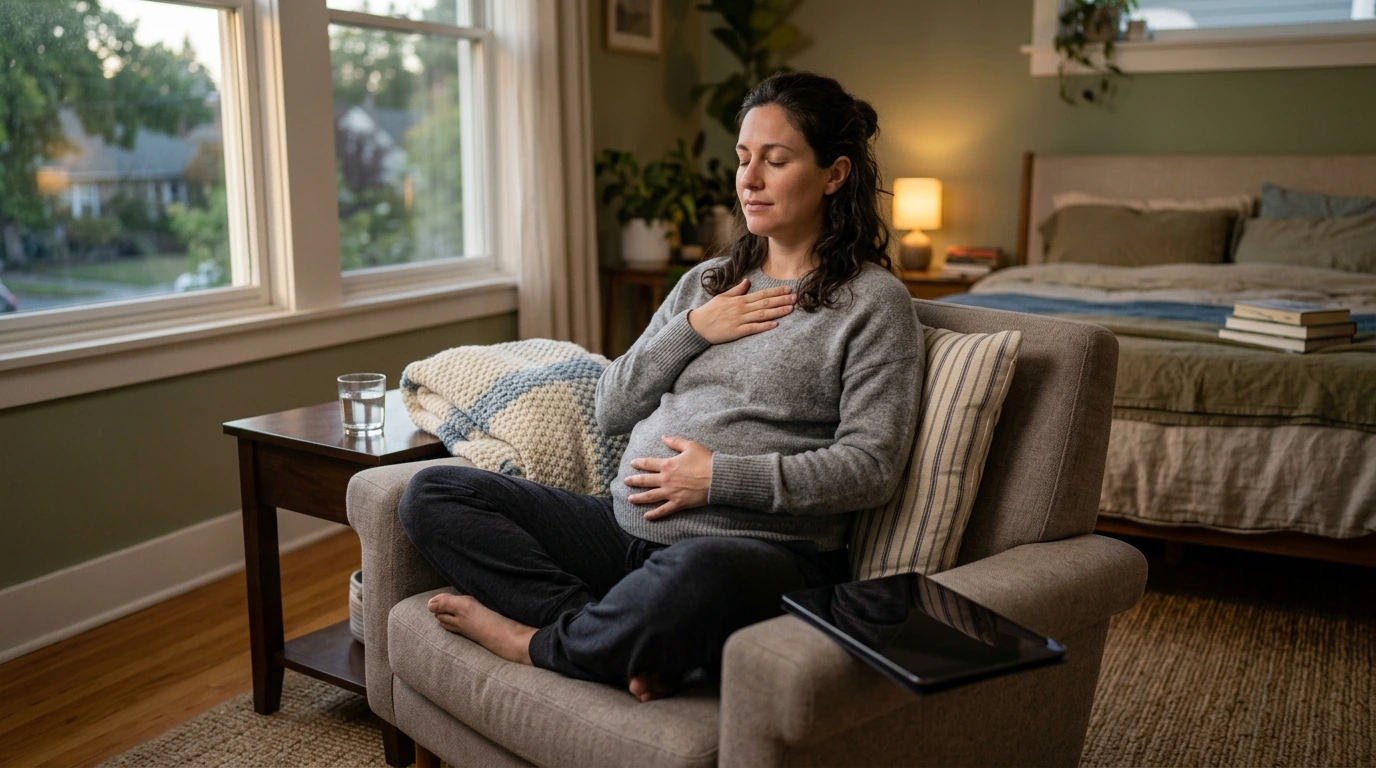
Pregnancy can make your nervous system feel “on” all the time—between changing sleep, body tension, appointments, and the mental load of preparing for baby. The most sustainable relief usually comes from short, repeatable routines that fit real life: a five-minute reset between tasks, a gentler evening wind-down, and a few go-to techniques for moments when stress spikes. Our team put this plan together around simple prenatal-friendly relaxation exercises—breathwork, supported movement, and guided reflection—so calm feels accessible even without a perfect schedule.
Before you add any relaxation routine to your day, make sure it’s appropriate for your pregnancy and how you feel right now.
For broader safety guidance, you can also review recommendations from ACOG and the NHS.
When stress hits fast—an appointment, an intense message, or a wave of overwhelm—this quick routine helps your body downshift without needing silence, a mat, or a full break.
Inhale through your nose for a comfortable count, then exhale slightly longer (no strain). Let your belly be soft and your jaw relaxed.
Unclench your tongue from the roof of your mouth. Drop your shoulders. Soften your hands. Relax your glutes.
Name 3 things you can see, 2 things you can feel (feet on the floor, fabric on your skin), and 1 sound you can hear. This gently tells your nervous system you’re in the present—not in danger.
| Moment | Cue | Why it helps |
|---|---|---|
| Racing thoughts at bedtime | Lengthen the exhale and relax the tongue | Signals safety and reduces jaw/neck tension |
| Tight shoulders at a desk | Slow shoulder rolls + soften hands | Breaks the “bracing” pattern that builds during stress |
| Overwhelm in public spaces | Look around and name objects by color/shape | Grounds attention in the present moment |
| After a hard conversation | Hand-to-heart breathing for 10 cycles | Supports emotional regulation without suppression |
Optional add-on: place one hand on your chest and one on your belly while you breathe—just enough contact to slow you down, without forcing deeper breaths.
Instead of trying to do everything daily, choose one practice at a time and repeat it long enough for your body to recognize it as a “calm cue.” Rotate when you’re bored or your body wants something different.
| Time | Option A | Option B |
|---|---|---|
| 5 minutes | Extended-exhale breathing + shoulder release | Seated body scan (head to toes) |
| 10 minutes | Side-lying rest + visualization | Hands-and-knees hip circles + calm breathing |
| 20 minutes | Gentle prenatal yoga flow + closing relaxation | Meditation + journaling prompts |
If you’d like additional exercise safety pointers, the Mayo Clinic has a helpful overview of pregnancy-safe workout approaches and when to slow down.
A realistic minimum is 3–5 minutes daily, with longer sessions (10–20 minutes) when you have the energy. Consistency matters more than duration, and it’s normal to adjust your routine by trimester and how your body feels that day.
Many beginners can start with gentle, prenatal-appropriate routines, especially when they use supported positions and avoid strain or breath holding. If you have any complications or restrictions, get medical guidance first and keep movements comfortable and steady.
Try extended-exhale breathing (exhale slightly longer than you inhale) for about a minute, then add grounding by naming a few things you can see and feel. If you become dizzy or lightheaded, stop and return to normal breathing.







Leave a comment