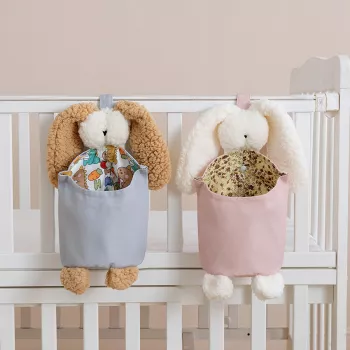
Small nursery moments go smoother when the essentials are within arm’s reach. Our Cartoon Bunny Crib Hanging Organizer with Long Ears keeps daily grab-and-go items (wipes, a spare pacifier, diaper cream, socks) close to the crib without adding clutter to the changing area. The long-eared bunny design brings a gentle, playful touch while helping you create a more predictable bedtime and nap routine.
We built this page around the practical decisions that actually save time at 2 a.m.: where to place a cribside organizer, what belongs in it, and how to keep the setup consistent so anyone helping with baby care can follow the same system.
What it helps you do, day and night
- Keep the most-used baby-care items in one consistent spot near the crib.
- Reduce “where did it go?” searching during night wakings by dedicating pockets for the same items every time.
- Create a simple routine station: bedtime book, burp cloth, nasal saline, spare onesie—whatever fits your family’s rhythm.
- Cut down on surface clutter by moving small essentials off dressers and nightstands.
- Make it easier for a partner, grandparent, or babysitter to follow the same setup (everything is visible and grouped).
For sleep-space planning, it’s worth keeping current safety guidance in mind, especially about maintaining a clear sleep area. You can review the American Academy of Pediatrics’ safe sleep recommendations here: https://www.aap.org/en/patient-care/safe-sleep/. For crib safety basics, the U.S. Consumer Product Safety Commission also has a helpful overview: https://www.cpsc.gov/Safety-Education/Safety-Education-Centers/cribs.
A simple setup that stays simple
- Choose a location that’s convenient for adults but out of baby’s reach when little hands become more curious.
- Assign each pocket a “job” (for example: pacifiers only, wipes only) so restocking takes seconds.
- Keep only the basics at the crib; store backups elsewhere to avoid overloading the organizer.
- Do a quick weekly reset: empty crumbs or lint, return items to their pocket, and remove anything that doesn’t belong at the crib.
- If using in a shared space, keep a small label card near each pocket to help everyone keep the system consistent.
Pocket ideas to keep a calm cribside routine
| Pocket |
Best for |
Refill cue |
| Top pocket |
Pacifier + clip, teether, small comfort item |
If there’s only 1 pacifier left, restock |
| Middle pocket |
Travel wipes pack, diaper cream, burp cloth |
When wipes feel light, replace pack |
| Bottom pocket |
Spare socks, mittens, small bib, mini thermometer case |
After laundry day, restock spares |
| Side space (if available) |
Bedtime book or soft cloth |
If book migrates, return it nightly |
What to store (and what to keep elsewhere)
- Good cribside items: wipes, small diaper cream, a couple of pacifiers, burp cloths, spare socks, a soft brush, nasal aspirator parts in a case.
- Keep medications and anything with small detachable parts stored higher up or in a closed cabinet.
- Avoid heavy, bulky, or hard items that could fall or become a hazard if grabbed.
- Keep cords (chargers, monitor cables) routed away from the organizer area.
- If something hasn’t been used for two weeks, move it out and keep the organizer reserved for daily needs.
A quick rule our team uses: if an item would worry you if it landed in the crib, it doesn’t belong in a cribside organizer. Keep the organizer focused on light, soft, frequently used essentials so it supports the routine instead of adding risk or clutter.
Nursery styling that still feels functional
- Use the bunny organizer as a soft accent: pair it with neutral sheets and one or two matching decor touches rather than many competing prints.
- Keep the palette calm near the sleep space—save bright, busy toys for play areas.
- If the nursery is small, a hanging organizer can replace countertop bins and free up drawer space for clothing.
- For a shared room, assign each child a distinct “character” organizer to prevent mix-ups.
- A themed organizer can help older siblings participate: returning items to the bunny pockets becomes a quick helper job.
If you’re building a bedtime rhythm around soothing habits (pacifier routine, calming comfort items, consistent steps), pairing a simple organizer system with a parent-friendly guide can help you stay consistent. Our team also keeps a low-effort resource on hand: Thumb-Sucking Explained: Easy Tips & Tricks – Printable Checklist for Parents.
Everyday care and long-term use
- Empty and shake out the organizer regularly to prevent lint buildup from cloth items.
- Rotate what’s stored as baby grows: early months may focus on pacifiers and cloths; later months may shift to teethers and bedtime books.
- If used beyond the crib stage, hang it near a toddler bed for socks, small books, or quiet-time items.
- For travel or visiting family, use the same pocket layout to keep routines familiar in a new space.
- When not needed at the crib, it can become a small station for car essentials or stroller accessories by the door.
FAQ
Where should a crib hanging organizer be placed?
Place it where you can reach it easily during care routines, while keeping it out of your baby’s reach as they become more mobile. Keep the sleep area clear and follow current crib and safe sleep guidance when deciding what’s close to the crib.
What should not be stored in a cribside organizer?
Avoid medications, sharp tools, heavy or hard objects, small choking hazards, and anything with cords or strings. Use closed, higher storage for items that could be risky if grabbed or dropped.
Can this be used after the crib stage?
Yes—repurpose it near a toddler bed for socks, small books, or quiet-time items, or use it as an entryway station for stroller accessories and on-the-go essentials. Keeping the same pocket layout can also help maintain familiar routines during travel or visits with family.
Recommended for you






Leave a comment