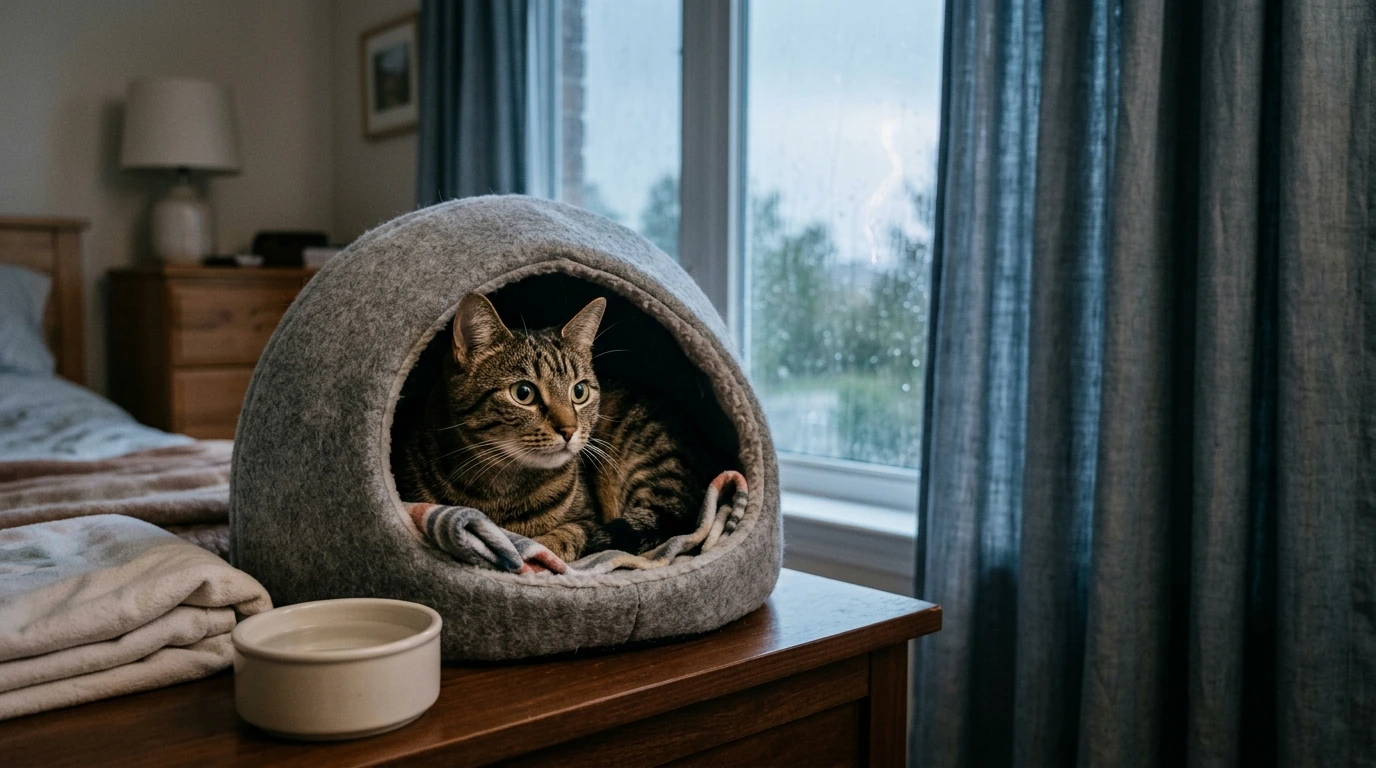
Thunderstorms can flip a calm household into a stress zone in minutes—especially for cats who feel trapped by booming sounds, pressure changes, and flashing light. Our goal isn’t to “push through it,” but to set up a plan that helps your frightened cat feel safer and gives you clear steps to follow. Below, our team breaks down what typically drives storm anxiety, what to do before and during the thunder, and how to build a steady routine afterward.
Common signs include hiding, trembling, clinginess, bolting, pacing, vocalizing, litter box accidents, overgrooming, or sudden irritability. Because many cats “disappear” when they’re stressed, anxiety can look like normal napping—until you notice panting, frantic dashing, or scratching at doors and windows.
Triggers vary: thunder vibration, lightning flashes, wind sounds, rain hitting windows, static electricity sensations, and barometric pressure changes can all play a role. One especially scary storm can also create anticipation anxiety, where stress starts as soon as clouds roll in.
If these behaviors are new, escalating, or paired with appetite/weight changes, it’s smart to rule out medical contributors (pain, cognitive changes, hyperthyroidism). For general behavior guidance, you can also reference reputable resources like the Cornell Feline Health Center and the AVMA.
| Stress signal | What it may mean | Helpful first move |
|---|---|---|
| Hiding deeper than usual, refusing to come out | Cat is seeking a “den” and reducing exposure | Keep the hiding spot accessible; reduce noise/light and avoid pulling the cat out |
| Pacing, darting room to room, startled by small sounds | High arousal and poor ability to settle | Close off unsafe rooms, offer a prepared safe room, start steady background sound |
| Excessive meowing, following closely, climbing on you | Seeking security and predictability | Offer calm contact if welcomed; keep movements slow and predictable |
| Scratching at doors/windows, trying to escape | Panic response | Secure exits, block visual triggers, guide to safe room with treats and a calm path |
| Litter box accident during storm | Acute stress or avoidance of exposed box | Add a second box in a sheltered location; clean with enzymatic cleaner afterward |
A safe zone works best when it’s prepared early and practiced on calm days. Choose a quiet interior space like a bathroom, closet, or bedroom away from large windows and exterior walls when possible. Then add “comfort anchors”: familiar bedding, a covered bed or box, and a few favorite toys that won’t clang or rattle.
Sound cover is a big deal. Aim for steady, boring audio (white noise, a fan, an air purifier, or calm music) at a consistent volume—avoid sudden track changes. You can also control light and motion by closing curtains, dimming lights, and blocking flashing reflections.
Stock the zone with water, a small litter box, and a high-value treat reserved for storms so the routine creates a positive association over time. If you want a ready-to-run routine that’s easy to repeat, our team built a practical checklist format in Managing Cat Anxiety During Thunderstorms | Calm Your Cat with Confidence (eBook).
| Do | Don’t |
|---|---|
| Offer a prepared safe room and let your cat choose where to settle | Drag your cat out from under furniture or closets |
| Run consistent background sound to soften thunder peaks | Turn volume up and down repeatedly or play sudden, loud TV scenes |
| Reward calm behavior with tiny treats when possible | Use punishment or scolding for fear behaviors |
| Close curtains and reduce lightning flashes | Keep bright windows uncovered during frequent lightning |
If stress behaviors linger (overgrooming, appetite changes, elimination issues), schedule a veterinary check to rule out medical issues and discuss anxiety support options. For additional cat care basics, the ASPCA cat care guidance is a helpful reference.
Our practical playbook, Managing Cat Anxiety During Thunderstorms | Calm Your Cat with Confidence (eBook), is designed around repeatable steps: prep, in-the-moment actions, and a short recovery routine you can use every single time. It’s especially helpful if your cat hides, shakes, bolts, vocalizes, or becomes clingy during storms—and if you want a clear checklist rather than scattered tips.
And because your calm matters, too, it can help to keep your own stress down while you supervise the environment. Some caregivers like using comfortable audio for themselves (without reducing awareness of safety needs), such as our High-Fidelity 9.2mm Beryllium-Coated Single Driver In-Ear Headphones, while maintaining a quiet, predictable home routine.
Calm, gentle comfort is okay if your cat seeks it out; fear isn’t “rewarded” the way a trained behavior is. Keep your tone and movements steady, and avoid forced holding, chasing, or frantic reassurance that can raise arousal.
Make the safe room more appealing with a covered hide, familiar bedding, and special storm-only treats, and block access to risky spaces before storms arrive. Practice short, positive “safe room sessions” on calm days so it feels normal rather than like confinement.
Talk to a veterinarian if you see self-injury, intense escape attempts, prolonged recovery, not eating for many hours, aggression, repeated elimination issues, or worsening anxiety over time. Your vet can rule out medical causes and discuss a behavior plan and medication options if appropriate.






Leave a comment