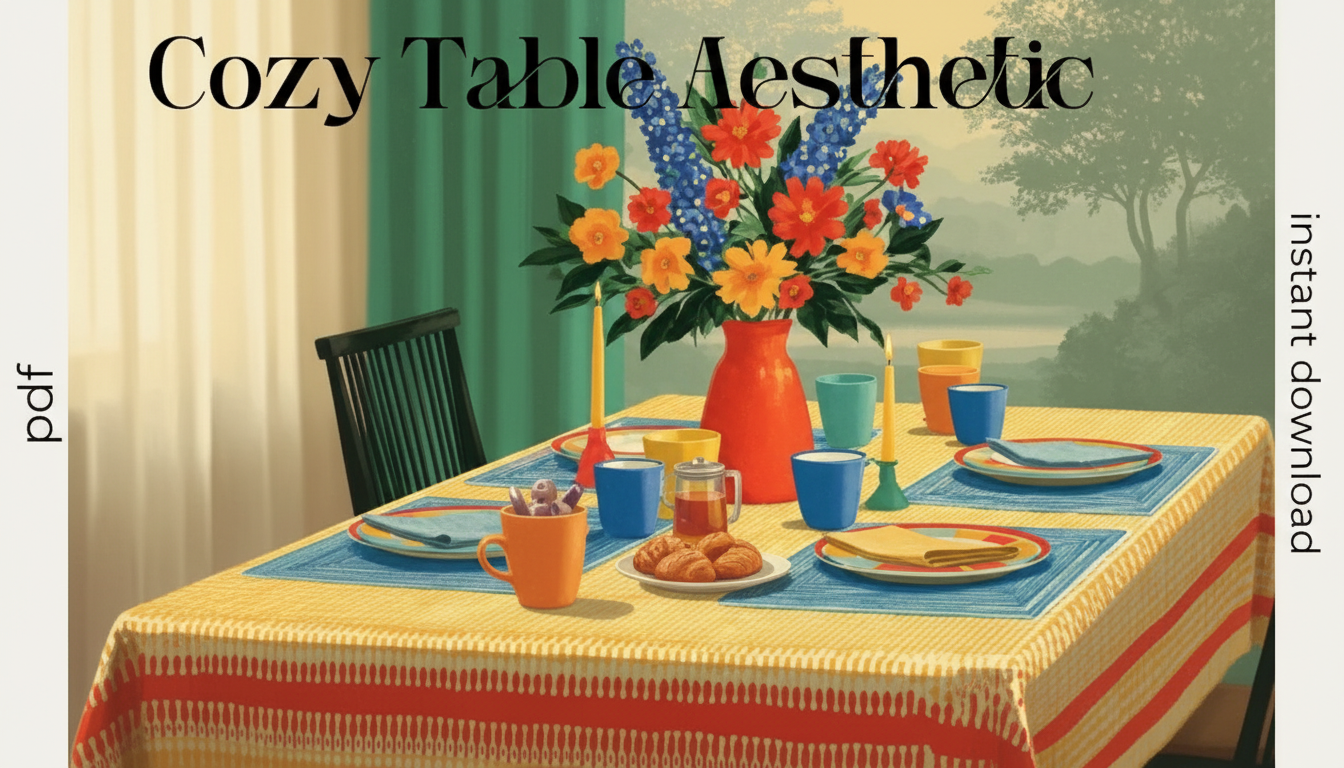
A cozy table scene is more than a few props—it’s a repeatable visual language made of light, materials, color, composition, and small “lived-in” details. When you treat that vibe like a system (instead of a one-off styling win), you can build AI training data that reproduces the same warmth across new concepts, seasons, and product stories without constant restyling.
The goal: a model that understands what must stay consistent (light temperature, tabletop texture, signature objects) and what can rotate (seasonal accents, food/drink, small variations in clutter) while still reading as “cozy.”
Cozy is a set of cues that feel tactile, warm, and human. Visually, it’s driven by gentle contrast, grounded focal points, and readable objects—never harsh, clinical, or overly perfect.
Most “inconsistent output” problems come from vague boundaries. Lock your non-negotiables first so your dataset teaches one coherent language.
| Category | Decisions to lock in | Examples |
|---|---|---|
| Lighting | Warmth, direction, time of day | Window light + soft fill; late afternoon golden |
| Materials | Top 3 textures | Ceramic, linen, wood |
| Color | Palette + contrast level | Warm neutrals + muted green; low contrast |
| Composition | Angle + spacing | 45° angle; negative space near focal object |
| Props | Signature items | Amber glass, paperback, small vase, spoon |
| Field | What to write | Sample |
|---|---|---|
| Mood | 2–4 descriptors | calm, warm, lived-in |
| Light | source + quality | soft window light, gentle shadows |
| Angle | camera viewpoint | 45 degree tabletop view |
| Surface | material + tone | warm oak table |
| Hero props | top 2–5 items | ceramic mug, candle, open book, linen napkin |
| Symptom | Likely cause | Dataset fix |
|---|---|---|
| Harsh contrast | Mixed lighting references | Remove hard flash and high-contrast images |
| Props look random | No signature set | Add consistent hero props across references |
| Feels cold | Neutral/blue white balance in dataset | Bias toward warm WB references; remove cool outliers |
| Clutter overwhelms | Too many objects per image | Include minimalist cozy scenes; enforce spacing |
| No focal point | Weak composition examples | Add images with clear hero object placement |
If you want the boundaries, captions, and evaluation steps in one place, use Cozy Table Aesthetic AI Training Checklist (digital download) as a working reference while you collect images, tag consistently, and run comparisons.
For creators building cozy-themed lifestyle stories beyond tabletop scenes, a tactile physical element can help steer your visual direction. The Cozy Baby Quilt – Soft & Thick Newborn Swaddle Blanket is a warm, texture-forward companion for soft-home narratives and comforting material palettes.
| Item | Info |
|---|---|
| Title | Cozy Table Aesthetic AI Training Checklist – How to Train AI on Your Favorite Cozy Table Aesthetics | Digital Download for Creators & Designers |
| Price | 5.99 USD |
| Format | Digital download |
| Availability | In stock |
For a first validation run, a small but consistent set (often a few dozen well-matched images) can be enough to confirm the model learns your lighting and materials. For a more refined look that stays stable across variations, expand gradually with controlled variety, prioritizing coherence over raw volume.
Use a consistent structure such as mood, lighting, angle, surface, and 2–5 hero props. Keep timeless descriptors (warm window light, linen, ceramic) separate from seasonal ones (pumpkin, pine), and reuse the same wording across the dataset.
This usually happens when the dataset mixes angles, lighting styles, or too many prop types without a signature “core set.” Tighten boundaries, remove outlier images, simplify scenes to reinforce negative space, and reintroduce variety only after the base look stays consistent.







Leave a comment