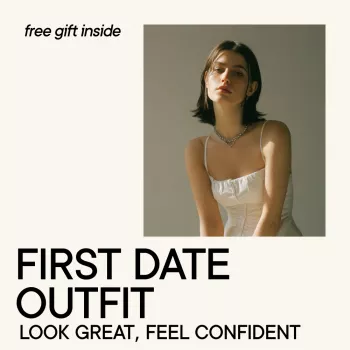
A great first-date outfit does not have to be the boldest thing in your closet. It needs to suit the plan, let you move comfortably, and feel like you. Our approach is to make a few practical decisions early, then leave yourself time to look forward to the date instead of debating shoes at the last minute.
Before opening your closet, find out what the date involves. A coffee meet-up, a restaurant reservation, and a walk outside call for different shoes and layers. Consider the time of day, the venue, and how much of the date you may spend walking or sitting. If there is a dress code, use it as your starting point rather than trying to guess what your date will wear.
Aim for the level of dress the setting calls for, then add one detail that feels personal. That might be a favorite color, an accessory you wear often, or a familiar silhouette in a slightly more polished combination. You do not need a complete style overhaul to look ready.
| Date plan | Outfit starting point | Comfort check |
|---|---|---|
| Coffee or a daytime meet-up | Neat everyday pieces with one polished detail | Can you walk and sit comfortably? |
| Dinner or drinks | An outfit that fits the venue, with a layer for the trip home | Does it still feel good after an hour seated? |
| Outdoor activity | Weather-appropriate layers and practical shoes | Can you move easily if the temperature changes? |
If the plans are a surprise, ask one useful question: “Should I expect much walking, outdoor time, or a dress code?” If you would rather keep the destination a surprise, choose comfortable shoes, a removable layer, and clothes that work for both a casual stop and a sit-down conversation.
Start with something you have worn comfortably before: well-fitting trousers, a favorite dress, or a shirt that reliably feels good. An outfit is easier to finish when its anchor is settled. Add pieces that support it rather than competing for attention.
Fit matters more than an ambitious new look. Choose clothes that fit you as you are today. If you have to keep tugging a hem, adjusting a waistband, or planning exactly how to sit, save that piece for another occasion. You deserve to pay attention to the person across from you, not to a seam.
One focal point is plenty. A textured layer, a color you love, or a piece of jewelry can make simple clothes feel intentional. If a collared shirt fits the venue and your usual style, our Tom Ford Timeless Appeal Checkered Shirt is one option to consider. It is not a first-date requirement; a shirt you already know you enjoy wearing may be the easier choice.
Try on the complete outfit before the date, including shoes, outerwear, and whatever you plan to carry. Walk across the room, sit down, stand back up, and reach for something. This quick test catches small annoyances that a mirror check can miss: a slipping strap, a layer that bunches when seated, or shoes that feel fine only while standing still.
Check the forecast close to departure, particularly if you will be outside or traveling between locations. The National Weather Service provides local forecasts that can help you decide whether to bring a warmer layer, prepare for rain, or switch footwear. Even a mostly indoor date can include a cold walk or an unexpected wait outside.
Give the practical details a few minutes, too. Set out clean clothes, make sure your shoes are comfortable for the route, charge your phone, and gather what you need for the trip. These steps may not change how the outfit looks, but they can make getting out the door much calmer.
If you are deciding between two looks, ask three questions: Does it suit the plan? Can I move comfortably? Does it feel like me? Pick the option with the clearest yeses. If both pass, choose the one that needs fewer last-minute fixes.
Our First Date Outfit digital style guide and dating outfit planner offers a reusable way to work through that decision. As a digital download, it can be a practical choice if you would like a planning tool to return to before future dates. You can also keep the three-question test above as your simple version.
Take one final look, check that you have what you need, and stop changing details. The goal is not to perfect every part of an outfit. It is to feel ready to meet someone while still feeling like yourself.
Start with comfortable, neat pieces you already enjoy wearing. Match your shoes and layers to the activity, then add one detail that makes the outfit feel personal.
Not necessarily. Familiar clothes that fit well can remove the uncertainty of an untested outfit. If you do buy something, wear it beforehand to check the fit and comfort.
Choose adaptable clothes, comfortable shoes, and a removable layer. If possible, ask whether you should expect walking, outdoor time, or a dress code.







Leave a comment