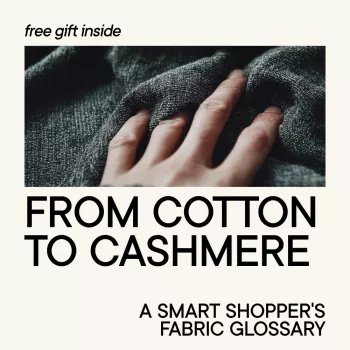
A fabric label can tell you a lot about a garment, but it cannot tell you everything. The fiber breakdown is a useful starting point; how the fabric is made, how the garment fits, and how you care for it all shape your experience wearing it. Our team uses those details together when comparing clothing. If you want a reference to keep handy while you shop, our From Cotton to Cashmere: A Smart Shopper’s Fabric Glossary ebook can help you make sense of the terms on a tag.
First, distinguish fiber content from fabric construction. A cotton button-down and a cotton sweater may share a fiber name, yet one is woven and the other is knit. They can differ considerably in stretch, weight, texture, and how they hold their shape. Read the full fiber breakdown rather than relying on a prominent word like “cashmere” on a tag; that word alone does not tell you what else is in the garment or in what proportions.
Then look beyond the percentages. Weight, weave or knit, finishing, and garment design affect how clothing feels and wears. A lightweight fabric may suit a warm commute but offer less coverage than you want for an office shirt. A dense knit may feel substantial but require more careful washing than your routine allows. For background on how textile fiber information is labeled, see the FTC’s guide to textile and wool labeling requirements.
Use this table to decide what to inspect next, not as a promise that every garment made with a particular fiber will perform the same way.
| Fiber | What shoppers often appreciate | What to check before buying |
|---|---|---|
| Cotton | Familiar feel and versatility | Weight, shrinkage guidance, and care label |
| Linen | Airy feel and relaxed texture | Wrinkling and your preferred fit |
| Wool | Warmth across a range of garment weights | Care instructions and comfort against your skin |
| Cashmere | Soft feel in many knit garments | Knit density, care requirements, and price |
| Polyester | Common in easy-care garments and blends | Comfort and breathability for your intended use |
| Viscose or rayon | Fluid drape in many garments | Washing instructions and how the fabric holds its shape |
The useful question is rarely “Which fiber wins?” It is “Which of these trade-offs matters for this piece?” If you enjoy linen’s texture, wrinkles may be part of its appeal. If you need a shirt to look crisp after a long day, you may weigh that same feature differently.
A blend combines fibers, so the percentages tell you more than a blend name alone. A garment with a small amount of elastane may have stretch that supports a close fit or makes movement more comfortable. Whether you want that stretch depends on the piece: you might welcome it in fitted pants but prefer a different feel in a relaxed shirt. Neither choice is automatically better.
Judge the finished garment as well as its label. If you can handle it, feel the fabric and hold it up to assess opacity. Notice whether it hangs smoothly, clings, or feels stiff. Examine seams and areas that will see frequent movement. When shopping online, use the fiber breakdown, garment description, and care instructions to narrow your questions rather than treating a fiber name as a complete quality rating.
For example, if you are considering our Tom Ford Timeless Appeal Checkered Shirt, start with how you would wear a checkered shirt: regularly for work, or occasionally as part of a particular outfit? Let that answer guide what you need to know about its fabric, fit, and upkeep before choosing it.
Before buying, ask four questions in order: Where will you wear it? How often? In what weather? How much care are you willing to do? Your answers can quickly separate an appealing garment from one you will actually reach for.
A frequently worn work shirt may need to fit comfortably through a full day and suit your regular laundry schedule. An occasional sweater may be worth a more involved care routine if you enjoy its feel and expect to wear it less often. That difference is about use, not fiber prestige. Even a material you love can be the wrong choice if its maintenance makes the garment impractical for you.
Read the care label before checkout, especially for anything you expect to wash often. It is easier to account for drying or cleaning requirements before a purchase than to discover afterward that they do not fit your week. The FTC’s care-labeling guidance offers further context on why those instructions matter.
When similar-looking garments list different materials, a compact reference can help you compare them without reducing the decision to a single “good” or “bad” fiber. Our From Cotton to Cashmere: A Smart Shopper’s Fabric Glossary is an ebook for shoppers who want practical fabric terms within reach. Use it alongside garment labels to identify the questions worth asking about comfort, construction, and care.
No. Comfort, care, intended use, fabric construction, and your preferences matter more than a blanket ranking.
Read the fiber percentages and care label, then consider stretch, feel, drape, and how you plan to wear and maintain the garment.
It provides a starting point, not a guarantee. Fabric weight, construction, seams, care, and frequency of wear also affect longevity.






Leave a comment