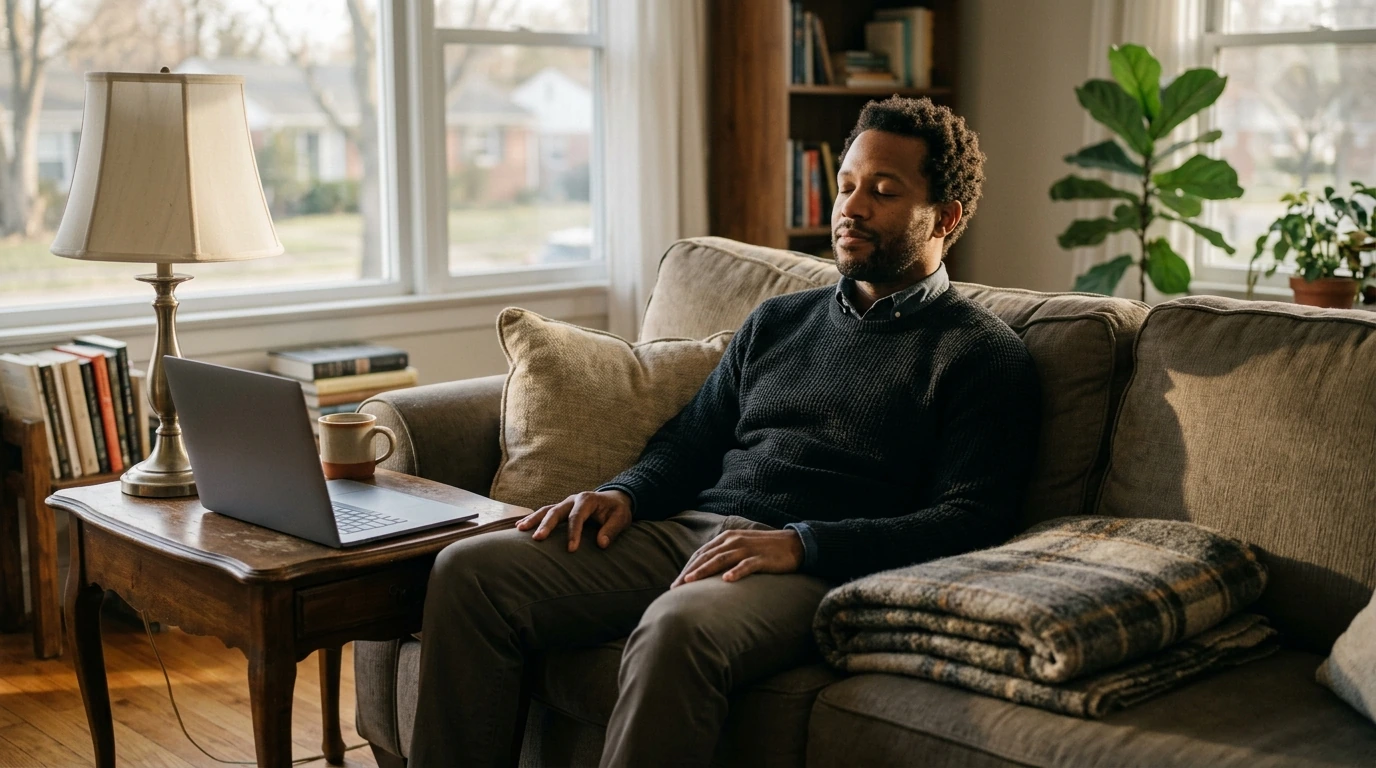
The workday is over, but your shoulders are still raised and your thoughts are moving from one unfinished task to the next. You want a moment to unwind, yet even deciding how to relax can feel like another thing to do. A body relaxation routine does not need to be elaborate. A few comfortable actions, chosen for the time you actually have, can give you a gentler way to pause.
You do not have to wait for an uninterrupted hour. If you have two minutes between activities, you can use them to notice how your body feels. If you have longer, you can stay with an action you find comfortable. The point is to make room for a pause, not to turn relaxation into another appointment you might miss.
Our The Ultimate Body Relaxation Action Checklist offers a practical prompt when you want to return to a wellness routine but are unsure where to begin. It is a digital download you can keep handy for moments when choosing a next step feels difficult. No single action works the same way for everyone, so you can treat each option as something to try rather than a promised fix.
Start by pairing a short pause with something you already do. Finishing work, changing into comfortable clothes, or getting ready for bed can serve as a cue. A familiar cue may be easier to remember than a new schedule, especially on days that do not go as planned.
When that moment arrives, choose one gentle action. Notice whether you are holding tension in your jaw, hands, or shoulders. Breathe at a pace that feels comfortable instead of trying to reach a particular count. Change position, try a light stretch without forcing the movement, or sit quietly for a few minutes. You can stop or choose something else if an action feels uncomfortable.
| When | Small action to try | Keep it comfortable by |
|---|---|---|
| During a busy day | Pause and notice your breathing | Letting your breath settle naturally |
| After sitting for a while | Change position or try a gentle stretch | Staying within a comfortable range of motion |
| Before bed | Put aside distractions and check in with your body | Keeping the routine short enough to repeat |
These are starting points, not requirements. If a quiet moment is easier to fit in than a stretch, choose the quiet moment. If you miss a day, you can begin again at the next convenient cue. A supportive routine should leave room for your energy, surroundings, and preferences rather than feel like a test you have to pass.
When you are tired, an open-ended question like “What should I do to unwind?” can feel surprisingly demanding. A checklist gives you somewhere to start without requiring you to invent a plan each time. Scan it, select an action that fits today, and leave the rest for another day. Completing every item is not the goal.
Our $2.99 digital download is an affordable option if you would like a dedicated body relaxation guide and a prompt for your wellness routine. You can review The Ultimate Body Relaxation Action Checklist before purchasing. Consider where you would use it: perhaps you want a quick reminder after work, or a way to choose one comfortable action before bed. That decision matters more than setting an ambitious plan you cannot easily repeat.
Some people prefer quiet, while others like listening to familiar audio during a pause. If listening helps you set aside distractions, our High-Fidelity 9.2mm Beryllium-Coated Single Driver In-Ear Headphones are an optional separate product. You do not need headphones, audio, or any special equipment to use the checklist. Choose the setting that feels most comfortable for you.
After a pause, take a moment to check in. Does your body feel more comfortable? Was the action easy to fit into your day? Would a different time, a shorter pause, or a gentler movement suit you better? Your answers can guide tomorrow’s choice without turning today into a success-or-failure judgment.
If you are exploring other relaxation approaches, the National Center for Complementary and Integrative Health’s overview of relaxation techniques offers helpful background. The Centers for Disease Control and Prevention’s guidance on managing stress is another resource for everyday self-care. Relaxation practices can be one part of that care, but they are not a substitute for professional support when stress is persistent, severe, or affecting your daily life.
Our team hopes the checklist helps make the next small step easier to choose. Keep what feels useful, adjust what does not, and let a repeatable pause be enough for today.
There is no required length. Start with a few comfortable minutes and choose a duration that feels realistic to repeat.
No. Use the checklist as a flexible guide and choose actions that fit your needs that day.







Leave a comment