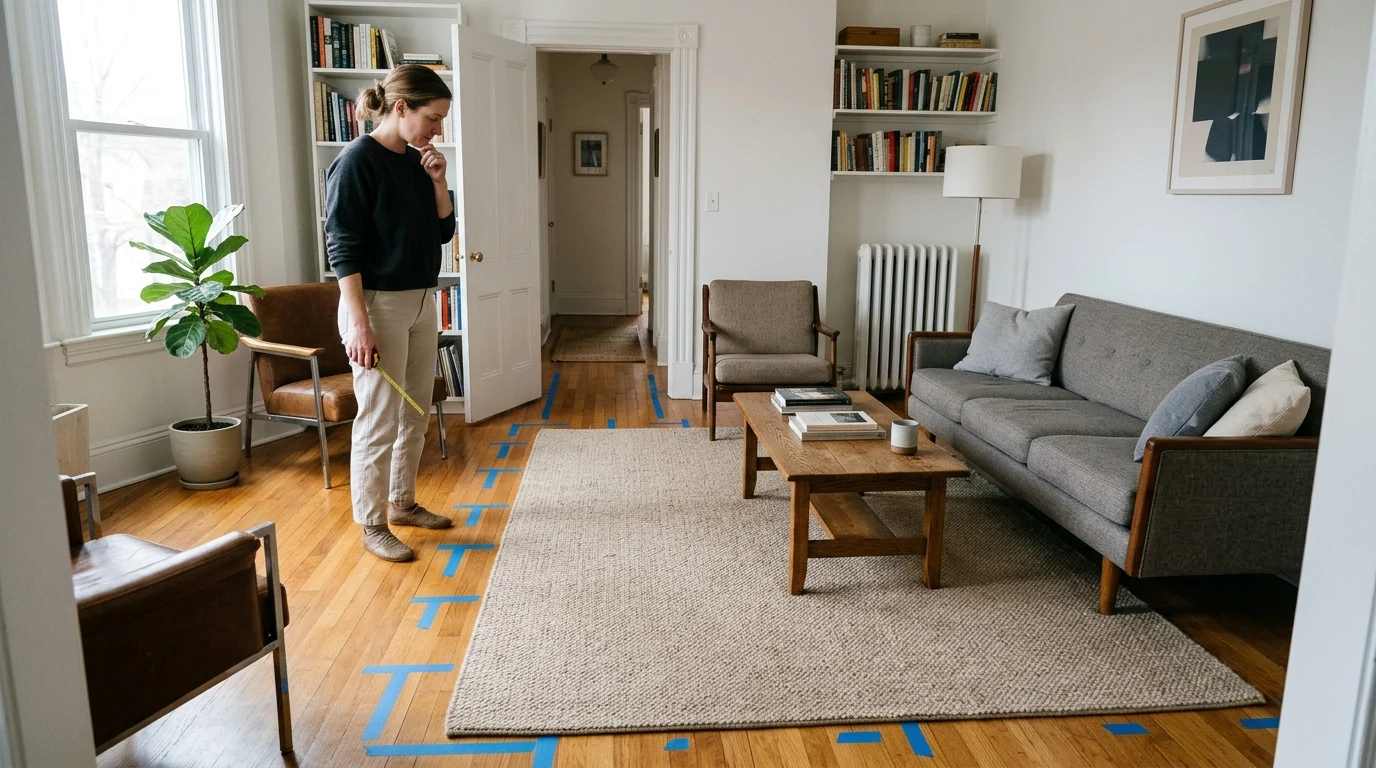
A rug can bring furniture together, define a space, and make a room feel more comfortable. The best-looking choice, though, may not be the best-fitting one. Before you compare colors and patterns, look at the furniture, the usable floor area, and the paths people take through the room. We use those details to narrow down the placement first, then choose a size and shape that support it. For more guidance, see 27 Ways to Optimize Your Classroom Design for Better ….
Measure the furniture arrangement you want the rug to anchor. In a living room, that might include a sofa, two chairs, and a coffee table—not just the open patch of floor between them. Note nearby door swings, floor vents, and walkways so you know where a rug can sit without getting in the way. For further reading, see Recommendations for designing lactation/wellness rooms.
Next, decide what the rug should connect. It could hold an entire seating group, sit beneath the front legs of the main pieces, or mark a smaller zone within a larger room. There is no need to commit to a standard size before you understand that job. If you want another visual reference while planning, the Rugs USA rug size guide shows common approaches to room placement.
Once you have a candidate size, mark its outline with painter’s tape. Walk around it, open nearby doors, and sit in the furniture. This simple test often reveals whether the rug feels centered on the arrangement or merely centered on the room.
A living room rug should make the main seats feel like one group. If space allows, you can place all the furniture legs on it. In a tighter layout, putting the front legs of the sofa and chairs on the rug can create the same connection while leaving more floor visible. Whichever approach you choose, aim for consistency across the main seating pieces and keep walking paths clear.
Measure beyond the tabletop. Dining chairs move, so the rug needs enough coverage for their legs to remain on it when someone pulls a chair out for normal use. Try this with an actual chair at your table rather than estimating from the table dimensions. Also consider whether the rug’s edge will meet a doorway or another heavily traveled route.
Think about where your feet land when you get out of bed. A larger rug can extend beneath the bed and provide floor coverage on both sides. If that would overwhelm the room or interfere with bedside furniture, runners can offer a soft landing with a smaller footprint. Measure the exposed area you want to step onto, not just the bed’s width.
An entry rug has to work with movement as well as appearance. Measure the clear floor space, then open the door through its full swing before settling on a shape. Leave a comfortable route around the rug and consider how you will clean it after everyday use.
| Room | What to measure | Fit check |
|---|---|---|
| Living room | Seating group and surrounding walkways | The rug connects the main seats without crowding paths. |
| Dining room | Table and chairs when pulled back | Chair legs stay on the rug during normal use. |
| Bedroom | Bed width and desired floor coverage | There is a comfortable area to step onto beside the bed. |
| Entryway | Clear floor space and door swing | The door opens freely and the rug does not obstruct traffic. |
These checks are starting points, not fixed rules. Furniture dimensions and room proportions determine the final fit. If you are deciding between two sizes, tape out both outlines and compare how much floor remains around each one.
Rectangular rugs work with many sofas, beds, and dining tables because their edges follow the general direction of the furniture. They can also help define one area in an open room. A round rug can echo a round table or soften an angular nook, but it still needs enough usable space around the furniture to feel intentional.
For a step-by-step companion, explore The Smart Guide to Choosing the Perfect Rug for Any Room. Our eBook brings rug sizing, shapes, styles, and AI design tips into one place. AI tools can help you explore different looks, but confirm any promising layout with a tape measure and an outline on your floor.
If you like to listen to audio while sketching layouts or comparing options, our High-Fidelity 9.2mm Beryllium-Coated Single Driver In-Ear Headphones are another in-stock option. They are not part of choosing a rug; the measurements and floor test should make that decision.
Not necessarily. An all-legs-on layout can define a generous seating area, while a front-legs-on layout can connect the main pieces in a smaller space. Consistent placement matters more than following one rule.
It should extend far enough for chairs to remain on the rug when pulled out for normal use. Measure with your own chairs because chair depth and available floor space vary.
Yes. A runner can provide a soft landing beside the bed when a large area rug does not suit the room. Check its placement against bedside furniture and walking space.







Leave a comment