Some days, the news is heavy, plans change, and small frustrations pile up. Staying positive does not mean pretending those things are fine. It means giving yourself practical ways to notice what helps, choose your next step, and make room for good moments alongside difficult ones.
We like to think of positivity as something you can practice in small, honest ways. You do not need to turn a hard day around all at once. You can begin with the next hour.
Disappointment, worry, and frustration are normal responses to difficult circumstances. You do not have to feel cheerful all day to have a hopeful outlook, and you do not have to find a lesson in every setback. Sometimes the most useful thing you can say is, “This is hard.”
From there, try asking, “What would make the next hour a little easier?” The answer might be drinking water, changing your plans, asking for help, or taking a break. The question keeps your attention on what is within reach without asking you to control everything around you.
A brighter outlook can also hold two truths at once: you can care about a problem and still appreciate a good conversation, a comfortable meal, or a moment of rest. Noticing something good does not cancel out your concern. It gives you another part of the day to hold onto.
When you feel unsettled, it is easy to check headlines or scroll again, hoping the next update will help you feel more prepared. Before you do, pause and ask whether another round of information will help you act—or simply leave you more drained. You can stay informed while setting a boundary around when and how you check updates.
For a quick reset, name three things: one thing that feels hard, one thing that is going okay, and one useful action you can take next. You might write them down, say them quietly, or just think them through. Keep the action modest enough to do today. If you want more ideas for everyday wellbeing, the NHS’s five steps to mental wellbeing offer approachable starting points, including connection and being active.
| When you notice… | Try this small step | Keep it manageable by… |
|---|---|---|
| A difficult news cycle | Set a time to check updates, then step away | Choosing one source rather than scrolling |
| A discouraging thought | Write down a kinder, more balanced response | Using words you would say to a friend |
| A day that feels stuck | Complete one simple task | Picking something that takes a few minutes |
| A good moment | Pause and name what you appreciated | Letting one sentence be enough |
The best reset is one that fits your day. A walk, a message to a friend, or a quiet break can all count. If you want to listen to something during a break, our High-Fidelity 9.2mm Beryllium-Coated Single Driver In-Ear Headphones are one option. Silence is an equally good choice if that feels better right now.
A small check-in is often easier to remember when you attach it to something you already do. While your coffee brews, you could ask what you need today. As you wind down for bed, you could name one thing you handled and one thing you can leave for tomorrow. Neither check-in needs to become a lengthy journal entry.
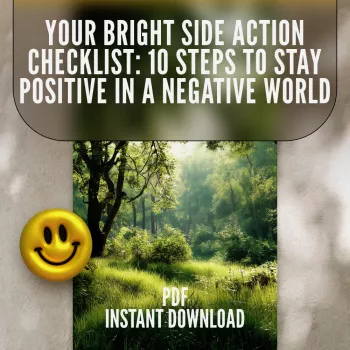
If having a visible prompt helps, our Your Bright Side Action Checklist is a printable digital checklist built around 10 steps for personal growth and mental wellness. You can choose one step at a time and return to the checklist when you want a nudge. It is not another task you have to complete perfectly.
Think about what makes a habit practical for you. If mornings are rushed, choose a quieter point in the day. If writing feels like too much, make your check-in a single spoken sentence. On a difficult day, repeating a familiar small step may be more helpful than adding a new one. Our team would rather you have a practice you can come back to than a strict routine you feel pressured to keep.
Some days call for connection more than another solo exercise. You might tell someone you trust, “I’ve had a hard day—do you have a few minutes?” You do not need a polished explanation before reaching out. Sharing a meal, taking a walk together, or having someone listen can make an isolating day feel less lonely.
A checklist can support everyday reflection, but it is not a substitute for mental health care. If stress feels persistent or difficult to manage, consider speaking with a qualified mental health professional. The American Psychological Association’s stress resources can also help you learn more about stress and ways to respond to it.
You can start small, be honest about what is hard, and begin again whenever you need to. A positive practice does not have to be perfect to be worth keeping.
Acknowledge what is difficult, limit input that drains you when possible, and choose one constructive action within reach. You can make space for both concern and hope.
You do not need a perfect streak. Start again with one small action when it feels useful; a checklist can be a prompt, not a test.






Leave a comment