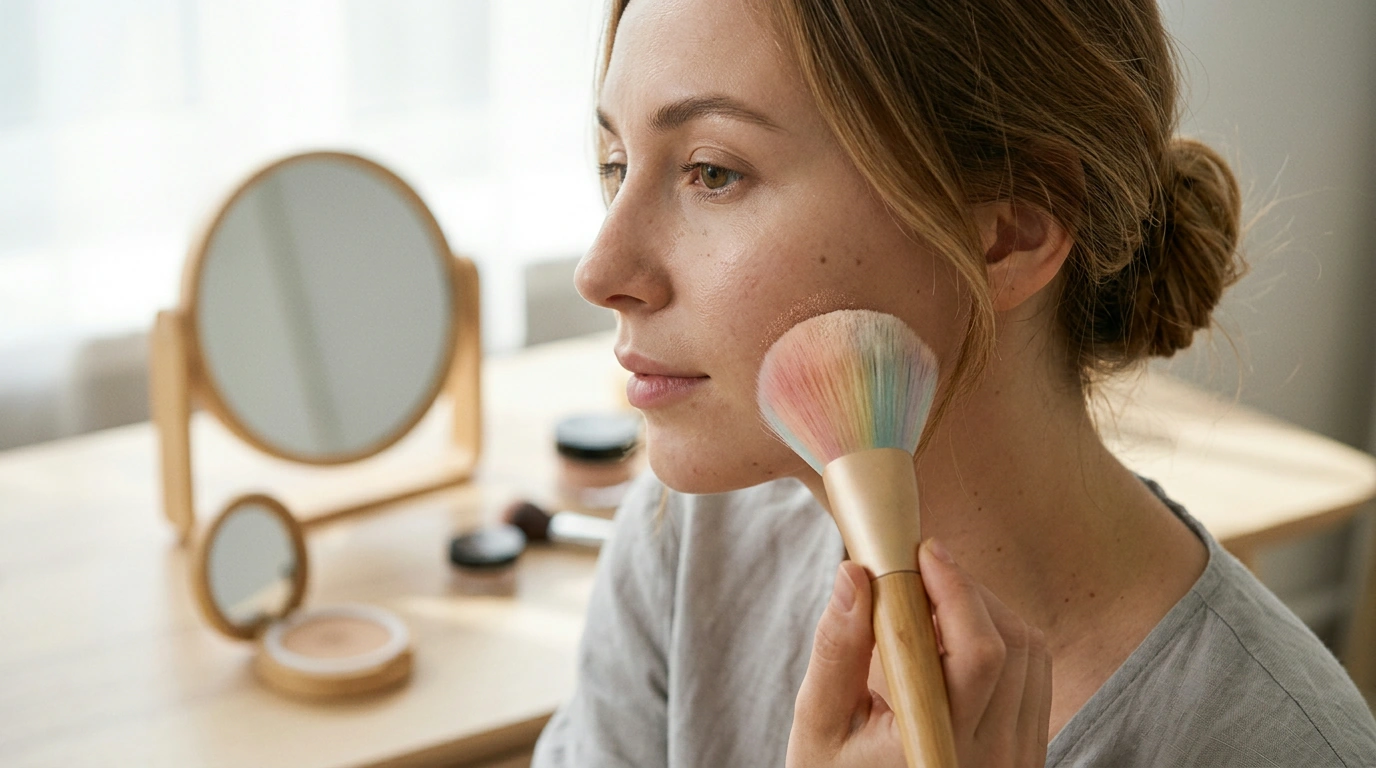
A large, fluffy brush can make the finishing steps of your makeup routine feel simpler. Instead of concentrating product in one spot, soft bristles spread it across a broader area. Our Large Fluffy Rainbow Makeup Brush for Powder, Blending & Foundation is an option for setting powder, softening visible edges, and diffusing light foundation touch-ups. The key is to pair the brush with a light hand: start with less product than you expect to need, then add more only where you want it. For more guidance, see BS-MALL Makeup Brush Set 18 Pcs Professional ….
Reach for a fluffy brush when your goal is a soft-looking layer over a broad area. It can distribute powder without placing a heavy patch in one spot, or blend the edge where one makeup product meets another. It is less suited to jobs that call for precise placement or concentrated coverage. For further reading, see Singe Beauty.
Before the brush touches your face, consider what the step needs to accomplish. Are you setting shine-prone areas, smoothing a visible transition, or adjusting a foundation edge? That decision helps you control both the amount of product on the brush and the motion you use. You can always add another thin layer, but removing excess product often takes more effort.
For loose or pressed powder, pick up a small amount and tap off the excess. Apply it first where you most want to set your makeup, using a gentle press or a light sweep. Then move to other areas with whatever remains on the brush. This keeps powder from becoming the most noticeable part of your finish.
To blend a visible edge, use small circles or short sweeps with very little pressure. Let the brush skim the surface rather than pushing into the makeup underneath. If repeated passes begin to move your base or leave an uneven spot, stop and reassess before adding more product.
A fluffy brush can also help diffuse a light layer of foundation or soften an edge around a touch-up. Use short, light strokes and look for streaks as you go. When fuller, more concentrated coverage is the priority, a denser brush may give you more control.
| Makeup step | Suggested motion | What to watch for |
|---|---|---|
| Setting powder | Light sweeps or gentle presses | Too much powder at once |
| Blending edges | Small, gentle circles | Overworking makeup underneath |
| Foundation touch-ups | Short, light strokes | Streaks or uneven coverage |
Thin layers give you room to adjust. After your first pass, step back and look at the overall result before picking up more makeup. Natural-looking light can make it easier to spot areas that need another touch and areas that are already finished.
If you use powder to set only part of your face, begin there. You may find that the small amount left on the brush is enough for a lighter pass elsewhere. For blending, focus on the boundary you want to soften rather than brushing repeatedly across an area that already looks even.
A clean brush can be useful at the very end of your routine, too. With no new product on it, make one light sweep over an area that looks overly powdered or has a distinct makeup edge. The goal is to soften the transition, not to keep buffing until the layers underneath shift.
Regular cleaning removes product buildup that can interfere with even application. How often your brush needs washing depends in part on what you use with it and how often you reach for it; visible buildup is a clear sign that it is time. The American Academy of Dermatology’s makeup-brush cleaning guidance offers hygiene recommendations and washing steps.
After cleaning, allow the brush to dry completely before using it again. Store it where the head will not be crushed, so it is ready for a light, even application the next time you do your makeup. If you switch between powder and liquid products, keep track of what is already on the bristles; leftover product can change how your next application looks.
One fluffy brush can handle several light-handed finishing tasks: setting powder, softening transitions, and diffusing foundation edges. Our team recommends choosing your technique by the finish you want, rather than treating every product the same way. Start small, use gentle motions, and pause to assess the result.
If those are the steps you want one brush to cover, explore our Large Fluffy Rainbow Makeup Brush for Powder, Blending & Foundation. And if listening to music is part of your getting-ready routine, you can explore our High-Fidelity 9.2mm Beryllium-Coated Single Driver In-Ear Headphones separately; they are not needed for any of the brush techniques above.
Yes. It can diffuse a light layer or soften foundation edges, while a denser brush may give you more control for fuller coverage.
Begin with a small amount, tap off the excess, and apply lightly where needed. Add another thin layer only if necessary.
Clean it regularly, especially when product buildup becomes noticeable, and let it dry completely before reuse. Dermatology guidance can help you establish a hygiene routine.






Leave a comment