
Sneaker trends rarely show up all at once—they spread through people. Vans is a perfect case study because it lives at the crossroads of skate, music, streetwear, and everyday wear, where peer influence moves fast and quietly. Our team put together a practical, repeatable checklist for recognizing when a Vans look is simply “popular in one circle” versus when it’s actually crossing into a wider trend—so you can spot signals early, dodge hype traps, and build a rotation that feels current without feeling copied.
Peer influence isn’t only direct pressure. It’s exposure, normalization, and the subtle reward of fitting into a scene. Sneakers are highly visible, so once a silhouette reads as “approved,” it spreads quickly—especially when people see it repeatedly in daily life.
Vans trends often start inside subcultures (skate crews, venue staff, art schools, streetwear circles) and then travel outward. The shift from niche to mainstream usually shows up as small changes in what people treat as “default”—the shoe people reach for without making it a whole announcement. This is also where social proof matters: if tastemakers inside a group adopt a pair, others follow faster. If you want a quick primer on the psychology behind it, see the APA definition of peer pressure and Cialdini’s overview of social proof.
One caution: don’t confuse “influence” with “availability.” Sometimes a Vans model looks like it’s everywhere because it’s widely stocked or heavily promoted—not because it’s gaining real cultural momentum.
If the same silhouette shows up across different scenes (skate + campus + casual street), that’s stronger than a cluster inside one friend group.
A trend is real when the shoe gets styled multiple ways—baggy denim, cargos, workwear, even tailored casual—rather than copied as one uniform.
Early phases often start with a specific colorway. Broader adoption shows up when people buy adjacent colorways (black/white to gum soles, seasonal shades, tonal pairs).
When people quietly swap their old default sneaker for a Vans silhouette with no big commentary, a new baseline is forming.
Look for repeated appearances in short clips, fit checks, event recaps, and casual posts—not only polished campaigns.
If common sizes start disappearing in a specific model while other models sit, it often indicates organic demand rather than one-off hype.
Use a simple timing test: if interest persists across at least two cycles (multiple weekends/events or several weeks of consistent sightings), it’s more likely a trend. Watch what happens after the first wave—if people keep wearing the shoes after the novelty fades, that’s staying power. If you want a neutral “sanity check” outside social media, you can also compare regional interest over time with Google Trends.
| Signal | Where to spot it | What it suggests | Next action |
|---|---|---|---|
| Repeat sightings across scenes | Campuses, venues, skate spots, commuter areas | Adoption beyond one circle | Track 2–3 more sightings before buying |
| Multiple styling approaches | Fit checks, candid event photos, street snapshots | Versatility is proving out | Save 3 outfit ideas that feel natural |
| Colorway migration | Retail shelves + user posts | Demand is broadening | Pick a colorway that matches your existing wardrobe |
| Replacement behavior | Friends/peers quietly switching pairs | A new everyday default forming | Audit your rotation for overlap and gaps |
| Micro-content repetition | Short clips, story posts, recap edits | Organic social proof | Confirm it’s not just one creator’s bubble |
| Community adoption | Staff uniforms, creators behind the scenes | Comfort + credibility | Match durability to your use-case (daily vs. occasional) |
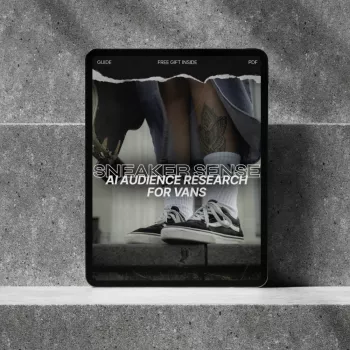
If you want a ready-to-use version of the process—organized for quick scoring, repeat checks, and less second-guessing—use our downloadable checklist: Understanding Vans Peer Influence – A Complete Checklist for Spotting Sneaker Trends. It’s built to help you wait for durable signals instead of reacting to one loud post.
If you’re also refining the “full look” around your sneakers, two style-adjacent picks our team keeps bookmarked are Tom Ford Timeless Appeal Checkered Shirt for clean pattern layering and High-Fidelity 9.2mm Beryllium-Coated Single Driver In-Ear Headphones for commuting and daily wear—useful when your trend checks happen out in the real world, not just on a screen.
Wait for repeated sightings across unrelated groups, then confirm the shoe is being styled in multiple ways—not just copied as one uniform. Our rule is to look for 2–3 independent signals (repetition, outfit integration, replacement behavior) before you buy.
Peer influence is exposure and social proof shaping what feels like the “default.” Personal preference is whether the shoe fits your comfort needs, lifestyle, and rotation role; filter inspiration through your use-case, color palette, and how often you’ll actually wear it.
Checkerboard is a perennial classic, so it’s not automatically a “new trend.” Trend behavior shows up when checkerboard spreads into new outfit formulas and scenes, or when adjacent high-contrast patterns start appearing widely alongside it.






Leave a comment