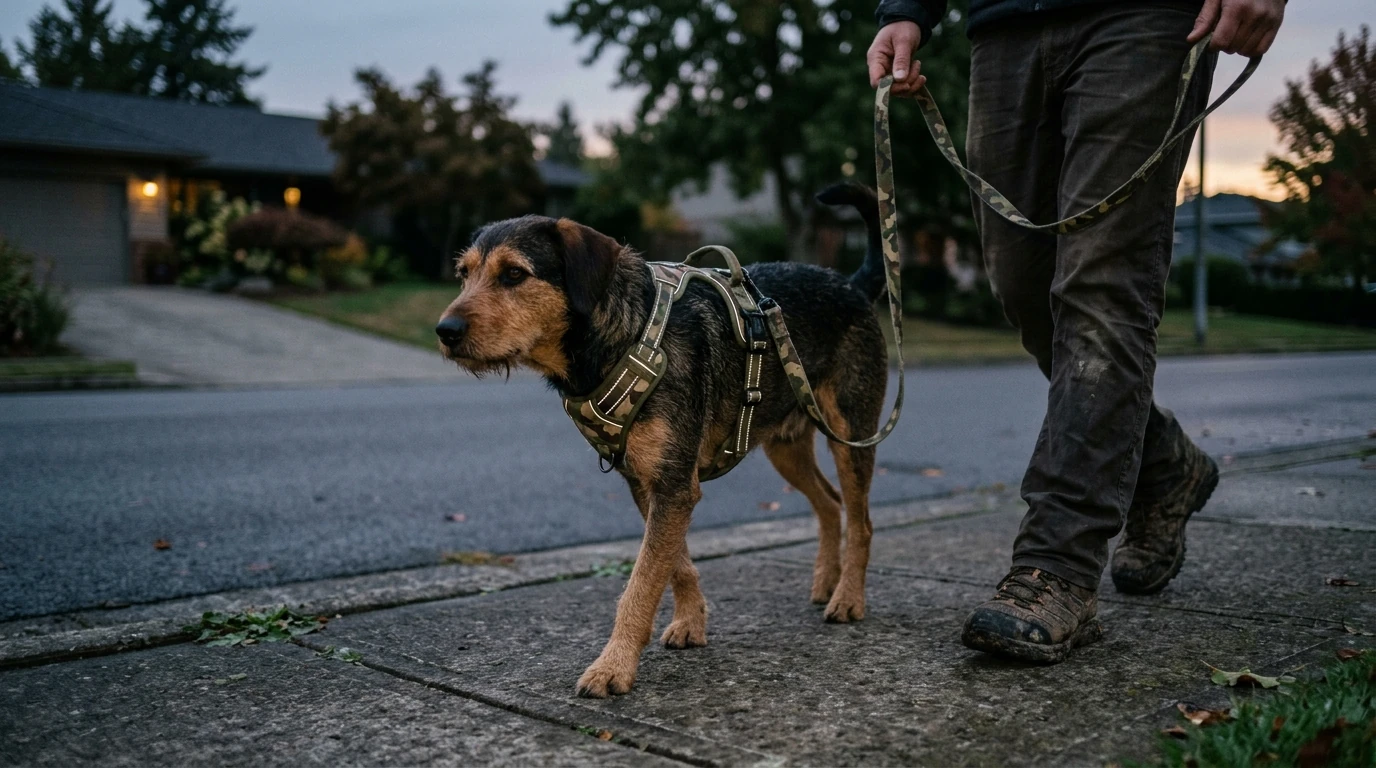
Daily walks should feel steady and controlled—especially with dogs that pull hard, back out of gear, or get extra bold after dark. Our No-Pull Escape-Proof Reflective Camo Dog Harness with Adjustable Leash is built to keep movement comfortable, reduce pulling leverage, and add visibility for early-morning and night strolls, all with a camo look that’s meant to handle real-life use.
When you’re dealing with lunges, sudden reversals, or busy sidewalks, small details—where pressure lands, how the harness stays centered, and how quickly you can shorten the leash—can make a huge difference in how safe and manageable your walk feels.
A no-pull harness approach helps redirect force to the chest and torso rather than concentrating pressure at the throat. That shift can give you more stable handling, which makes it easier to reward loose-leash walking and avoid accidental yanks when your dog hits the end of the leash.
For best results, pair the harness with a consistent routine: when tension appears, stop; when the leash loosens, continue. This pattern is a classic foundation for loose-leash walking, and you can reinforce it with praise, treats, or permission to sniff. If you want a structured training refresher, the American Kennel Club and ASPCA both outline practical loose-leash methods you can apply on your next walk: AKC loose-leash guidance and ASPCA leash-pulling tips.
| Moment | What to do | What the dog learns |
|---|---|---|
| Leash goes tight | Stop moving; wait for slack | Pulling doesn’t move the walk forward |
| Slack returns | Mark/praise and continue | Loose leash keeps the walk going |
| Dog surges ahead again | Turn and walk the other way | Staying close prevents losing direction |
| Good stretch of calm walking | Reward with praise or a quick sniff break | Calm walking earns freedom |
Escape attempts often happen when a dog plants their feet and reverses. Secure fit and proper adjustment are the real “escape-proof” factors: you’re aiming for snug (not tight) contact at the chest and torso so the harness can’t twist, ride up, or slide forward when your dog pivots.
Before you head out, do a quick back-out test indoors: gently guide your dog backward a step. If the harness shifts toward the neck, loosens, or rotates to one side, adjust again before you’re at the curb.
Reflective details are designed to help headlights and street lighting catch your dog’s outline sooner. For the best effect, keep reflective areas unobstructed by jackets or bulky layers, and consider adding a clip-on light when you’re walking in unlit areas. Visibility helps, but it’s not a substitute for careful handling—keep the leash shorter near driveways, intersections, and parking lots.
Better control on walks also supports community safety. The AVMA emphasizes responsible pet ownership practices that reduce risk in public spaces, including the importance of managing your dog appropriately around others: AVMA guidance on prevention and responsibility.
An adjustable leash gives you quick options without swapping gear. A longer setting can support relaxed sniffing on open paths, while a shorter setting can improve control in crowds, near traffic, or during focused training. Consistency matters: when you’re training, try to use one predictable length so your dog learns the boundary.
Use a snug fit that still allows the two-finger rule under straps. The harness should stay centered during a gentle backward-step test without sliding toward the neck or loosening around the torso.
It can reduce pulling leverage and improve control, but it works best with consistent loose-leash training. Stop on tension, move forward on slack, and reward calm walking so your dog learns what keeps the walk going.
Reflective elements help drivers and other pedestrians see your dog sooner when light hits them, but they don’t eliminate risk. Night safety also depends on leash control, route choice, and staying attentive near traffic and driveways.





Leave a comment