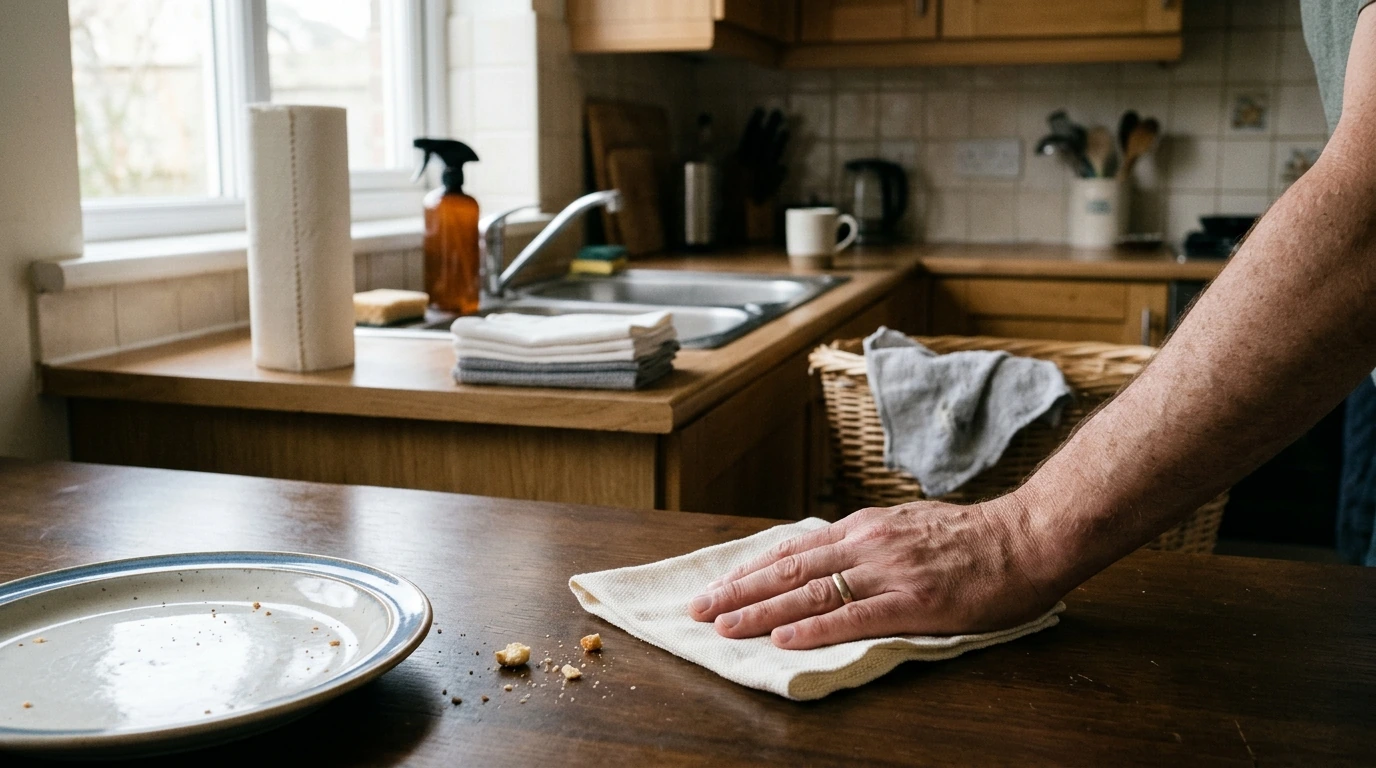
A splash beside the sink, crumbs after lunch, a quick table wipe after dinner—small kitchen cleanups happen all day. Reusable rags give you a way to handle suitable everyday messes without reaching for a fresh disposable towel each time. Our 20-sheet roll provides individual 7.87 × 7.87-inch squares, so you can keep several assigned to different jobs while used rags wait to be cleaned. For more guidance, see Are Swedish dishcloths more environment-friendly than ….
A square rag is handy for ordinary surface cleaning: wiping the table after a meal, tidying a countertop, or catching drips around the sink. The useful habit is simple. Take a clean sheet for the job, then set it aside when it becomes dirty instead of putting it straight back into service. For further reading, see 13 Best Reusable Paper Towels For Tree-Free Spills & Cleans.
That is where a roll can fit naturally into a kitchen routine. With multiple sheets available, you do not need to rely on one rag for every spill. Our 20-sheet reusable cleaning rags roll gives you 7.87 × 7.87-inch sheets to divide among the tasks you do most often. You might keep a few ready for table and counter touch-ups and reserve others for the sink area.
Start with the surfaces you already wipe regularly. A reusable rag does not need to change your entire cleaning routine to be useful; it just needs a clear job and a place to go after use. For delicate finishes or materials with particular cleaning requirements, follow the surface maker’s care guidance before using any rag or cleaner.
Separating rags by task helps you avoid carrying grime from one area to another. A rag used for a messier cleanup should not become the next rag you use on a food-preparation surface. You can make the distinction as simple as keeping separate groups in different spots, as long as everyone in your household understands which rags are for which jobs.
The rotation below is a starting point, not a claim that one wipe or cleaning approach suits every kitchen surface. Adjust it to your space and to the care instructions for your counters, table, and sink.
| Task | Suggested habit | When to set the rag aside |
|---|---|---|
| Table and counter touch-ups | Use a rag reserved for routine kitchen surfaces. | After visible soil or a cleaning session. |
| Sink-area drips | Keep a separate rag near the sink. | When damp or dirty. |
| Messier cleanup | Use a different rag from those used on food-preparation areas. | Immediately after the task. |
It also helps to decide where used rags will wait before they are cleaned. Keep them separate from fresh ones, rather than dropping a damp rag back into the clean rotation. When you reach for the next sheet, you will know it has not already been used for a different task.
Reuse works best as a cycle: use a clean rag, clean it after a dirty job, allow it to dry before storage, and return it to the appropriate group. A rag that is visibly soiled should be set aside even if you have not finished your usual round of kitchen chores. Likewise, do not leave a damp rag in a stack of clean ones.
Wiping away everyday dirt and disinfecting are different tasks. A reusable rag can be part of routine cleaning, but it does not replace a disinfectant when disinfection is needed. The Centers for Disease Control and Prevention’s guidance on cleaning and disinfecting explains the distinction. If you use a disinfectant, choose one appropriate for the surface and follow its label, including its directions for use.
Finally, treat each sheet as reusable, not permanent. Replace a rag when it is worn or when you cannot clean it adequately. Keeping usable rags in rotation—and retiring ones that no longer do the job—makes the system easier to maintain. If your household has several people cleaning up, agreeing on when a rag is “used” can be more helpful than trying to stretch one sheet through every task.
Using a rag repeatedly for suitable jobs may reduce how often you reach for single-use wipes or paper towels. The actual difference depends on how often you reuse each sheet and how you care for it. The U.S. Environmental Protection Agency’s reducing and reusing guidance offers a broader look at why getting more use from everyday items matters.
You can begin with one repeatable habit rather than replacing every disposable product at once. For example, set aside a few clean rags for after-dinner table wipes. Once that routine feels easy, decide whether separate sheets would help with countertop touch-ups or sink-area drips. Keeping each job distinct makes it simpler to know when a rag should be cleaned and when a fresh one is ready to use.
Our team likes practical changes that fit the way you already run your kitchen. If a dedicated rag rotation would help with your daily cleanups, consider our 20-sheet roll as a place to start. And if you put on something to listen to while tackling a longer round of chores, you can also browse our High-Fidelity 9.2mm Beryllium-Coated Single Driver In-Ear Headphones—a separate addition to your routine, not a cleaning tool.
Each of the 20 sheets measures 7.87 × 7.87 inches.
We recommend keeping separate rags for routine food-area wiping and messier jobs. Clean used rags before putting them back into rotation.
No. A rag can help wipe away everyday dirt, but disinfection, when needed, requires an appropriate product used according to its label.






Leave a comment