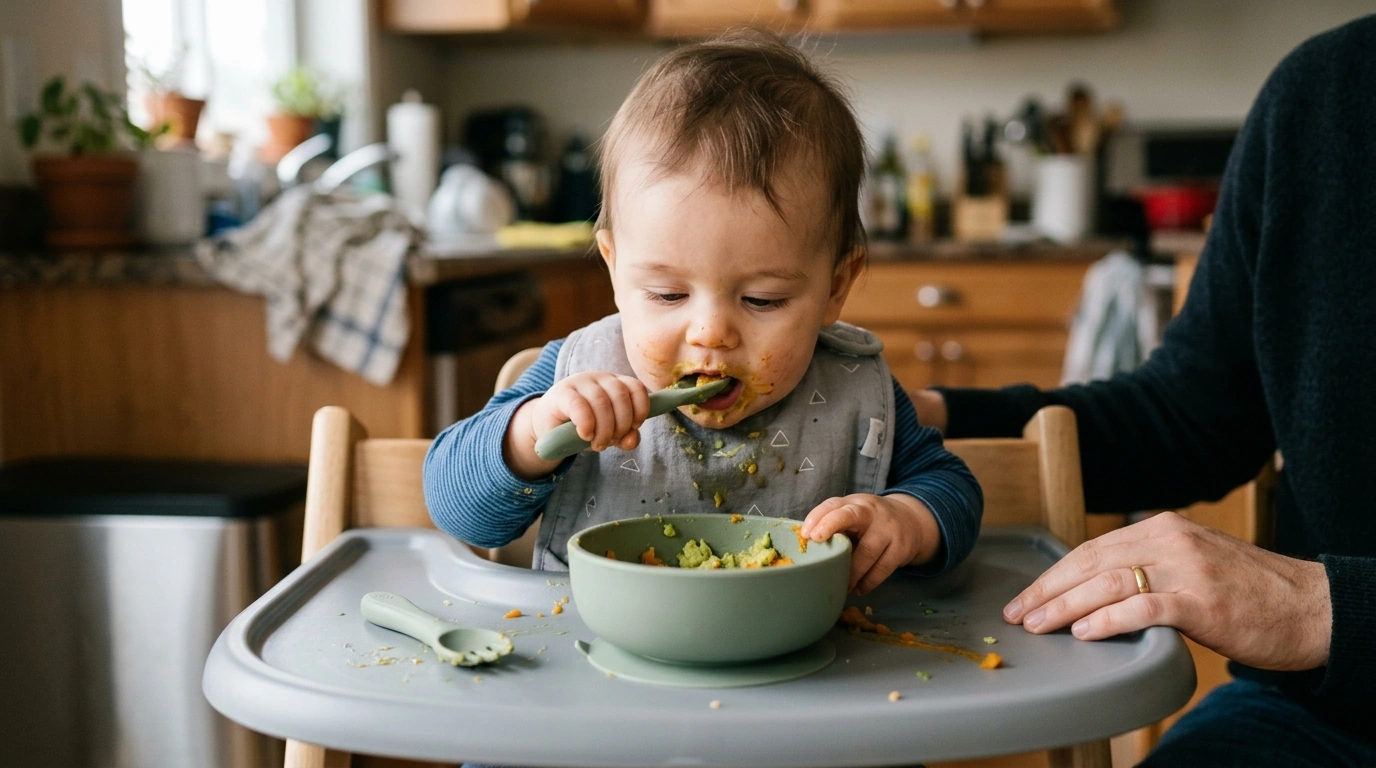
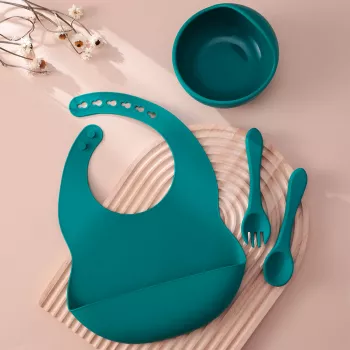
Starting solids brings new tastes, new skills, and plenty of spills. A bowl that stays put, plus a spoon and fork ready for practice, can make everyday meals feel more manageable. Our 3-Piece Silicone Baby Feeding Bowl Set with Suction Base, Spoon & Fork gives you a straightforward setup for serving food and letting your child explore self-feeding. It will not keep the table spotless—and it does not need to. Mealtime is a chance to learn.
The set brings together one bowl, one spoon, and one fork. Use the bowl for a small serving, and offer the utensils as your child becomes interested in holding and using them. The suction base can help reduce bowl movement when it grips a suitable surface, giving your child a steadier place to scoop.
That grip has limits. A determined child may still lift the bowl, and food can still land on the tray or floor. We find it more useful to plan for ordinary mess than to expect a suction bowl to prevent every spill. Keep a cloth nearby, and focus on making the meal comfortable and supervised rather than perfectly tidy.
Before serving, place the bowl on a clean, smooth, dry high-chair tray or tabletop. Press the base down, then give the bowl a gentle test to see whether it has attached. Suction may work differently on textured, uneven, or damp surfaces. If the bowl slides, clean and dry both the base and eating surface before trying again. Do not rely on suction alone to keep the bowl in place.
Start with a small portion instead of filling the bowl. That leaves space for scooping and gives you an easy way to add more if your child wants it. Prepare each food in a form appropriate for your child’s developmental stage, and stay close throughout the meal.
| Step | What to do | Why it helps |
|---|---|---|
| Prepare | Clean and dry a smooth eating surface. | Gives the suction base a better chance to hold. |
| Attach | Press the bowl down and test it gently. | Lets you check its grip before serving. |
| Serve | Start with a small, age-appropriate portion. | Leaves room for scooping and exploring. |
| Stay close | Supervise throughout the meal. | Helps you respond to spills and eating needs. |
Early utensil use is practice, not a test. Your child might hold the spoon, reach for the fork, switch back to their fingers, or spend more time exploring a texture than eating it. Those moments can all be part of getting familiar with food and the tools on the tray.
You can load the spoon with an appropriate food at first and let your child guide it, or simply offer it alongside a meal they already know. Offer foods and textures that suit their developmental stage, and keep them seated upright and supervised while eating. If you are deciding when to begin solids or have questions about readiness, the American Academy of Pediatrics’ guidance on starting solid foods is a helpful place to begin; your pediatrician can address concerns specific to your child.
Give your child time to try, pause, and try again. A spoonful that misses the mouth is not a failed meal. By keeping portions modest and your expectations flexible, you can make space for practice without turning every bite into a correction.
A familiar routine can be simple: attach the bowl, serve a small amount, offer a utensil, and sit with your child while they eat. For variety, you might introduce one new food alongside foods they already accept. That way, the whole meal does not depend on their reaction to something unfamiliar.
Afterward, clean the bowl and utensils according to the product’s care instructions. We would not assume a particular appliance or temperature is suitable without those instructions. Having the pieces ready for the next meal is enough; you do not need a complicated setup to make room for self-feeding practice.
Our team also knows that feeding is only one part of a family’s daily routine. If you are looking for separate guidance on another common childhood habit, our Thumb-Sucking Explained printable checklist for parents is a different resource for that topic—not a feeding guide or a replacement for individualized advice.
One bowl, one spoon, and one fork give you a clear place to start. A suction base can help steady the bowl on a suitable surface, while small servings and a relaxed pace leave your child room to explore. The essentials remain the same with any feeding setup: prepare food appropriately, supervise closely, and expect learning to be a little messy.
When you are ready to put those steps into your routine, explore our 3-Piece Silicone Baby Feeding Bowl Set with Suction Base, Spoon & Fork.
No. Suction works best on a clean, smooth, dry surface, and grip may vary on textured or uneven trays. Test the bowl before serving.
A child can begin exploring a spoon when they are developmentally ready for solids and can eat seated upright with supervision. Follow your child’s cues and ask a pediatrician about individual feeding concerns.
No. It can help steady the bowl on a suitable surface, but spills are a normal part of learning to eat.






Leave a comment