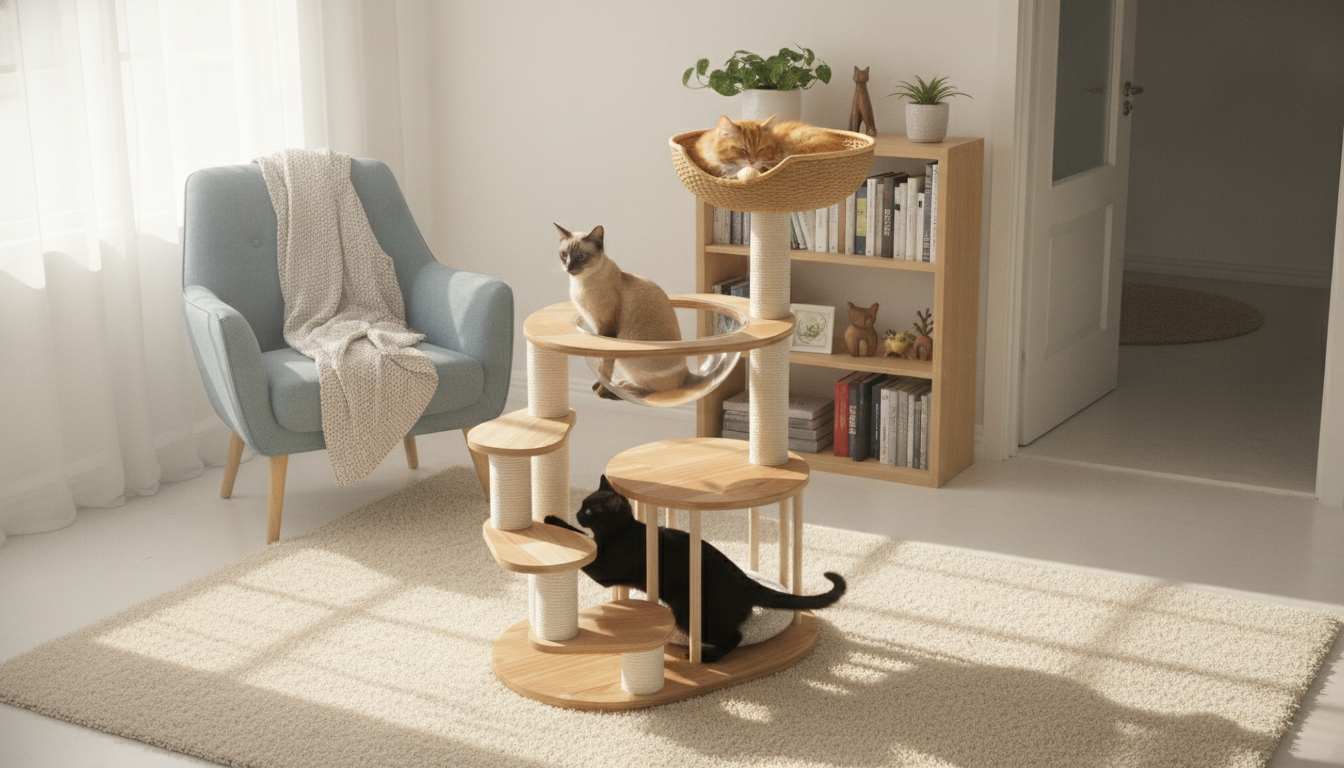
A well-built cat tree can reduce stress, protect furniture, and give cats a dedicated place to climb, perch, and rest. A solid wood frame adds stability and a furniture-like look, while a hammock and enclosed nest offer two distinct sleep styles—open-air lounging and tucked-away security. When the layout fits your cat’s body and habits, a cat tree becomes less of a “pet product” and more of a daily destination. For more guidance, see 5 Best Eco-Friendly Cat Beds (Tested by Cleo & Pumpkin).
Vertical space supports core feline behaviors: climbing, scratching, surveying territory, and resting up high. Many cats feel calmer when they can observe the room from a perch instead of navigating everything at floor level, especially in busy households. For further reading, see Straw cat hammock cat climbing frame cat nest – Revista – unitec.
Extra height also helps multi-cat homes function more smoothly. Separate levels and perches increase usable “real estate,” which can reduce bottlenecks in hallways or around favorite sleeping spots. It also supports a healthy daily rhythm: play, climb, pause to watch, then rest—an enrichment loop that helps regulate energy and boredom.
Placement is the quiet deal-breaker. A cat tree positioned near a window (bird-watching) or in a social room (where people gather) is typically used more than one tucked into a low-traffic corner.
Not all cat trees feel the same under a running leap. Solid wood frames often feel less “wobbly” when cats jump between levels, which matters for confidence—especially for cautious cats, seniors, or larger breeds that dislike unstable landings.
Durability is another advantage. With proper assembly and occasional tightening, wood structures can resist loosening joints over time. Aesthetically, a wood finish tends to blend more naturally with home furniture than many carpet-wrapped builds.
Maintenance can be simpler, too. Hard surfaces are generally wipeable, while soft pieces (like a hammock or nest cushion) can often be spot-cleaned depending on the fabric. Always follow the care instructions for your specific model.
| Feature | Solid wood frame | Typical fiberboard frame |
|---|---|---|
| Stability | Often higher; less flex under load | Varies; may wobble as fasteners loosen |
| Longevity | Can be long-lasting with care | May degrade faster with moisture/impact |
| Look & feel | Furniture-like, natural finish options | Often carpeted, bulkier appearance |
| Cleaning | Wipeable hard surfaces plus removable soft pieces (model-dependent) | Carpet can trap fur and dander |
| Weight | Usually heavier | Often lighter |
Cats don’t just choose a nap spot—they choose a feeling. A hammock creates a gently cradled, open-air lounge where many cats sprawl and doze without feeling confined. It’s a favorite for relaxed naps, post-play cooldowns, or cats that like airflow.
An enclosed nest delivers the opposite: a tucked-away, den-like space that feels protected. This can be especially appealing for shy cats, new adoptees, or any cat that prefers a “hideaway” nap when the household is noisy.
Temperature plays a role. Hammocks can feel cooler because air circulates underneath, while an enclosed nest can feel warmer and more secure. If your cat tends to rotate between spots through the day, that’s a good sign the tree is offering meaningful choice.
For more on enrichment and home setup, see the American Association of Feline Practitioners (AAFP) Feline Environmental Needs Guidelines and the ASPCA guide to environmental enrichment for cats.
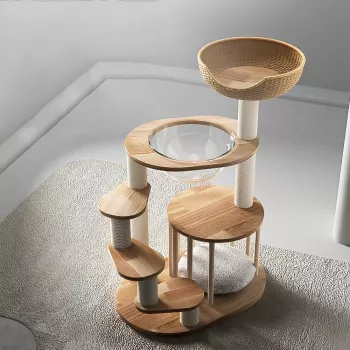
The Solid Wood Cat Tree with Hammock & Nest combines a solid wood build with two distinct rest zones: an open hammock for lounging and a tucked nest for secure naps. It’s designed to function as a dedicated climbing-and-rest station that can help redirect scratching and perching away from furniture when placed where your cat naturally wants to hang out (often a window area or living room).
| Check | Why it matters |
|---|---|
| Footprint fits the room | Prevents awkward placement that reduces use |
| Rest zones match the cat’s preferences | Many cats alternate between open and enclosed sleep |
| Stable placement surface | Helps prevent wobble and startle avoidance |
| Cleaning plan for fur | Keeps sleep areas comfortable and odor-controlled |
If your cat loves an extra-soft surface, a removable, washable blanket can make the nest feel more inviting and simplify fur cleanup. Some households use a dedicated throw kept just for pet lounging; an option to consider is the Cozy Baby Quilt – Soft & Thick Newborn Swaddle Blanket as a liner (ensure it doesn’t interfere with safe hammock attachment or create a slipping hazard).
Check the hammock’s weight rating and dimensions before buying; larger cats usually do best with a deeper, wider sling and sturdy attachment points. Inspect the fabric and hardware regularly, and replace the hammock if seams fray or the sling begins to sag.
Place it near a window or in a high-traffic room, then use treats, catnip, or a favorite toy to reward exploration. Start with the lower levels for cautious cats and avoid forcing them onto the tree.
Tighten and inspect after assembly, check again after 1–2 weeks, then monthly or any time wobble appears. Do quick checks of fasteners, scratching areas, and hammock seams so small issues don’t become safety problems.





Leave a comment