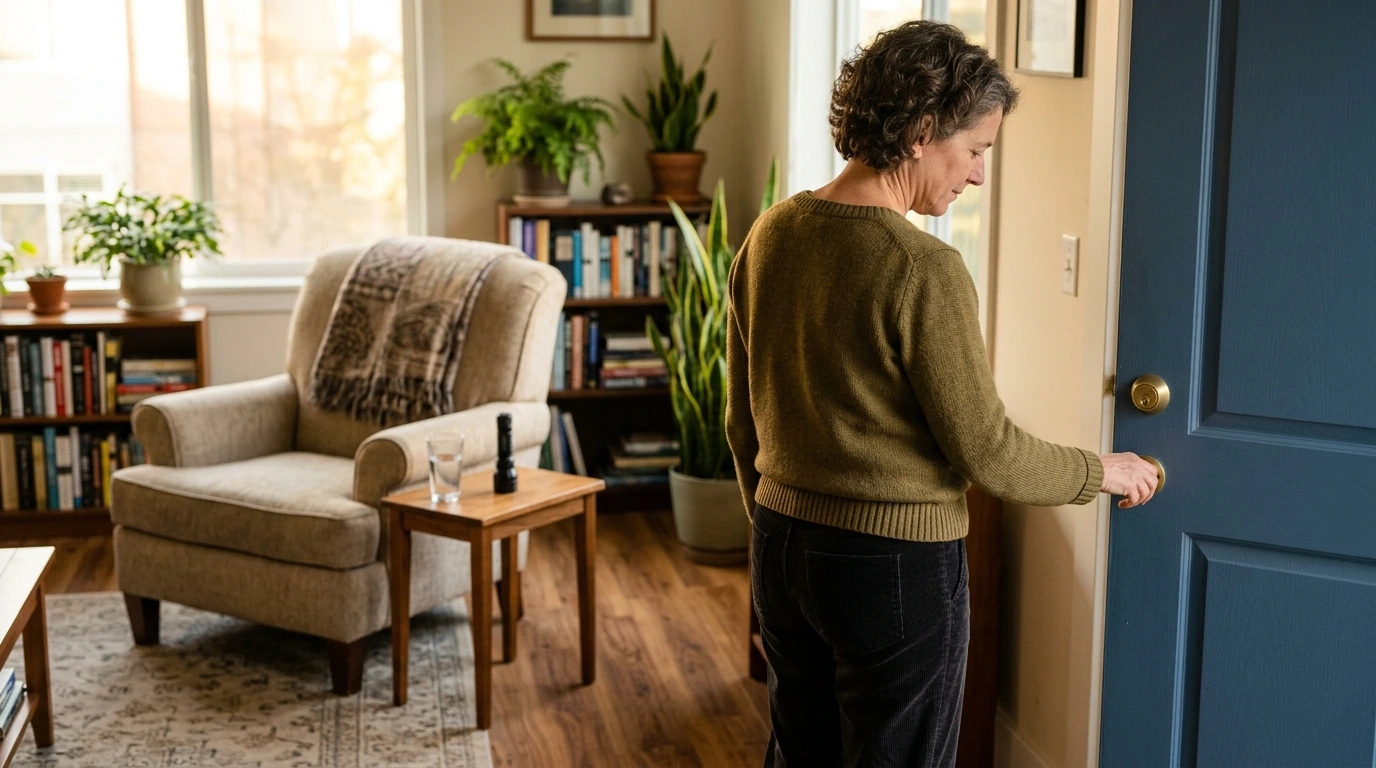
Living alone can feel like freedom and a spotlight at the same time. The quiet is real, the decisions are all yours, and so is the growth. Our team built Own Your Space: Confidence for Solo Life – A Practical Guide for the in-between moments—when independence sounds right, but nerves still show up. This is practical confidence: routines that steady you, a home setup that reduces surprises, and a calmer inner voice that doesn’t require constant reassurance.
Confidence isn’t a personality type; it’s capacity. It’s your ability to handle a wider range of days without losing your footing, even when the day isn’t ideal. You’ll recognize it when:
A confidence-friendly home doesn’t need to be big or perfect. It needs to be predictable. Start with three “anchor zones” that quietly take care of you:
Then reduce decision fatigue with defaults: default meals, default cleaning rhythm, and a quick “home-check habit” that increases safety without feeding anxiety (doors/windows, smoke/CO alarms, emergency contacts, basic first-aid). Finally, set up a “future me” basket: spare batteries, flashlight, basic tools, an extra charger—tiny items that prevent late-night stress.
| Need | Simple system | Why it builds confidence |
|---|---|---|
| Feeling safe at night | One closing routine: lock-check + light-off path + phone charging spot | Reduces rumination and repeat-checking |
| Keeping up with chores | 15-minute reset timer 3x/week | Creates proof you can maintain your space |
| Feeding yourself consistently | 2 easy breakfasts + 3 rotating dinners | Stabilizes energy and mood |
| Handling small problems | Mini tool kit + note with shutoff valves location | Turns “panic” into “next step” |
Overwhelm loves a huge to-do list. Confidence grows faster when you pick one “adulting lane” per month: cooking basics, laundry rhythm, budgeting, home maintenance, or personal safety. Focus beats intensity.
If you want one structured place to capture these routines and wins, we made Own Your Space: Confidence for Solo Life – A Practical Guide to be that steady framework—practical steps you can repeat, not hype you have to maintain.
Solo living feels dramatically easier when finances are predictable. Automate bills when possible and choose one weekly money check-in (15 minutes) so you’re not constantly “mentally budgeting” all week. Separate must-pay costs (rent, utilities, insurance) from comfort costs (eating out, subscriptions, small treats). Both matter, but mixing them blurs priorities and spikes stress.
For deeper stress-and-body context, you can also reference the American Psychological Association’s overview of how stress affects the body: https://www.apa.org/topics/stress/body.
If you want a reliable “comfort activity” that doesn’t require more screen time, a focused listening routine can help. Our High-Fidelity 9.2mm Beryllium-Coated Single Driver In-Ear Headphones are an easy add-on for a wind-down playlist, guided breathing, or a call with someone you trust—especially when you’re trying to make evenings feel less echo-y.
For additional coping strategies from a public-health perspective, the CDC’s stress coping guide is a solid resource: https://www.cdc.gov/mentalhealth/stress-coping/index.html. For anxiety education, the National Institute of Mental Health is also helpful: https://www.nimh.nih.gov/health/topics/anxiety-disorders.
Most people feel noticeable progress in a few weeks once routines and simple systems are consistent, with deeper confidence building over a few months. Setbacks are normal; the goal is recovering faster and needing fewer “panic checks,” not never having a hard day.
Start with structure: a brief safety routine that doesn’t escalate into compulsive checking, a predictable evening plan, and scheduled connection. If anxiety interferes with sleep, work, or daily functioning, professional support can make a big difference.
Use “planned connection”: short, regular touchpoints (a weekly call, a class, saying hi to a neighbor) alongside boundaries that protect rest and privacy. Independence feels strongest when you know support exists and you’re choosing it intentionally.





Leave a comment