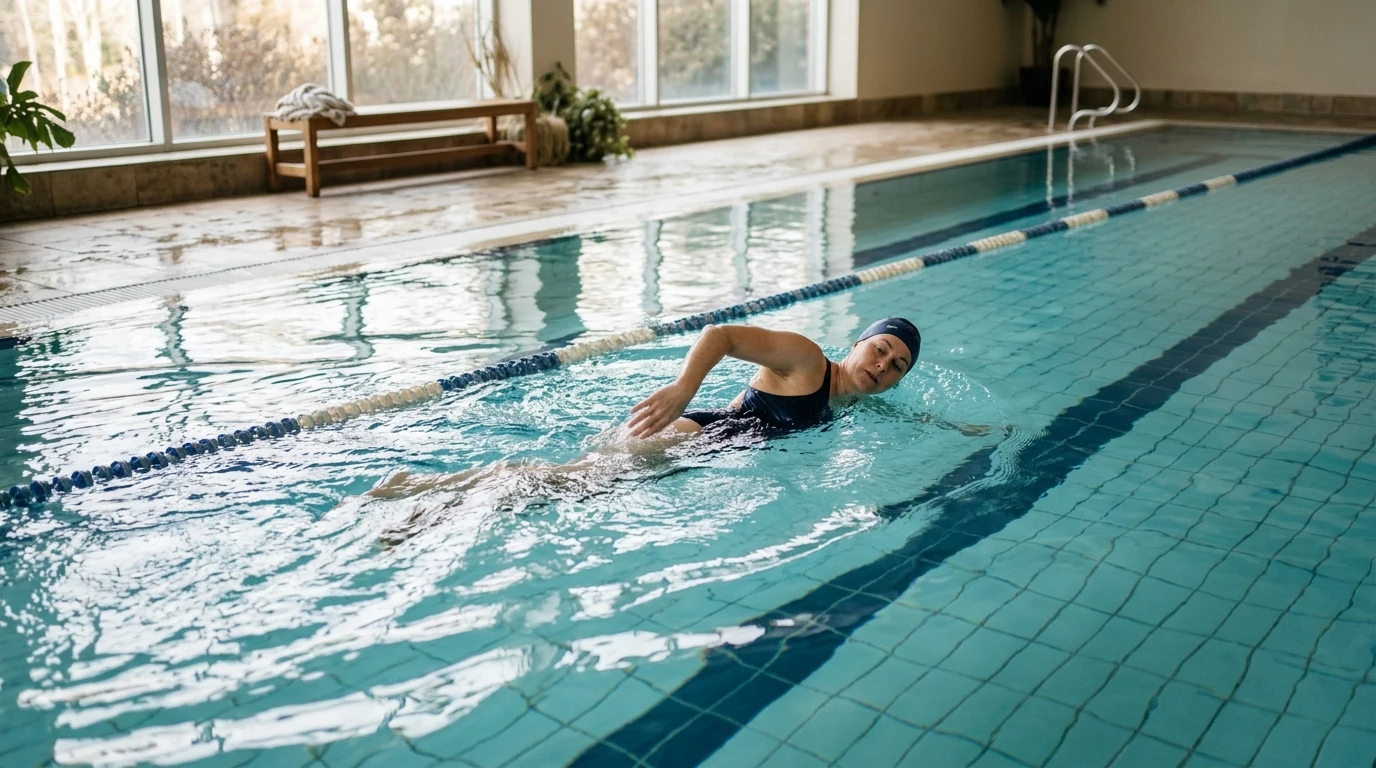
Swimming is more than a workout—it’s a repeatable reset button for the mind. The steady breathing, full-body rhythm, and sensory “quiet” of water can help reduce stress load, improve sleep quality, and support focus over time. With the right approach, you can turn occasional laps into a routine that supports steadier moods and clearer thinking—without needing to train for speed or distance.
Health organizations consistently link regular physical activity with better mental well-being and stress regulation. If you’d like a deeper dive and a structured plan you can keep on hand, our team also carries Boosting Mental Health with Swimming: A Comprehensive Guide to Improving Your Emotional and Cognitive Well-being.
One reason swimming helps mentally is that it creates a clean transition away from the day’s noise. The simple sequence—packing a bag, changing clothes, showering, stepping into the pool—interrupts rumination and signals a new “mode” to your brain.
Mental-health changes from swimming are often subtle at first. Instead of looking for a single “magic” session, watch for patterns across 2–4 weeks: less irritability, smoother stress recovery, and an easier time shifting out of tense moods.
| Timing | Rate (1–10) | Note one sentence |
|---|---|---|
| Before swim | ___ | What’s loudest in the mind right now? |
| After swim | ___ | What feels lighter or clearer? |
| Later that day | ___ | Any change in patience, sleepiness, or focus? |
Swimming can also support clearer thinking by converting “stress energy” into structured movement. As your stress load drops, you often get more mental bandwidth back—especially if you keep the session predictable and not overly taxing.
If you want a consistent way to set the mood before swimming (or to downshift afterward), our team also stocks High-Fidelity 9.2mm Beryllium-Coated Single Driver In-Ear Headphones for pre/post-swim listening—useful for creating a repeatable calm ritual outside the pool environment.
The best “mental health swim” is the one that doesn’t leave you depleted. Use the rule: leave better than you arrived. That usually means moderate effort, calm breathing, and a clear stop point.
2–4 minutes easy warm-up + 6–10 minutes relaxed laps with breaks + 2 minutes cool-down. Your goal is steady breathing and comfort, not speed.
| Session length | Main set | Best for |
|---|---|---|
| 15–20 min | 6×25 easy, 20–40 sec rest | Anxiety downshift, starting a habit |
| 25–35 min | 6×50 easy-moderate, 30–45 sec rest | Mood lift, steady focus |
| 35–45 min | 10×50 (odd easy / even moderate) | Cognitive stamina, stress resilience |
For additional context on how physical activity supports mental health, you can reference CDC guidance on physical activity and health, the APA overview of exercise and stress, and this NIH resource on physical activity and mental health.
For most people, 2–3 swims per week is a practical sweet spot for mood and stress regulation. Short, repeatable sessions often work better than occasional intense workouts, especially if you track sleep and mood changes for 2–4 weeks.
This can happen during the adjustment period, particularly if breathing feels unfamiliar. Reduce intensity, take wall breaks, swim at quieter times, and focus on longer exhales; if panic persists, consider speaking with a qualified professional.
Swimming has unique advantages—breath rhythm, reduced sensory input, and low-impact full-body movement—but the best exercise is the one you can do consistently. Many people do well combining swimming with walking or light strength training as tolerated.







Leave a comment