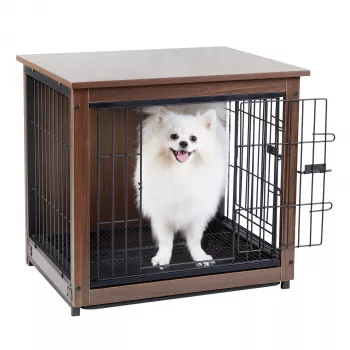
A dog’s indoor crate doesn’t have to look like an afterthought. Our Vintage Pet Crate Dog Cage with Table Top is built to live in the center of your home—offering a dedicated, enclosed space for your dog while also functioning as a practical side table. If you want a calmer-looking setup that fits your daily rhythm (and keeps the room feeling pulled together), this furniture-style option helps you make the crate feel like it belongs.
This is a dual-purpose indoor crate: your dog gets a contained home base, and you get a usable tabletop for everyday essentials like a lamp, a book stack, a water carafe, or a small tray for remotes. It’s especially helpful in open-plan spaces where a dog benefits from a defined resting zone without the “temporary gear” look of a metal wire crate sitting in the living room.
We recommend treating placement like you would any other piece of furniture: choose a spot with good airflow, away from direct heat sources, and where your dog can relax without being isolated from the household.
| Room | Where to place it | What to style on top | Why it works |
|---|---|---|---|
| Living room | Next to the sofa or under a window | Lamp + coaster set + small tray | Blends with furniture while keeping your dog close to family activity |
| Bedroom | Near a dresser or nightstand zone | Book stack + tissue box + diffuser | Supports a calm bedtime routine without a bulky crate look |
| Entryway | Along a clear wall near the door | Key tray + catchall bowl | Creates a landing spot for items while giving your dog a settled “watch spot” |
| Home office | Beside the desk (not under foot) | Charging tray + notebook | Helps reduce pacing by offering a defined resting area during work hours |
Furniture-style crates earn their keep in small, everyday moments—when you’re carrying laundry through the hall, taking a work call, or trying to keep one corner of the living room “company-ready” without extra effort.
Comfort comes first. Your dog should be able to stand up, turn around, and lie down comfortably inside. If your dog is between sizes, prioritize movement and ease—especially if the crate will be used for longer indoor rest periods.
We also recommend setting the right expectations from day one: a crate is a safe resting zone, not a substitute for exercise, enrichment, or daily connection. Temperament matters, too—some dogs settle immediately, while others do best with a gradual, reward-based introduction. A “quiet-but-connected” location (near the living room edge, bedroom corner, or office side) often helps dogs relax because they can still feel part of what’s happening.
For broader training guidance, we like these references: American Kennel Club (AKC) crate training guidance and ASPCA general dog care.
Yes—this style is designed to function like furniture in an indoor space. Keep décor stable, use coasters or a tray to help protect the surface, and leave clear access at the gate so your dog can enter and exit comfortably.
Wipe it routinely and use pet-safe cleaners to keep the surface comfortable and odor-free. Clean promptly after muddy paws or accidents, and make sure everything is fully dry before your dog settles back inside.
Choose a quiet-but-connected spot where your dog can relax while still feeling included, such as the edge of the living room, a bedroom corner, or beside your home office desk. Avoid direct heat, strong drafts, and cramped traffic paths that make resting feel unsettled.






Leave a comment