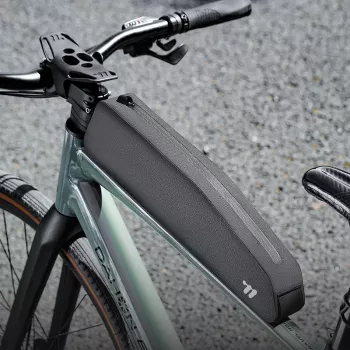
The things you reach for most often deserve a convenient place on your bike. A waterproof extended top tube bike bag can give small essentials a home without sending you to the bottom of a backpack every time you need a snack or your keys. Our Waterproof Extended Top Tube Bike Bag 1.9L is an option if you want to keep a few ride-day items close. Here’s how to decide what to pack, whether the format suits your bike, and what to check before you head out.
A top tube bag works best when it has a clear job. You might use it for keys, a small snack, a compact repair item, or personal essentials you want to find quickly. The 1.9L capacity gives you a starting point, but it does not tell you whether every combination will fit: a long, rigid item can be harder to pack than several smaller ones with the same total volume.
The extended format may appeal to you if you already carry a backpack or other bike luggage but want your frequently used items in a separate place. That separation can make a stop simpler: you know where to look without unpacking your larger bag. It also helps you avoid filling a small bag with gear you never reach for during the ride.
Before you fill the bag, set out what you actually use. Put your highest-priority items in first, then see whether the packed bag closes comfortably and holds its shape. Leave out anything that makes access difficult or causes the contents to press awkwardly against the bag. Capacity is useful, but a tidy load is more useful on the road.
Keep heavier or oddly shaped items from shifting as you ride. If a tool or other compact supply moves around inside, reconsider where it sits or whether another bag is a better place for it. After packing, make sure the bag does not brush your legs or affect your ability to pedal and steer. The ideas below are packing priorities, not a promise that every listed item will fit together.
| Ride | Items to consider | Before you leave |
|---|---|---|
| Short local ride | Keys, a small snack, and compact personal essentials | Check that the bag sits securely and does not brush your legs. |
| Daily commute | Small must-haves you want to keep separate from a backpack | Confirm that cables and controls remain unobstructed. |
| Longer outing | A snack and selected compact repair supplies | Test your own items for fit and secure heavier gear appropriately. |
If your commute includes time off the bike, you may also have items that belong in your backpack rather than your top tube bag. For example, our High-Fidelity 9.2mm Beryllium-Coated Single Driver In-Ear Headphones are better treated as an off-bike item, not something to use when you need to hear traffic and your surroundings. Keep the bike bag focused on what you need while riding.
Bike frames and setups vary, so compare the available space on your bike with the bag’s dimensions and mounting requirements before purchasing. Pay attention to more than the open length of the top tube. Your frame shape, nearby cables, and the way you move over the bike all matter to a comfortable setup.
Once the bag is installed, check clearance around the frame, your knees, cables, and handlebars. Turn the handlebars through their normal range and make sure nothing pulls, catches, or blocks a control. Then pack the bag as you intend to use it and take a short test ride. Pedal seated and standing, make a few ordinary turns, and stop to confirm that the bag remains secure. If it shifts or gets in your way, address that before a longer outing.
For broader guidance on preparing a loaded bike, REI’s bikepacking basics offers useful context. We also encourage you to keep basic riding safety in mind; the National Highway Traffic Safety Administration’s bicycle safety guidance is a helpful reference.
The waterproof designation is a reason to consider this bag for rides when rain is possible, but it should not be taken as a guarantee that contents will stay dry in every condition. Before riding, make sure the bag is properly closed. If you are carrying an electronic device, important paper, or another water-sensitive valuable, an additional protective pouch is a sensible precaution—especially in sustained rain.
The right setup comes down to three practical questions: How large are the items you want close at hand? How much usable space does your particular bike provide? And does the packed bag stay comfortable and secure while you pedal? If those answers line up, the Waterproof Extended Top Tube Bike Bag 1.9L can be a focused choice for everyday essentials. You can view its product page for current product details before deciding.
Consider small ride essentials such as keys, a snack, or selected compact supplies. What fits depends on the dimensions and combination of your own items.
Compare your frame space with the bag’s dimensions and mounting requirements, then check clearance around your knees, cables, and steering. A short ride with the bag packed as intended is the best way to assess comfort and security.
Yes. An additional protective pouch is a sensible precaution for water-sensitive valuables, particularly during sustained rain.





Leave a comment