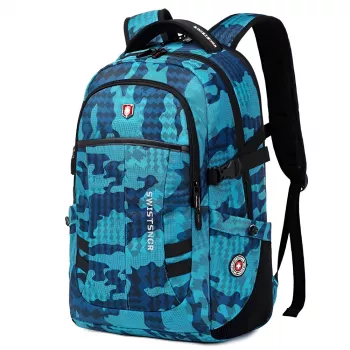
Your backpack may start the day carrying a laptop to class, spend the afternoon on a work commute, and end up under an airplane seat. The Waterproof 17.3″ USB Laptop Backpack for Men & Women – Travel, School, Business is made for that kind of changing schedule. Before you choose it, focus on three practical questions: Will your laptop fit, will your daily load feel manageable, and will its features work the way you need them to?
A 17.3-inch screen measurement is a useful starting point, but it does not tell you the laptop’s full width, depth, or thickness. Bezels and case designs vary. Measure the exterior of your laptop, including any protective case you plan to leave on, and compare those measurements with the backpack’s stated laptop capacity. A close fit should not require you to force the laptop past a zipper or other opening.
Then account for everything that travels with it. A charger, notebook, documents, and personal essentials can turn a comfortable load into an awkward one. Gather your usual items before deciding whether one backpack can handle the day. If you often carry extra books or equipment, test that heavier combination rather than your lightest routine.
What you need to reach first changes with your destination. At school, you may need a notebook between classes. On a workday, your phone, keys, and meeting notes may matter more. When traveling, your laptop and documents should be straightforward to retrieve without unpacking everything else.
Use this quick load plan to identify the trade-offs that matter to you:
| Where you’re going | Items to account for | What to check before leaving |
|---|---|---|
| School | Laptop, charger, notebooks, daily essentials | Comfort with the full day’s load |
| Work | Laptop, documents, phone, small accessories | Easy access to frequently used items |
| Travel | Laptop, charger, documents, personal items | Laptop access and carry-on size requirements |
For a useful trial, pack what you would carry on a busy day and wear the backpack for several minutes. Notice whether you can walk comfortably and get to small essentials without setting the bag down and emptying it. A pack that works with a laptop alone may feel different once you add a charger, books, and a water bottle.
This backpack is listed as waterproof, a feature worth considering if your commute includes uncertain weather. Still, treat protection for expensive electronics as a separate decision. A laptop sleeve or protective case adds a layer of care when heavy rain or prolonged exposure is possible.
Before taking any bag into wet conditions, look at its closures and openings. The word “waterproof” alone does not establish that a backpack can be submerged or left exposed to water indefinitely. If you expect a long walk in a downpour, plan around that exposure rather than relying on the label by itself.
USB access can be convenient during a long day, especially when you are moving between class, meetings, and transit. Confirm how this backpack’s USB connection is used before you depend on it. Do not assume the backpack generates power or includes a power bank; determine what charging equipment you need and pack the appropriate cable.
If a power bank is part of your travel setup, keep it accessible and review the FAA’s guidance on lithium batteries in baggage before flying. Spare lithium batteries, including power banks, are subject to carry-on rules. Organizing your cable and power bank before departure is simpler than searching for them in a packed bag at the airport.
For a commute or flight where you also want audio, the High-Fidelity 9.2mm Beryllium-Coated Single Driver In-Ear Headphones are another compact item to consider for your packing list. Keep small accessories together so they do not get lost among documents and chargers.
For air travel, compare the backpack’s listed exterior dimensions with your airline’s current carry-on or personal-item allowance. Limits can vary by airline, fare, and where you intend to stow the bag. A backpack being suitable for travel does not guarantee that it qualifies for every cabin allowance.
Consider how you will remove your laptop at security, too. The TSA’s laptop guidance is a useful reference, but follow the instructions given at your checkpoint. A practice pack at home will show whether you can take the laptop out smoothly while keeping your other belongings organized.
Our team recommends making your final choice around your real load, not an idealized empty bag. Compare your laptop’s exterior measurements, the items you carry most often, and the backpack’s current product details. If those line up, one bag can be a simpler way to move between school, work, and travel.
The backpack is listed for a 17.3-inch laptop, but screen size alone does not confirm fit. Compare your laptop’s full exterior dimensions with the stated laptop capacity.
Do not assume it includes a power source. Confirm how the USB connection works and whether you need a separate power bank.
Compare the backpack’s listed exterior dimensions with your airline’s current allowance. Size rules vary by airline and fare.





Leave a comment