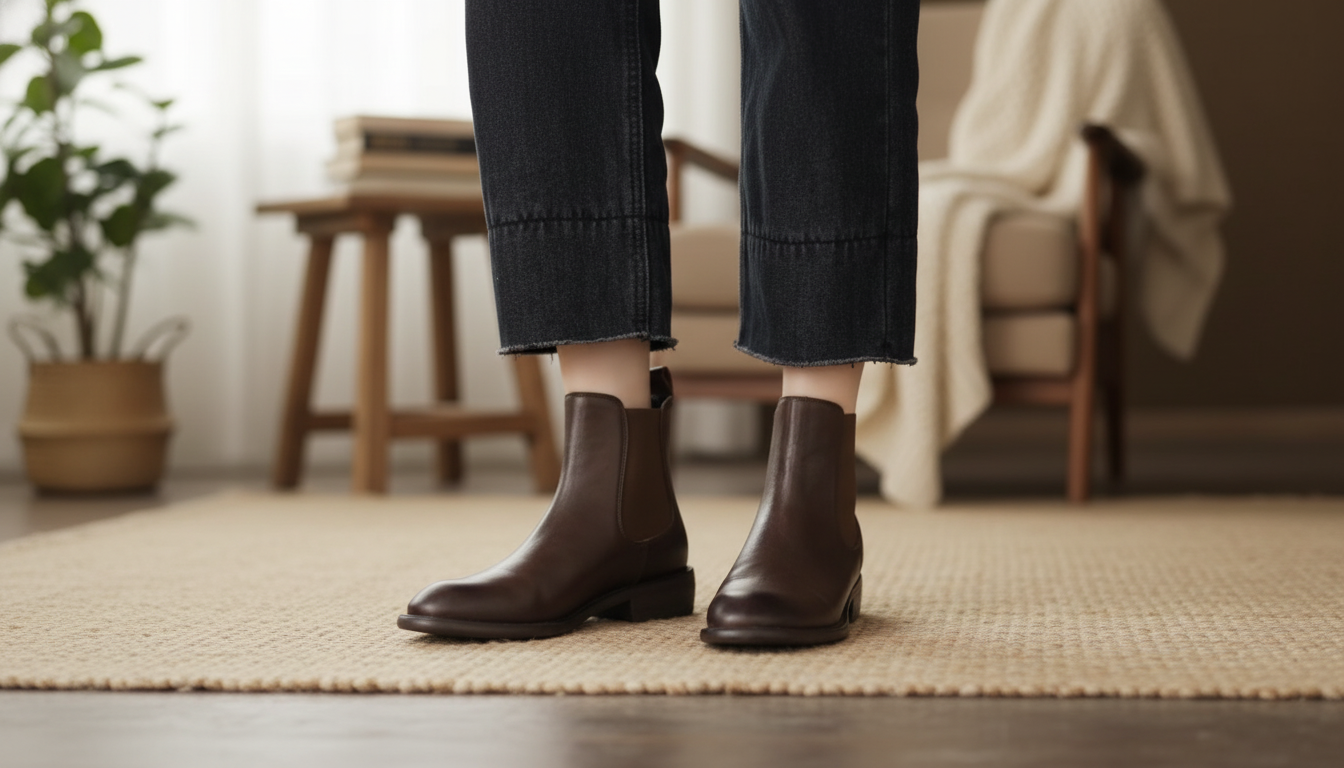
A pair of Chelsea boots that balances polish and everyday comfort can anchor a wardrobe through changing seasons. With genuine leather, elastic side panels, a round toe, and a low block heel, this ankle-boot silhouette is designed for easy pull-on wear, steady footing, and versatile styling—from casual denim to tailored layers.
When a boot is meant to handle repeat wear, small design choices matter. Genuine leather delivers a structured look that can gradually soften and mold to your foot, while the classic Chelsea profile stays streamlined enough for work outfits and relaxed enough for weekends.
Genuine leather is valued for durability and the way it “breaks in” over time (its fibers and structure are discussed broadly in resources like Encyclopaedia Britannica: Leather). To get the best experience from leather Chelsea boots, pay attention to how the upper, elastic, and sole are finished.
| Check | What to notice | Why it matters |
|---|---|---|
| Leather surface | Even color and minimal wrinkling at rest | Helps predict how the boot will age and crease |
| Elastic gores | No gaps pulling away from the upper; rebounds after stretching | Supports the ankle and keeps the fit snug |
| Heel attachment | Heel feels solid with no wobble when pressed | Improves stability and reduces premature wear |
| Outsole tread | Visible tread depth and consistent pattern | Better traction and slower outsole smoothing |
| Insole comfort | No hard edges or pressure points under the arch/ball | Reduces fatigue during longer walks |
A Chelsea boot should feel secure through the midfoot and heel, with enough give at the sides to move naturally. Because leather changes with wear, the goal is a fit that starts comfortably snug rather than roomy.
For general footwear comfort guidance, the American Podiatric Medical Association (APMA): Healthy Footwear is a helpful reference point when evaluating supportive design and fit.
| Timing | What to do | Products/tools |
|---|---|---|
| After each wear | Wipe and brush off dust; air out | Soft cloth, horsehair brush |
| Every 2–4 weeks (regular wear) | Condition lightly | Leather conditioner |
| Before wet season | Apply protector spray; spot-test first | Leather water-repellent spray |
| As needed | Polish or cream for color refresh | Neutral or color-matched cream polish |
| End of season storage | Clean, condition, and store with shape support | Cloth, conditioner, paper/boot shapers |
| Detail | Value |
|---|---|
| Price | $111.17 USD |
| Availability | In stock |
| Product page | View details |
Yes—leather typically relaxes in width and at the flex points as it warms up and breaks in, but the length changes very little. A secure heel fit matters most, and socks or a thin insole can help fine-tune the feel.
They can be, since a low block heel tends to feel more stable and less straining than higher or narrow heels. Comfort still depends on proper sizing, supportive insoles, and an outsole with reliable grip.
Use a leather-safe water-repellent spray before wet weather, wipe boots down after exposure, and let them dry naturally away from direct heat. If salt appears, remove it with a lightly damp cloth, dry thoroughly, then condition or use cream polish to restore the finish.







Leave a comment