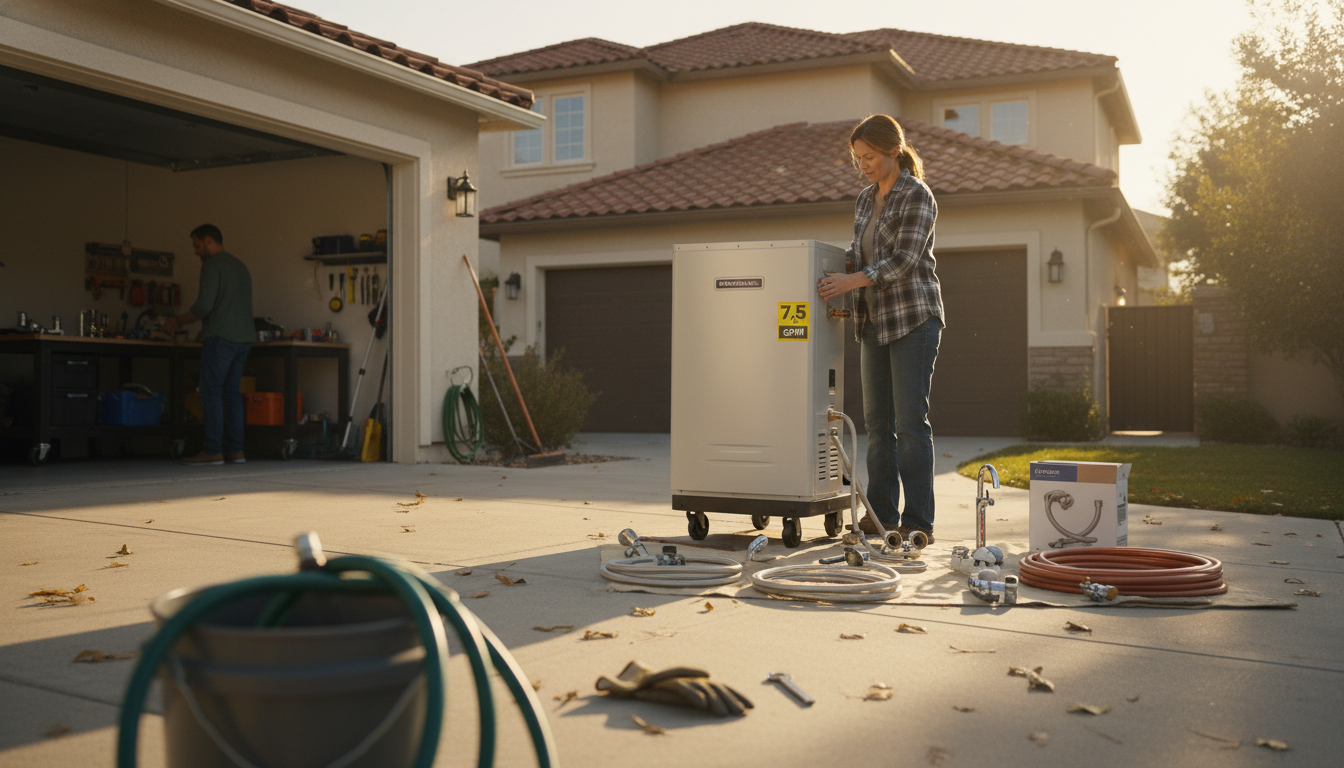
A 7.5 GPM (gallons per minute) natural gas tankless water heater can typically run 2–3 “average” fixtures at the same time, or up to 4 lower-flow fixtures—assuming a moderate temperature rise. The real limit isn’t the number of bathrooms in the home; it’s the combined hot-water flow rate of the fixtures you’re using simultaneously and how much the heater has to raise the incoming water temperature.
The 7.5 GPM rating is usually measured under a specific temperature rise. If incoming water is cold and you need a larger temperature jump (common in winter or in colder climates), the heater’s usable GPM for truly hot water goes down. If incoming water is warmer (or you’re setting a lower outlet temperature), you’ll get closer to the full 7.5 GPM.
Actual flow varies by fixture and plumbing setup, but these ranges are common:
• Shower: about 1.8–2.5 GPM
• Bathroom faucet: about 0.5–1.5 GPM
• Kitchen faucet: about 1.0–2.2 GPM
• Dishwasher: roughly 1.0–2.0 GPM (intermittent)
• Clothes washer: roughly 1.5–3.0 GPM (intermittent)
If you run two showers at 2.0–2.5 GPM each, you’re using about 4.0–5.0 GPM—leaving room for a bathroom sink, but not much else. Add a third shower and you may still be fine in mild conditions, but in colder incoming-water situations you can start seeing lukewarm water or reduced flow as the heater reaches its limit.
For lighter-demand combinations—like one shower (2.0 GPM), a bathroom faucet (1.0 GPM), and a dishwasher (1.5 GPM intermittent)—a 7.5 GPM unit often handles it comfortably.
For a deeper walkthrough (including temperature rise and realistic simultaneous-use scenarios), see the main guide here: How many fixtures can a 7.5 GPM natural gas tankless water heater run at once?
Most modern showers run about 1.8–2.5 GPM. Older showerheads can be higher, which can reduce how many fixtures a tankless heater can support at once.






Leave a comment