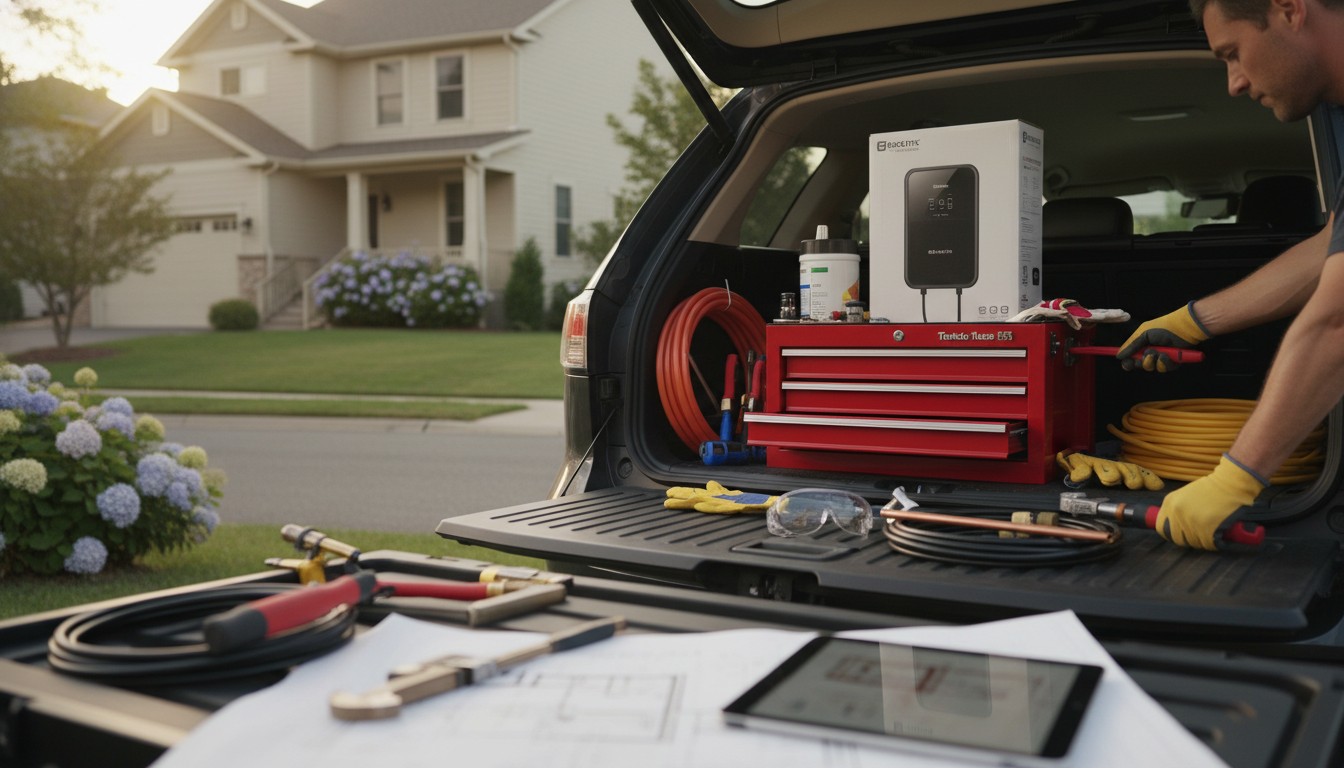
Installing an electric tankless water heater can be a smart upgrade for on-demand hot water, but it requires careful planning for electrical load, proper mounting, and code-compliant plumbing. Before starting, confirm the unit is sized for your home’s flow rate and temperature rise, and verify your electrical panel can support the required amperage and breakers.
Choose a spot close to the primary hot-water demand to reduce heat loss and wait time. Turn off the water supply to the home and open a hot faucet to relieve pressure. Shut off power at the main panel before touching any wiring.
Use the manufacturer’s mounting template or bracket and fasten into studs or masonry anchors (not just drywall). Keep required clearances for service access and ventilation around internal components.
Add a full-port shutoff valve on the cold inlet and the hot outlet for future service. Many installers also add a filter/strainer on the cold side and service valves for descaling. Connect cold in/hot out using approved fittings (often copper or stainless flex lines, depending on local code). Use thread sealant or tape only where permitted, and avoid overtightening.
Most electric tankless heaters require multiple dedicated double-pole breakers and correctly sized wire (often heavy-gauge copper). Follow the wiring diagram exactly, torque lugs to spec, and confirm proper grounding. If you’re not fully qualified for high-amperage electrical work, hire a licensed electrician—this step is where most safety and code issues occur.
With power still off, open the cold supply and purge air by running hot taps until flow is steady. Inspect every joint for leaks. Then restore power, follow the startup sequence, and set the output temperature (typically 120°F for most homes).
For a more detailed walkthrough and key safety notes, see the full guide here: https://perfectpickspalace.shop/how-to-install-an-electric-tankless-water-heater/.
Many electric tankless units need multiple high-amperage breakers and substantial available capacity. If your panel is near its limit or lacks the required breaker spaces, an upgrade or subpanel may be necessary.






Leave a comment