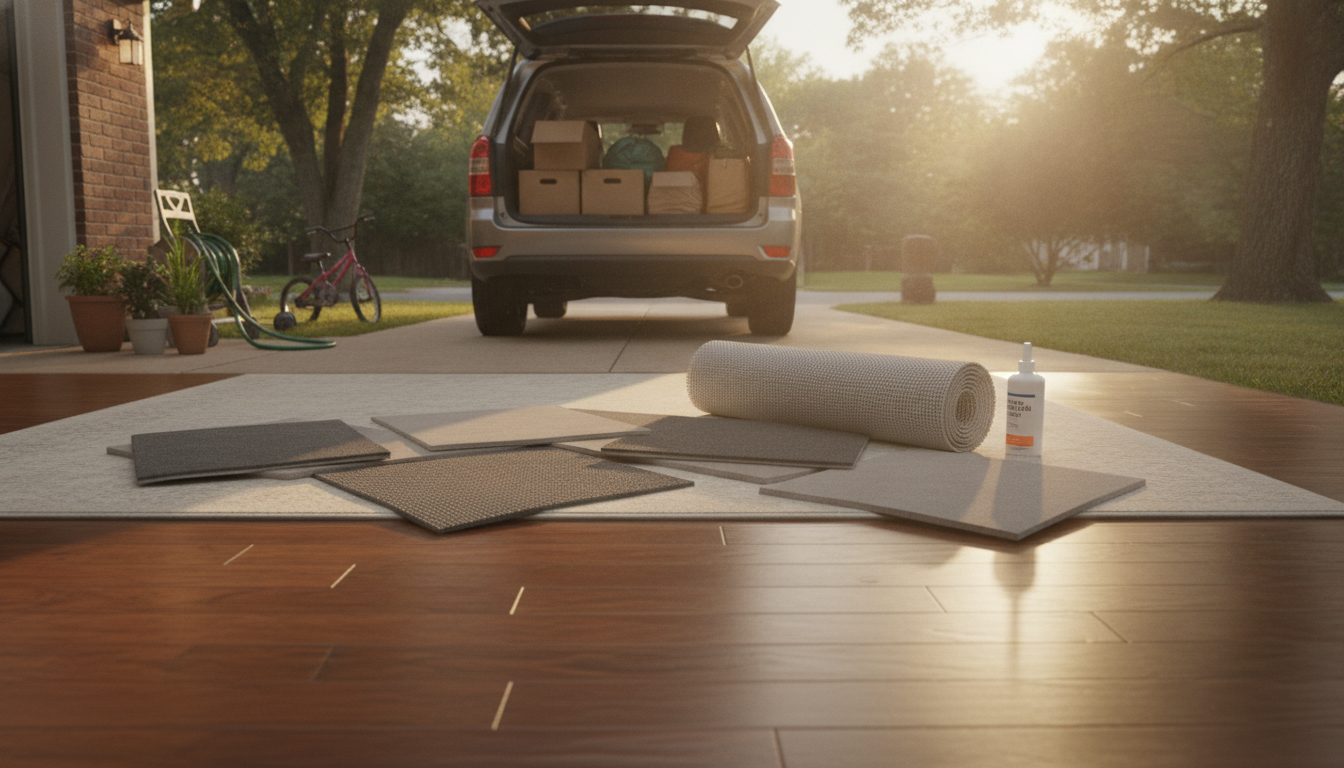
The best anti-slip option for rugs on hardwood floors is a non-staining rug pad made for hard surfaces—typically felt-and-rubber or natural rubber with a grippy (but residue-free) backing. It keeps the rug from sliding without relying on aggressive adhesives that can damage finishes or leave sticky marks.
Hardwood needs two things: traction and protection. A quality rug pad adds friction to reduce shifting, while also creating a buffer that helps prevent scuffs from daily foot traffic. Look for pads labeled “safe for hardwood” and “non-staining,” and avoid anything described as adhesive or permanent unless the manufacturer explicitly states it won’t harm polyurethane or oil-finished floors.
If you’re dealing with a small rug (like a bath mat) or a lightweight runner that curls at the edges, rug tape or corner grippers can help—especially in high-traffic spots. The safest options are removable, residue-free strips designed for hardwood. Test a small area first, and replace tape periodically so it doesn’t dry out and cling too tightly.
In damp areas, the simplest anti-slip “upgrade” is choosing a rug that already has a reliable non-slip backing. That way, you reduce layers, minimize trapped moisture, and get steady grip right out of the box. For a practical example of a plush, absorbent rug with non-slip support, see the detailed guide here: https://perfectpickspalace.shop/guide-inyahome-3d-shag-bath-rug-plush-absorbent-non-slip/.
Choose a pad or grip that is: labeled for hardwood, non-staining, breathable (especially for larger rugs), the right size (trim slightly smaller than the rug), and easy to lift and clean. If your rug still creeps, consider adding a thin hard-floor pad under the rug rather than stacking multiple sticky solutions.
Use a hard-floor rug pad cut slightly smaller than the rug so edges lay flat. For persistent bunching in busy areas, add removable corner grippers to stabilize the corners.






Leave a comment