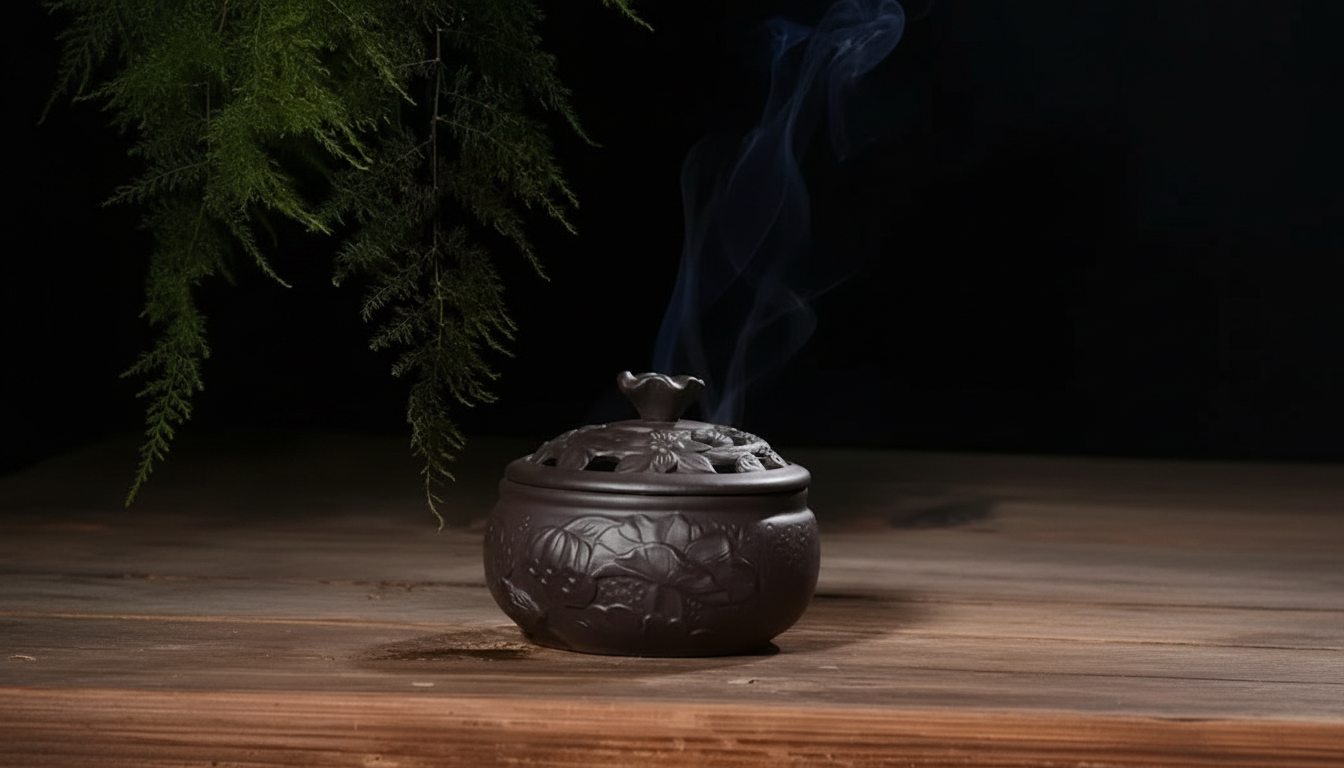
Ceramic backflow incense burners look best when the smoke channels stay clear and the glaze stays free of incense oil buildup. Cleaning is simple, but it works best when done gently and regularly—especially after using resin-heavy cones that leave more residue.
Wait until the burner is completely cool. Lift off any removable pieces and tap out ash into the trash. Use a soft, dry cloth or a small soft brush to sweep remaining ash from the bowl and along the carved “waterfall” path.
Fill a bowl with warm (not hot) water and a small drop of mild dish soap. Wipe the ceramic with a soft sponge or microfiber cloth. For narrow channels, use a cotton swab or a soft toothbrush to reach into grooves without scratching the finish.
If you notice dark spots where cones sit or sticky residue in the flow path, make a paste of baking soda and water. Rub it lightly over the stained area, then rinse well. Avoid harsh powders or abrasive scrubbers, which can dull glossy ceramic over time.
Backflow designs rely on small openings to guide the heavier smoke downward. Use a damp cotton swab to clear the cone seat hole and any internal channels you can access. If residue is packed inside, let the affected area soak for 10–15 minutes in warm soapy water, then brush gently and rinse.
Rinse away all soap, then dry with a lint-free towel. Let the burner air-dry completely before using it again, since trapped moisture can mix with residue and create new buildup. For a deeper look at how a lotus-style backflow burner works (and how to keep the smoke path flowing smoothly), visit this guide to the Lotus Ceramic Backflow Incense Burner.
Darkening usually comes from soot and incense oils collecting where the cone sits and along the smoke path. Regular gentle washing and occasional baking soda paste spot-cleaning help prevent stains from setting.






Leave a comment